
article image Copyright: NASA
International Space Station: Space Farming Breakthroughs, NASA Experiments, and the Viral “Spudnik-1” Story
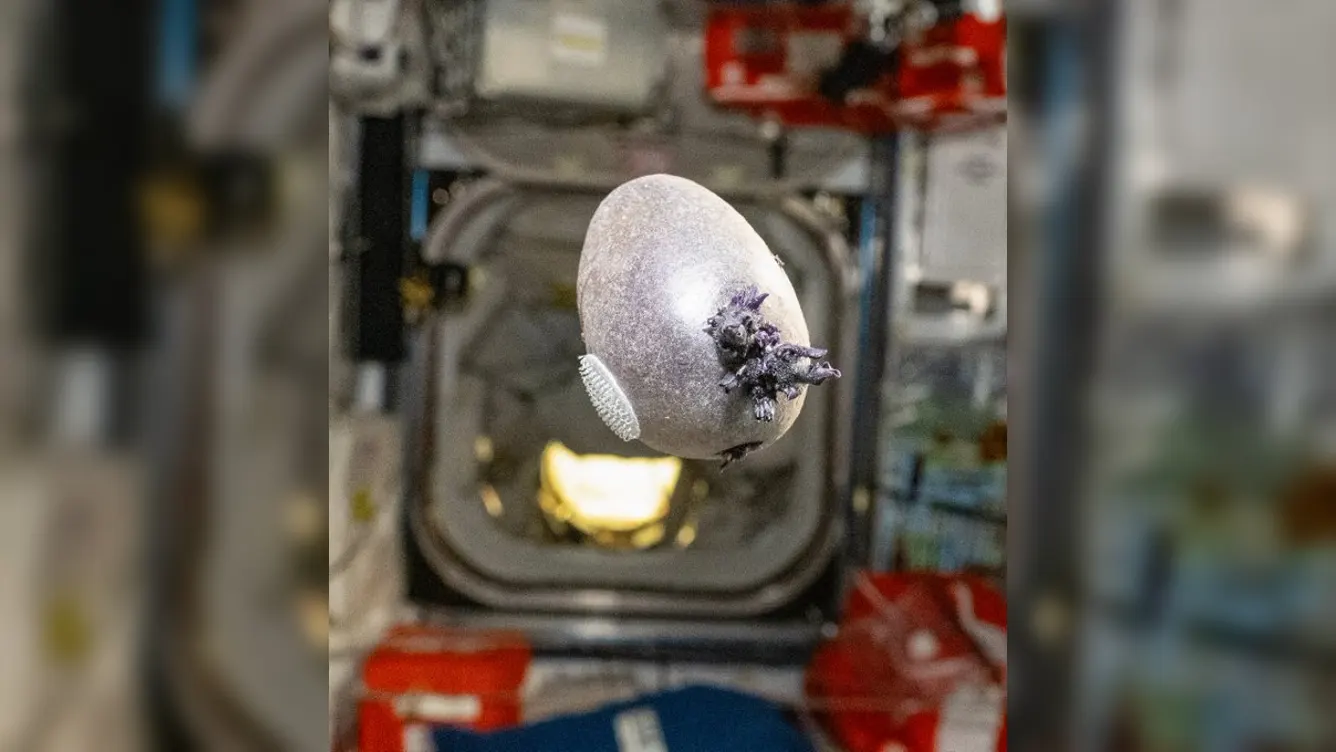
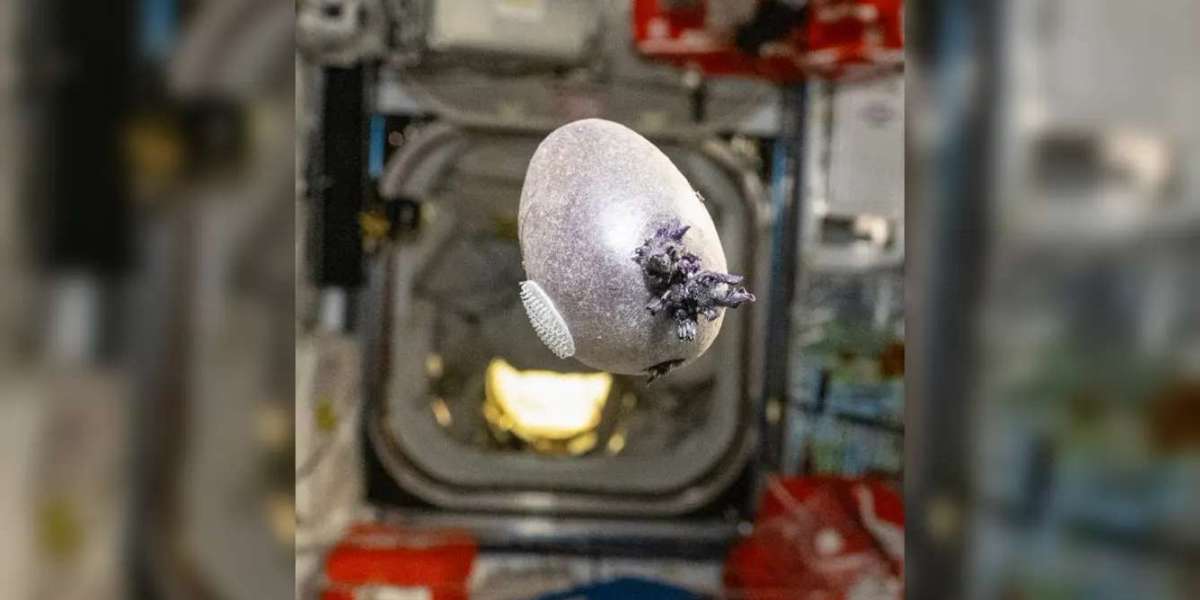
Astronaut Don Pettit shared a photo of a weird object growing on the International Space Station.
(Don Pettit/X / FOX Weather)
Key Highlights
A viral “alien-like” object on the ISS turned out to be a space-grown potato
Space farming is becoming essential for missions to Mars and the Moon
NASA and global agencies are advancing technologies for sustainable life in space
advertisement
Introduction: The International Space Station and the Future of Space Exploration
The International Space Station (ISS) stands as one of humanity’s greatest achievements in space exploration, serving as a laboratory where scientists test technologies that could enable long-term missions to the Moon and Mars.
One of the most exciting areas of research aboard the ISS is space agriculture, where astronauts grow food in microgravity to support future deep-space missions.
Recently, a viral image from the ISS sparked global curiosity and confusion, highlighting both the wonder and the importance of these experiments.
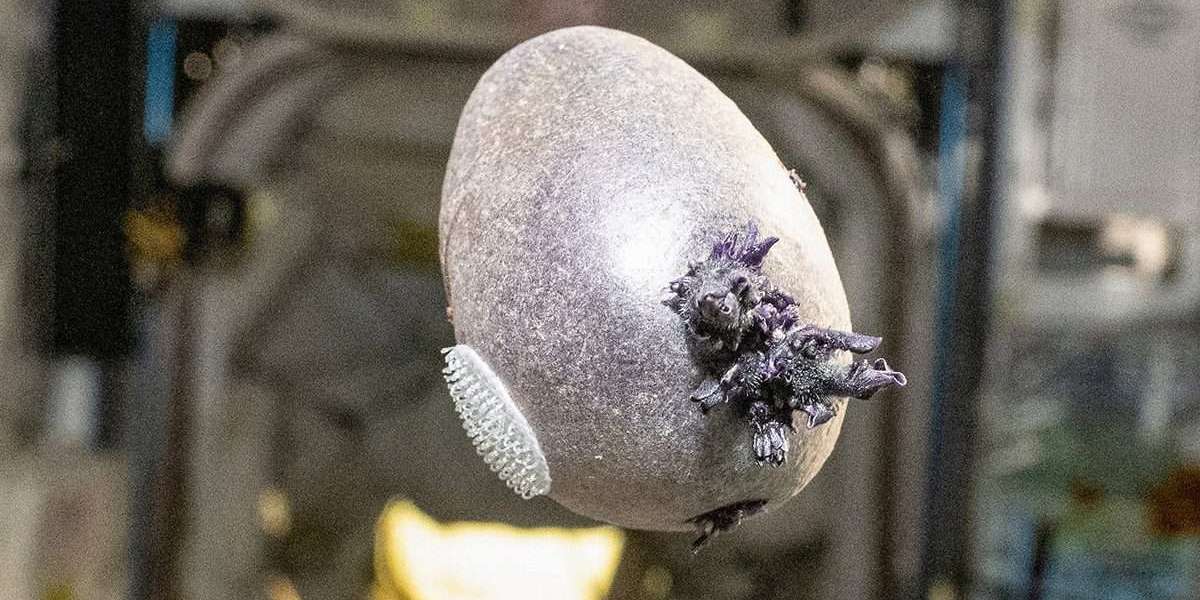
A purple potato on the International Space Station, photographed by NASA astronaut Don Pettit. Credit: NASA
image source: euronews.com - Copyright: NASA
The Viral “Alien” Object That Wasn’t
In March 2026, NASA astronaut Don Pettit shared a striking image from space that quickly captured attention worldwide.
The object appeared to be a purple, egg-shaped form with tentacle-like structures, floating inside the ISS.
Social media users speculated wildly, with some comparing it to alien life or scenes from science fiction films.
However, the truth was far more grounded in science: the mysterious object was actually a potato grown in space.
Pettit humorously named it “Spudnik-1,” a nod to Sputnik-1, the first artificial satellite launched in 1957.
advertisement
Space Gardening on the ISS
The potato was part of Pettit’s personal space gardening experiment conducted during Expedition 72 (September 2024 – April 2025).
He grew the potato in a small, improvised terrarium equipped with a grow light and even used Velcro to keep it anchored in microgravity.
This experiment reflects a broader effort by NASA, where astronauts cultivate plants not only to supplement their diets but also to study how crops grow in space conditions.
Over the years, astronauts have successfully grown a variety of plants, including:
Lettuce
Chinese cabbage
Mizuna mustard
Red Russian kale
Zinnia flowers
These experiments help scientists understand plant biology in microgravity and improve techniques for future missions.
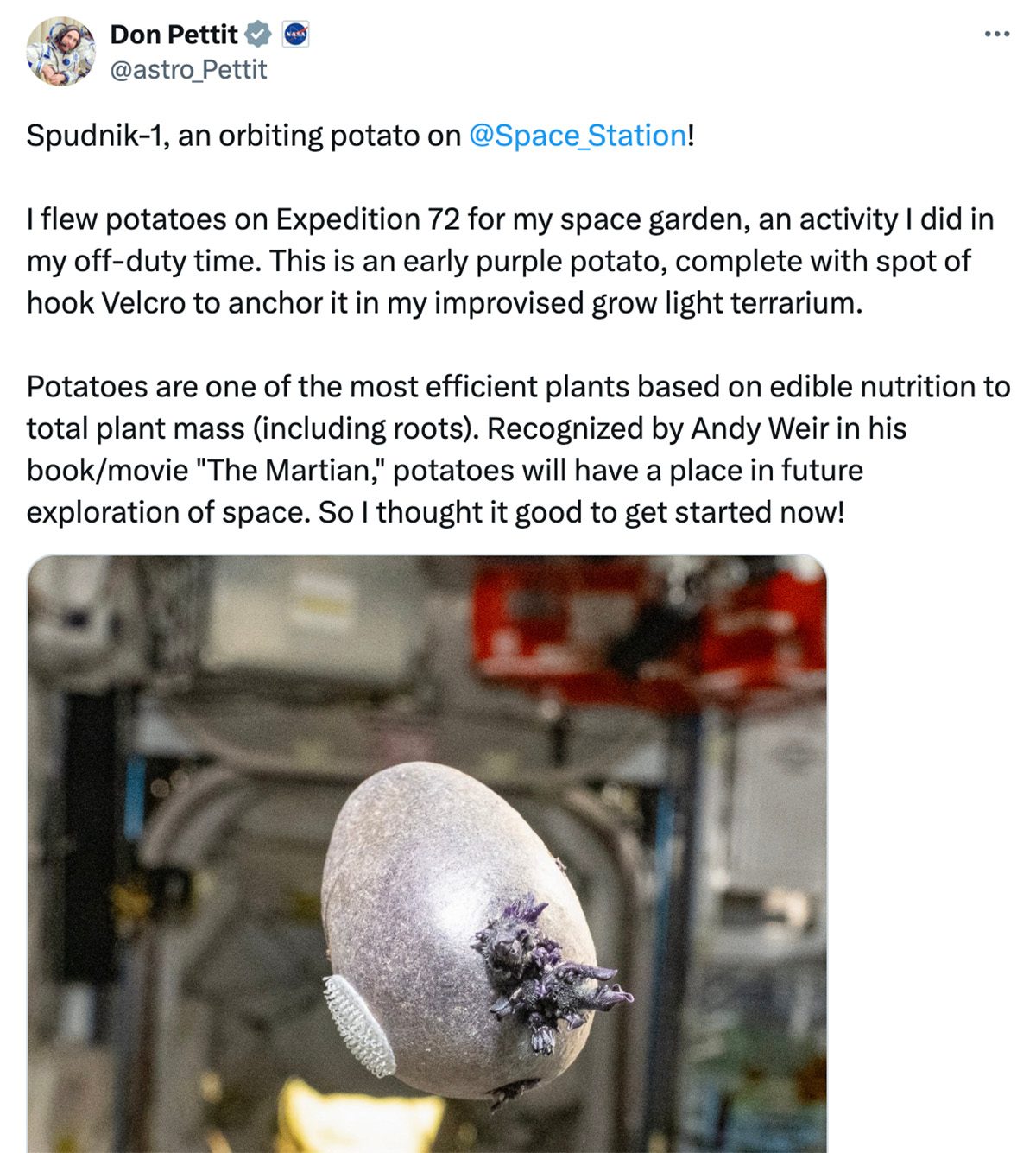
Petit shared this image of the purple potato on X channel on 20 March 2026.
Why Potatoes Matter in Space Exploration
Potatoes are considered one of the most efficient crops for space missions.
They provide a high nutritional yield relative to their total plant mass, making them ideal for environments where resources are limited.
Astronaut Pettit noted that his inspiration came from Andy Weir’s famous novel The Martian, where an astronaut survives on Mars by growing potatoes.
This fictional idea is now influencing real-world science.
Interestingly, the purple color of Pettit’s potato is natural and caused by compounds called anthocyanins, not by space conditions.
advertisement
The Growing Importance of Space Agriculture
As space agencies plan for long-duration missions and permanent settlements beyond Earth, growing food in space has become essential.
Organizations actively working on space farming technologies include:
NASA
European Space Agency (ESA)
German Aerospace Centre (DLR)
Japan Aerospace Exploration Agency (JAXA)
Key innovations in this field include:
Hydroponics: growing plants using nutrient-rich water instead of soil
Bioreactors: producing protein from microorganisms
Automated greenhouses: enabling food production in extreme environments
NASA’s Veggie and Advanced Plant Habitat (APH) programs have already demonstrated successful crop growth aboard the ISS.
A Photographer in Space: Don Pettit’s Unique Perspective
Don Pettit is not only an astronaut but also a skilled space photographer.
Across his four missions since 2002, totaling around 590 days in orbit, he has captured breathtaking images of Earth, comets, and auroras.
His recent potato image may have gone viral for its unusual appearance, but it also serves as a reminder of how science and creativity intersect aboard the ISS.
advertisement
Conclusion: From Viral Curiosity to Scientific Progress
What began as a viral mystery about a supposed alien organism turned into a powerful example of scientific innovation aboard the ISS.
The “Spudnik-1” potato represents more than a humorous moment—it symbolizes the future of human survival beyond Earth.
As humanity prepares for missions to Mars and beyond, the ability to grow food in space will be critical.
The experiments conducted today on the International Space Station are laying the foundation for sustainable life in space, turning science fiction into reality.
In the end, even something as simple as a potato can play a vital role in shaping the future of space exploration.
Key Points Summary
A viral ISS image showed a strange object that was actually a potato grown in space
Space agriculture is crucial for long-term missions to Mars and the Moon
NASA and global agencies are developing advanced food-growing technologies
Potatoes are highly efficient crops for space environments
The ISS serves as a testing ground for sustainable life beyond Earth
advertisement
Frequently Asked Questions (FAQ)
1. What was the “alien-like” object on the ISS?
It was a purple potato grown by astronaut Don Pettit as part of a space gardening experiment.
2. Why are astronauts growing food in space?
To support long-duration missions where resupplying food from Earth is not practical.
3. Why was the potato purple?
Its color comes from natural compounds called anthocyanins, not from space conditions.
4. What crops have been grown on the ISS?
Astronauts have grown lettuce, cabbage, mustard greens, kale, peppers, and flowers.
5. How do plants grow in space without soil?
Using technologies like hydroponics, where plants grow in nutrient-rich water instead of soil.
Sources
- Fox Weather – News report on the viral ISS potato image
https://www.foxweather.com/earth-space/nasa-astronaut-shares-abnormal-alien-looking-object-growing-international-space-station - BBC Sky at Night Magazine – Explanation of the purple potato and astronaut Don Pettit’s work
https://www.skyatnightmagazine.com/news/nasa-astronaut-purple-potato-in-space - Euronews – Coverage of the ISS potato and advancements in space farming
https://www.euronews.com/next/2026/03/27/space-creature-or-humble-potato-what-nasa-astronaut-don-pettits-latest-photo-actually-show
Thank you !