
Surging Oil Prices in 2026: How Geopolitics and Market Reactions Are Shaping Global Energy

Key Points:
Oil prices briefly touched $120 per barrel amid the US-Israel-Iran conflict.
The Strait of Hormuz disruption threatens 20% of global oil supply, amplifying market volatility.
US stock markets and strategic reserves play pivotal roles in moderating oil shocks.
advertisement
Introduction

The global oil market in 2026 has entered one of its most volatile periods in decades. Following the US and Israeli military actions in Iran, crude oil prices experienced a historic surge, briefly smashing through $120 per barrel before stabilizing near $90–$95.
Market analysts agree that two key factors determine how oil shocks affect investors: the duration of the price spike and the reaction of central banks, particularly the Federal Reserve. Historical data from oil crises spanning the 1970s to the Ukraine war in 2022 suggest that short-lived shocks can be managed, but prolonged disruptions can reverberate across global markets, raising the risk of recession and inflation.
Why Oil Prices Are Spiking

Several factors are driving this unprecedented surge in oil prices:
Geopolitical Disruptions – The conflict in Iran has severely disrupted oil shipments through the Strait of Hormuz, a critical waterway through which 20% of the world’s oil supply flows. Iran has threatened attacks on tankers, forcing producers to halt shipments. This has led to a near standstill in global oil deliveries, a disruption larger than during the Suez Crisis of 1956-57.
Reduced Spare Capacity – Major oil producers like Saudi Arabia and the UAE have been cut off from global markets, eliminating the traditional “shock absorber” in energy markets. Without spare capacity, any production delay amplifies price volatility.
Strategic Petroleum Reserves (SPR) Constraints – The US SPR, which peaked at over 726 million barrels in 2010, is currently around 413 million barrels. Legislative constraints from the Big Beautiful Bill Act and ongoing mandated withdrawals have limited the Trump administration’s ability to swiftly counter rising prices.
Investor Sentiment and Market Whiplash – The oil market has been “whipsawing,” with crude prices jumping to nearly $120 per barrel and then dropping to $86–$95 within a single day. Stock markets mirrored this volatility, with the Dow, S&P 500, and Nasdaq rebounding after initial losses triggered by geopolitical fears.
Market Reactions: Stocks, Bonds, and Commodities

Historically, U.S. stocks tend to outperform international peers during oil shocks, while safe-haven assets like gold and the U.S. dollar receive a boost.
On March 9–10, 2026, the S&P 500, Dow Jones Industrial Average, and Nasdaq all recovered from earlier losses, reflecting investor optimism after Trump’s comments that the Iran war is “very complete.”
Treasury yields fluctuated but remained high, reflecting concerns about inflation and a risk-off mindset in markets.
Commodities like oil and gasoline have surged, with US gas prices rising 50 cents per gallon in a single week.
Analysts warn, however, that these reactions are highly sensitive to developments in the Middle East. Until shipping resumes freely through the Strait of Hormuz, the market remains at risk for further oil spikes and economic ripple effects across industries like aviation, agriculture, and automotive.
advertisement
How High Could Oil Prices Go?
Forecasts vary:
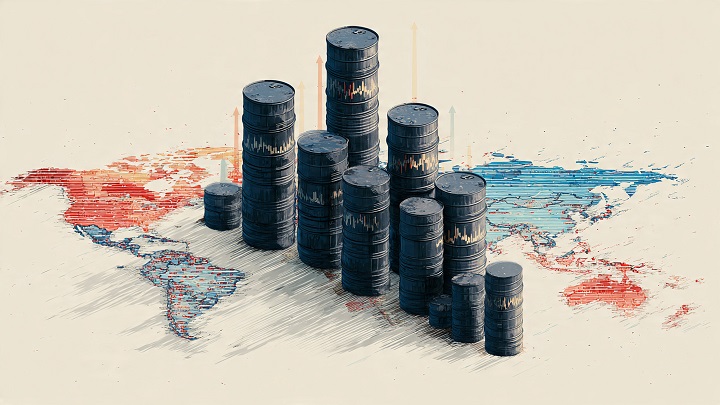
Short-term view: Analysts like Dan Pickering of Pickering Energy Partners suggest contracts for 2027–2028 still trade around $60–$70 per barrel, implying that the $100 spike may be temporary.
Medium-term risk: Homayoun Falakshahi of Kpler warns that prices could reach $150 per barrel if the Strait of Hormuz remains blocked through the end of March.
Strategic intervention: G7 finance ministers have discussed releasing emergency oil reserves to stabilize prices, but no immediate action has been taken.
The longer the disruption continues, the more pressure builds on governments and markets, creating a reinforcing cycle of rising oil prices and global economic anxiety.
Global Implications

Oil supply chain: With global inventories at a five-year low, any further production halts could trigger cascading effects across multiple industries.
Inflation: Energy price spikes increase costs for consumers and businesses, potentially reigniting inflationary pressures.
Stock markets: Volatility in oil impacts broader equities, particularly sectors sensitive to energy costs. Investors are watching central bank moves closely.
advertisement
Conclusion

The 2026 oil crisis illustrates the fragile interplay between geopolitics, energy infrastructure, and global markets. While the short-term volatility is staggering, history shows that markets tend to adapt if disruptions are temporary and policy interventions are timely.
Investors, governments, and consumers alike can draw a crucial lesson: diversification, strategic reserves, and resilient energy policies are essential buffers against unforeseen crises. As nations work to secure shipping lanes, balance reserves, and monitor central bank reactions, the global oil market serves as a vivid reminder that energy is not just a commodity—it is a cornerstone of global stability and economic growth.
Key Points Summary
Iran conflict disrupts 20% of global oil supply via Strait of Hormuz.
Oil briefly touched $120 per barrel; US gas prices up 50 cents per gallon.
Strategic reserves and Fed responses critical to market stabilization.
US stocks rebound after Trump comments, but volatility persists.
G7 and governments explore measures to mitigate further price surges.
advertisement
Frequently Asked Questions (FAQ)
Q1: Why are oil prices rising so sharply in 2026?
A1: The US-Israel conflict with Iran disrupted the Strait of Hormuz, halting 20% of global oil supply, combined with limited spare production capacity and depleted strategic reserves.
Q2: How does this affect US gas prices?
A2: Gasoline prices in the US have risen about 50 cents per gallon in a week, reflecting higher crude prices and supply constraints.
Q3: Could oil reach $150 per barrel?
A3: Analysts warn that if the Strait of Hormuz remains blocked and supply disruptions persist, prices could spike to $150 per barrel in the short term.
Q4: How are US stocks reacting?
A4: Stocks have been volatile, with the Dow, S&P 500, and Nasdaq rebounding after Trump’s statements on Iran, but markets remain sensitive to further geopolitical developments.
Q5: What can governments do to stabilize prices?
A5: Potential measures include releasing strategic reserves, securing shipping lanes, and coordinating internationally through forums like the G7.
Sources
MarketWatch – Analysis of 50 years of oil-price shocks and market impact
https://www.marketwatch.com/story/50-years-of-oil-price-shocks-have-taught-us-that-only-2-things-matter-to-markets-right-now-2b8361cd?mod=home_leadCNN – Stocks rebound and oil volatility after hitting $100 per barrel
https://edition.cnn.com/2026/03/09/investing/global-stocksCNN – Historic oil disruption due to Iran war
https://edition.cnn.com/2026/03/09/economy/oil-price-shockYahoo Finance – How Big Beautiful Bill Act limited SPR options
https://finance.yahoo.com/news/how-last-years-big-beautiful-bill-act-talks-limited-trumps-options-to-fight-oil-price-increases-today-185600738.htmlYahoo Finance – Aramco warns of catastrophic oil consequences
https://finance.yahoo.com/news/gulf-producers-slash-oil-output-103000547.htmlInvestor’s Business Daily – Stock market reaction to Trump’s Iran comments
https://www.investors.com/market-trend/stock-market-today/dow-jones-sp500-nasdaq-trump-iran-oil-prices-tsmc/
Thank you !