
Parrots and Complex Communication: How Yellow-Naped Amazon Parrots Use Language-Like Duets in the Wild
Diving into Amazon Parrot Duets - Dr Dahlin Talks Animals
3 Key Insights
• Wild parrots may follow language-like communication rules similar to human syntax.
• Yellow-naped Amazon parrots perform complex “warble duets” with dozens of call types.
• These vocal exchanges often occur during territorial disputes and social interactions.
advertisement
Parrots are widely known for their remarkable ability to mimic human speech, but their communication abilities go far beyond imitation.
Recent research on the Yellow‑naped Amazon Parrot suggests that wild parrots may use complex, structured vocal signals resembling elements of human language.
Scientists studying these birds in Costa Rica and across Central America have discovered that their vocal interactions—especially the so-called warble duets—follow patterns similar to syntax in human speech.
These discoveries provide new insights into animal cognition, communication, and the social lives of parrots in the wild.
The Remarkable Vocal Intelligence of Parrots
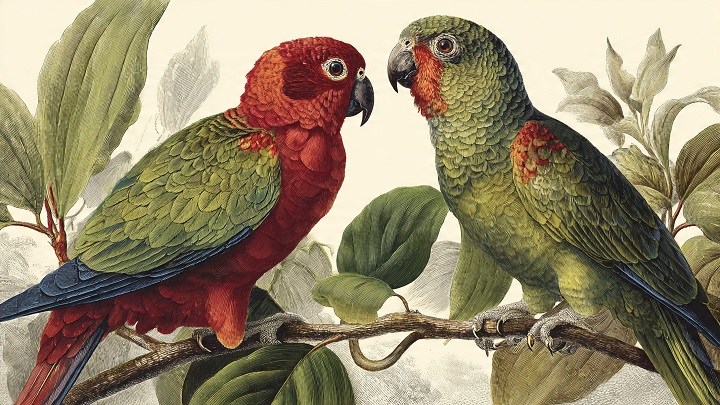
Parrots are among the most vocal and socially complex birds on Earth.
They communicate constantly—not only with members of their own species but sometimes with other birds and even humans. Some research has shown that certain parrots can understand the meaning of words and use them in the correct context, highlighting their impressive cognitive abilities.
Because parrots learn vocalizations throughout their lives and live in socially structured groups, scientists consider them an excellent model for studying advanced communication systems in animals.
One researcher particularly interested in this phenomenon is Christine Dahlin, a biologist at the University of Pittsburgh.
Her research focuses on how wild Yellow-naped Amazon parrots communicate in natural environments.
Where Yellow-Naped Amazon Parrots Live

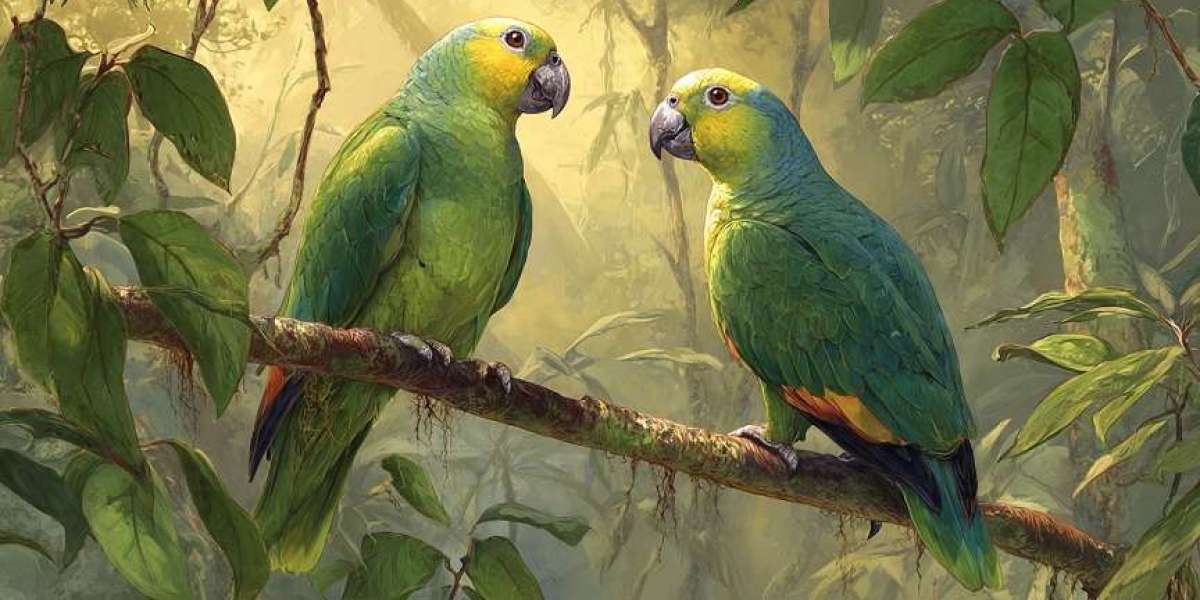
Yellow-naped Amazon parrots inhabit dry forests and mangroves stretching from southern Mexico to southern Costa Rica.
Despite once being relatively widespread, the species has experienced a dramatic population decline. Studies indicate that the population has dropped by more than 90 percent over three generations, leading conservation groups such as the International Union for Conservation of Nature to classify them as critically endangered.
One major reason for the decline is illegal capture for the pet trade.
Research has found that many nests fail due to poaching, highlighting the urgent need for conservation efforts to protect these birds in their natural habitat.
advertisement
Warble Duets: The Most Complex Parrot Conversations

One of the most fascinating behaviors observed in Yellow-naped Amazon parrots is the warble duet—a rapid vocal exchange performed by mated pairs.
These duets typically occur on nesting territories and often arise when neighboring parrots approach.
As tensions increase, the calls become faster, louder, and more layered, sometimes escalating just before a physical confrontation between rival pairs.
To human listeners, the sounds may appear chaotic.
However, researchers discovered that these vocalizations are far from random.
Language-Like Structure in Parrot Calls
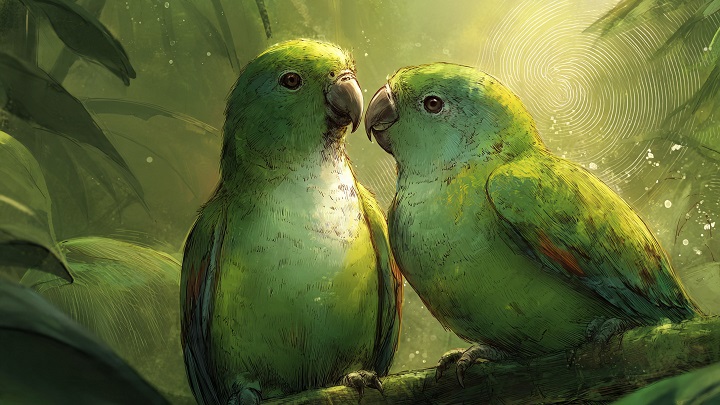
According to several studies, warble duets contain dozens of distinct call types that form a surprisingly large “vocabulary.”
Some research identified 36 different call types, while other analyses recorded more than 450 individual calls within dozens of duets lasting only five to ten seconds.
Scientists also detected patterns similar to syntax—rules that determine how sounds are ordered and combined.
Researchers identified more than 20 syntactic rules governing how specific calls can follow or pair with others.
Another linguistic feature observed in the parrots’ communication is collocation, where certain sounds frequently appear together—similar to word pairs in human language such as “green grass” or “eat food.”
These findings suggest that parrots may organize their vocal signals in structured ways rather than producing random sounds.
advertisement
How Scientists Studied Parrot Communication

To understand these complex vocal exchanges, scientists conducted over three years of field research, recording parrots near nesting trees with directional microphones and video cameras.
After gathering hundreds of recordings, the research team used a text-analysis program called Voyant Tools to analyze the calls.
The software—normally used for analyzing literature—treated each vocal exchange as if it were a sentence.
By examining the arrangement of sounds like words in a text, researchers uncovered patterns that revealed the presence of structured communication.
The analysis showed that the parrots were making rapid decisions during duets, coordinating with their partner while following consistent rules.
Communication That Reflects Emotion and Social Context
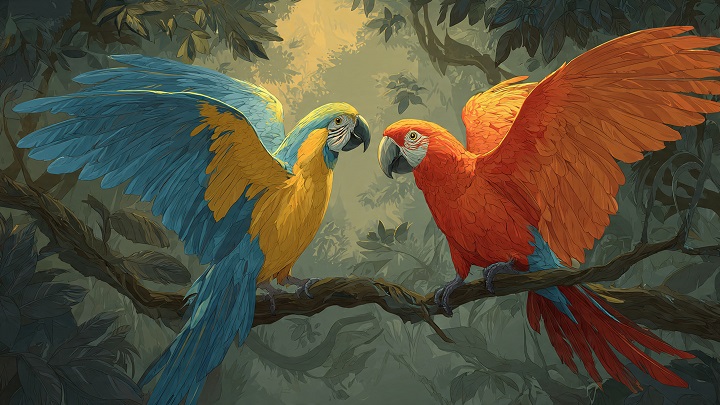
Warble duets appear to serve important social functions.
They often occur during territorial disputes, possibly helping rival pairs assess each other before escalating into physical fights.
Some scientists believe the diversity and complexity of the calls may also demonstrate vocal skill or social status.
Interestingly, despite the structured patterns, each duet contains very little repetition, suggesting the birds create varied vocal sequences in real time rather than repeating memorized patterns.
This balance between structure and flexibility is one of the key reasons researchers find parrot communication so fascinating.
advertisement
What These Discoveries Mean for Animal Intelligence

The findings do not imply that parrots speak in full sentences like humans.
However, they strongly suggest that their communication follows organized rules similar to those seen in human language systems.
Understanding these patterns could transform how scientists interpret animal communication and cognition.
It also reinforces the idea that parrots possess highly advanced mental abilities—far more complex than previously believed.
Conclusion

Research into the vocal communication of Yellow-naped Amazon parrots reveals a remarkable glimpse into the complexity of animal language systems.
What once sounded like chaotic noise in forest canopies may actually be a structured exchange of information governed by rules similar to human syntax.
These discoveries not only deepen our understanding of parrot intelligence but also highlight the importance of protecting these birds in the wild.
As scientists continue decoding their vocal signals, parrots may help answer one of the most fascinating questions in biology: how language-like communication evolved in the animal kingdom.
Protecting these birds ensures that future researchers—and future generations—can continue uncovering the secrets hidden within their extraordinary conversations.
Key Points
Wild parrots use complex vocalizations that resemble elements of human language.
Yellow-naped Amazon parrots perform rapid “warble duets” during territorial interactions.
Scientists identified dozens of call types and more than 20 syntactic rules in these vocal exchanges.
The parrots’ communication combines structure with flexibility, showing advanced cognitive abilities.
Understanding their vocal behavior highlights the importance of protecting this critically endangered species.
advertisement
Frequently Asked Questions (FAQ)
1. What makes parrots good communicators?
Parrots have advanced cognitive abilities, strong social bonds, and the capacity for lifelong vocal learning, which allows them to develop complex communication systems.
2. What are warble duets in parrots?
Warble duets are rapid, coordinated vocal exchanges between pairs of Yellow-naped Amazon parrots, often used during territorial disputes.
3. Do parrots actually speak like humans?
No. While parrots can mimic human speech and follow structured communication rules, there is no evidence that they use full human-like language.
4. How many call types do Yellow-naped Amazon parrots use?
Research has identified at least 36 distinct call types, though some studies suggest there may be even more.
5. Why are Yellow-naped Amazon parrots endangered?
The species has declined dramatically due to habitat loss and illegal capture for the pet trade.
Sources
- Forbes – Article discussing complex vocal communication and research on Yellow-naped Amazon parrots
https://www.forbes.com/sites/grrlscientist/2026/02/23/complex-communication-in-wild-yellownaped-amazon-parrots/ - Popular Science – Overview of research showing parrots use language-like communication in the wild
https://www.popsci.com/environment/parrots-complex-language-conversations/ - Discover Magazine – Explanation of syntax-like patterns and structured vocal rules in parrot duets
https://www.discovermagazine.com/wild-parrots-may-follow-language-like-rules-including-syntax-48694
Thank you !