
Stock Market, Economy & AI Investing in 2026: Jobs Data, Inflation Risks, and the Rise of Nvidia

Key Takeaways Before You Read
• The U.S. economy entered 2026 with mixed signals: job losses, rising gas prices, and stock market volatility.
• The Iran conflict is increasing uncertainty around inflation, oil prices, and interest rate decisions.
• Artificial intelligence stocks—especially Nvidia—continue attracting major investor interest despite broader economic uncertainty.
advertisement
Introduction: Understanding the 2026 Economy, Stock Market Trends, and AI Investment Boom

The global economic landscape in 2026 is shaped by a complex mix of geopolitical events, monetary policy decisions, and technological transformation.
While political leaders have highlighted strong economic momentum, recent data shows a more complicated reality. Job reports suggest weakening employment trends, gasoline prices have jumped due to geopolitical tensions, and stock markets are experiencing volatility.
At the same time, the technology sector—especially artificial intelligence (AI)—continues to attract massive investment. Companies like Nvidia are becoming central players in the modern economy, demonstrating how innovation can drive stock market performance even during uncertain economic conditions.
Understanding these developments is essential for investors, analysts, and everyday readers who want to grasp how economic forces, geopolitics, and technology are shaping financial markets in 2026.
Economic Growth Expectations vs. Early 2026 Reality

At the start of 2026, expectations for economic growth were high. U.S. President Donald Trump predicted a “roaring economy,” suggesting the year would bring strong growth and widespread job creation.
However, early economic data tells a more mixed story.
The February employment report revealed that the U.S. economy lost 92,000 jobs, while previous months were revised downward. December’s job numbers even shifted from growth to a loss of 17,000 jobs.
Analysts note that without job gains in the healthcare sector, the broader economy would have lost approximately 202,000 jobs since early 2025.
Unemployment trends also highlight concerns. The unemployment rate for U.S.-born workers increased from 4.4% to 4.7% over the past year, indicating that job growth may not be keeping pace with expectations.
Despite these figures, the administration points to continued hiring in construction outside the housing sector as a possible indicator of future job growth.
advertisement
Energy Prices and the Inflation Challenge
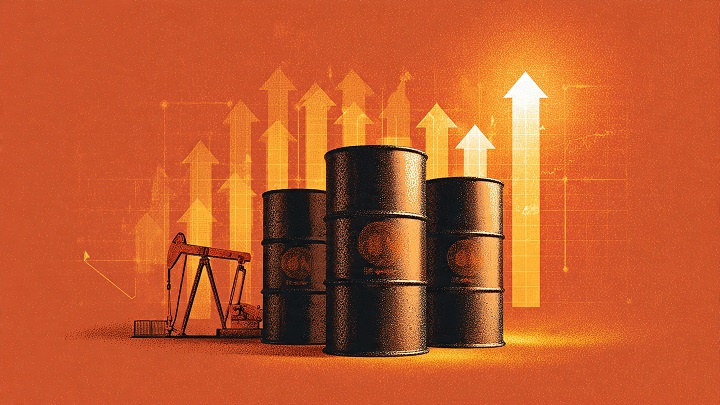
Energy costs remain one of the most important drivers of inflation and consumer spending.
Recent geopolitical developments—particularly the conflict involving Iran—have dramatically affected oil markets.
Gasoline prices in the United States increased 19% in a single month, reaching a national average of $3.45 per gallon.
Investment bank Goldman Sachs warned that if elevated oil prices persist, inflation could rise from 2.4% to around 3% by the end of the year.
Government officials believe the price spike may only be temporary, arguing that energy supply routes could stabilize soon if the geopolitical situation improves.
However, higher energy prices typically ripple through the entire economy, affecting transportation, manufacturing costs, and consumer prices.
The Federal Reserve’s Perspective: Inflation and Interest Rates

Federal Reserve officials are closely monitoring the conflict in Iran because of its potential impact on inflation and economic stability.
According to New York Federal Reserve President John Williams, geopolitical tensions can influence near-term inflation, particularly through oil prices. However, he also noted that the U.S. economy today is less dependent on oil than it was decades ago.
Boston Federal Reserve President Susan Collins believes inflation still faces risks but expects price pressures to gradually ease later in the year as the effects of tariffs decline.
Minneapolis Federal Reserve President Neel Kashkari added that the key question is how long energy prices remain elevated. Persistent increases could affect inflation forecasts and delay interest rate cuts.
Some policymakers are less concerned. Federal Reserve Governor Stephen Miran said energy price spikes typically create temporary “headline inflation” but may not affect long-term inflation trends.
Similarly, Governor Chris Waller compared the current oil price surge to past shocks and suggested it may not produce the sustained inflation seen during the 1970s oil crisis.
For now, investors widely expect the Federal Reserve to hold interest rates steady in the near term as policymakers wait for clearer economic data.
advertisement
Stock Market Volatility and Investor Sentiment

Stock markets are another important indicator of economic confidence.
The Dow Jones Industrial Average previously reached a historic 50,000-point milestone, but recent market performance has been less impressive. Over the past month, the index declined by about 5%, reflecting investor caution.
Stock market sentiment often varies depending on whether individuals own investments. Surveys show that people with stock holdings generally feel more optimistic about the economy, while those without investments tend to be more pessimistic.
Despite short-term fluctuations, analysts say market performance could improve if geopolitical tensions ease and corporate earnings remain strong.
Artificial Intelligence Stocks: The Growth Engine of Modern Markets

While broader economic indicators remain uncertain, one sector continues to dominate investor attention: artificial intelligence.
The AI revolution is reshaping industries from healthcare and finance to manufacturing and software development.
At the center of this transformation is Nvidia, the world’s largest producer of discrete graphics processing units (GPUs).
Originally known for gaming hardware, Nvidia now generates most of its revenue from data center chips used for AI training and machine learning applications.
These GPUs are ideal for processing complex parallel tasks, making them essential for training advanced AI models.
advertisement
Why Nvidia Continues to Attract Investors

Nvidia has achieved extraordinary growth over the past decade.
Its stock has surged by nearly 22,000%, pushing the company’s market value to approximately $4.3 trillion and making it the most valuable company in the world.
The company maintains a dominant position in the GPU market, controlling more than 90% of discrete GPU sales, while competitors like AMD hold only small market shares.
Nvidia also benefits from its proprietary software ecosystem, particularly its CUDA platform, which allows developers to build AI applications optimized for Nvidia hardware.
This ecosystem creates strong customer loyalty and makes it difficult for competitors to replace Nvidia’s technology.
Additionally, the company invests in emerging AI leaders and has formed partnerships with governments and businesses worldwide, positioning itself at the heart of the AI boom.
Long-Term Growth Expectations for AI Stocks

Financial analysts remain optimistic about Nvidia’s future growth.
Between fiscal 2026 and fiscal 2029, analysts project that the company’s revenue could grow at an annual rate of about 36%, while earnings per share may increase at roughly 37% annually.
Nvidia is also returning significant capital to investors. In fiscal 2026 alone, it repurchased $40.1 billion worth of shares, with tens of billions still authorized for future buybacks.
While Nvidia faces competition from companies like AMD and Broadcom and must navigate export restrictions affecting China, analysts believe the company will remain a central player in the global AI ecosystem.
Conclusion: A Complex Economy with Powerful Innovation Driving the Future

The economic outlook for 2026 illustrates how modern markets are influenced by multiple interconnected forces.
Short-term challenges—such as job market fluctuations, geopolitical conflicts, and rising energy prices—are creating uncertainty about inflation and economic growth.
At the same time, technological innovation continues to reshape the global economy. The rapid expansion of artificial intelligence and companies like Nvidia demonstrates how new technologies can drive investment, productivity, and long-term economic transformation.
For investors and observers alike, the key lesson is balance: economic cycles may bring volatility, but innovation often creates new opportunities.
Understanding both the risks and the breakthroughs shaping markets today can help individuals make better decisions about the future of finance, technology, and the global economy.
Key Points
Early 2026 economic data shows mixed signals, including job losses and rising gasoline prices.
The Iran conflict is increasing uncertainty about inflation and Federal Reserve policy.
Artificial intelligence stocks—especially Nvidia—remain one of the strongest growth opportunities in global markets.
Energy prices continue to influence inflation and consumer spending.
The AI sector is becoming a major driver of stock market growth and investor interest.
advertisement
Frequently Asked Questions (FAQ)
1. Why is the stock market volatile in 2026?
Several factors contribute to volatility, including geopolitical conflicts, changes in energy prices, economic data releases, and uncertainty around Federal Reserve interest rate policies.
2. How does the Iran conflict affect inflation?
The conflict has pushed oil prices higher, which can increase gasoline and transportation costs. If sustained, these increases may raise overall inflation levels.
3. Why are AI stocks attracting so much investment?
Artificial intelligence is transforming industries and creating new economic opportunities. Companies producing AI infrastructure—such as chips and data centers—are expected to see strong long-term demand.
4. Why is Nvidia considered a major AI investment?
Nvidia dominates the GPU market used for AI training and machine learning, controls a large developer ecosystem, and continues launching new chip architectures that support advanced AI applications.
5. Will interest rates fall in 2026?
Federal Reserve officials are cautious. Rate cuts may depend on whether inflation declines and how long energy prices remain elevated.
Sources
- U.S. News / Associated Press – Economic data, jobs report, stock market performance and policy context
https://www.usnews.com/news/business/articles/2026-03-08/trumps-roaring-economy-meets-a-rough-start-to-2026-what-the-latest-numbers-show - Yahoo Finance – Federal Reserve officials’ views on inflation risks from the Iran conflict
https://finance.yahoo.com/news/fed-officials-are-watching-iran-war-for-inflation-impact-130030587.html - Yahoo Finance – Analysis of Nvidia as a leading AI stock and its growth prospects
https://finance.yahoo.com/news/artificial-intelligence-ai-stock-smart-155844723.html
Thank you !