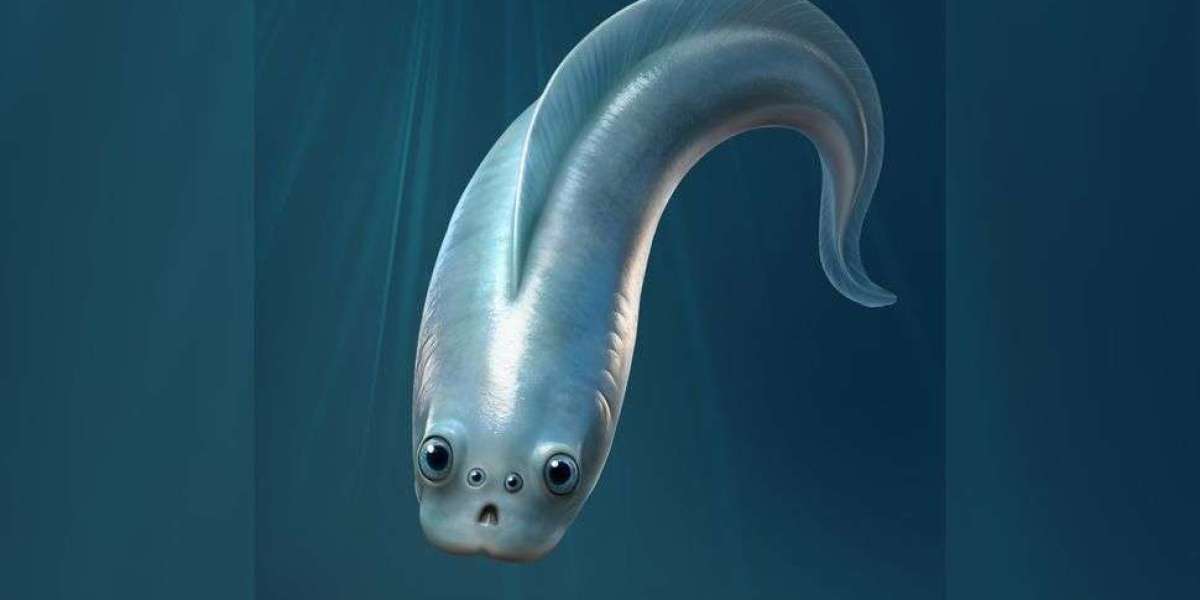

article image source: livescience.com (Link)
Half-Billion-Year-Old Fossils Reveal Our Four-Eyed, Noodle-Like Ancestor from the Cambrian Ocean
After 11 Years, Scientists Proved The Earliest Vertebrates Had 4 Eyes
• 518-million-year-old fossils show early vertebrates had four fully functional eyes
• The extra eyes may have helped our ancestors survive deadly Cambrian predators
• The human pineal gland may have evolved from an ancient image-forming eye
advertisement
Half a billion years ago, in the dangerous seas of the Cambrian period, our earliest known vertebrate ancestors were not only small and soft-bodied — they were four-eyed survivors.
New research based on 518-million-year-old fossils from southern China suggests that some of the earliest jawless fish possessed two pairs of fully functional eyes, offering a surprising glimpse into the origins of vertebrate vision and even the evolution of the human sleep gland.
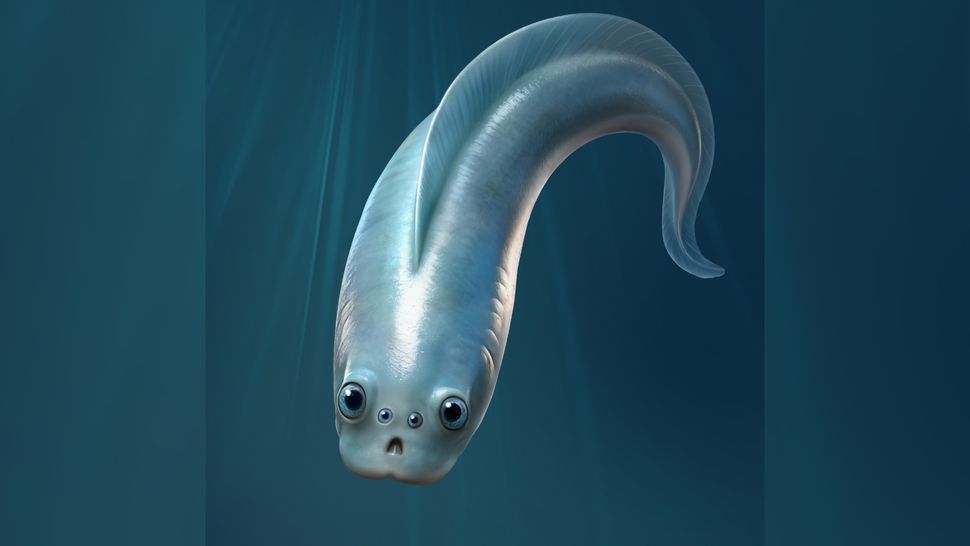
Researchers have discovered myllokunmingids with four eyes on their heads.
(Image credit: Xiangtong Lei & Sihang Zhang)
- source: livescience.com
The fossils, discovered in the famous Chengjiang fossil beds, belong to primitive vertebrates known as myllokunmingids. These ancient creatures lived during the Cambrian period, a time when complex life rapidly diversified and large marine predators began to dominate the oceans.
According to the study published in Nature, researchers identified four eyes in two species: Haikouichthys ercaicunensis and an unnamed myllokunmingid species. Each animal had two larger lateral eyes and two smaller eyes positioned centrally on the head. Remarkably, the smaller pair was not rudimentary — chemical analysis and high-powered microscopy revealed light-absorbing pigments and lens structures capable of forming images.
“This changes how we think about the early evolution of vertebrates,” said study co-author Jakob Vinther of the University of Bristol. He noted that these visually sophisticated animals were navigating an increasingly perilous marine ecosystem. In a world where predators were becoming larger and faster, having four eyes may have expanded their field of view, giving them a better chance of survival.
advertisement
Lead author Peiyun Cong of Yunnan University described the discovery as unexpected and thrilling. Initially examining the obvious large eyes, the team was astonished to detect two smaller, fully developed eyes nestled between them. Because soft tissues such as eyes rarely fossilize, finding any preserved visual structures is exceptional — discovering four is extraordinary.
The evolutionary implications are profound. Modern vertebrates — including humans — typically have two eyes, but some reptiles, amphibians, and fish possess a light-sensitive “third eye,” known as the parietal eye. This structure is associated with the pineal gland, a small organ in the human brain that produces melatonin and regulates sleep cycles.
The researchers propose that the smaller eye pair in these Cambrian vertebrates represents the ancestral origin of the pineal organ. According to Cong, what began as an image-forming eye gradually shrank and lost its visual power over millions of years, eventually becoming the pineal gland that helps humans fall asleep in the dark. In other words, the biological mechanism that once helped our ancient ancestors evade predators may now help us rest at night.
The original research article is available via Nature.com website: https://doi.org/10.1038/s41586-025-09966-0
Conclusion
These half-billion-year-old fossils reshape our understanding of vertebrate evolution and the origins of complex vision. Far from being primitive, our earliest spine-bearing ancestors were visually advanced organisms adapted to survive a rapidly changing and dangerous world.
The discovery that our pineal gland — a structure tied to sleep and circadian rhythms — may have evolved from a functional eye is a powerful reminder of how evolution repurposes existing features for new roles. From scanning ancient oceans for predators to regulating human sleep cycles, the journey of our biological structures tells a story of resilience, adaptation, and transformation.
What once helped a tiny, noodle-like creature survive in the Cambrian seas now quietly governs the rhythms of our daily lives — an extraordinary evolutionary legacy written in stone.
Key Points Summary
518-million-year-old fossils reveal early vertebrates had four functional eyes.
The extra eyes may have expanded their field of view to escape predators.
The smaller eye pair may have evolved into the pineal gland in modern vertebrates.
The discovery reshapes understanding of early vertebrate evolution.
advertisement
Frequently Asked Questions (FAQ)
Did early vertebrates really have four eyes?
Yes. Fossils from China show that some Cambrian jawless fish had two large lateral eyes and two smaller central eyes capable of forming images.
What species were discovered with four eyes?
Researchers identified four eyes in Haikouichthys ercaicunensis and an unnamed myllokunmingid species.
Why would these animals need four eyes?
During the Cambrian period, marine predators were emerging. A wider field of vision may have helped these small vertebrates detect threats more effectively.
How is this related to humans?
Scientists propose that the smaller eye pair may be the evolutionary precursor to the pineal gland, which regulates sleep by producing melatonin.
Where were the fossils found?
They were discovered in the Chengjiang fossil beds in southern China, one of the most important early Cambrian fossil sites in the world.
Sources
- Live Science – News report on four-eyed Cambrian vertebrate fossils
https://www.livescience.com/animals/extinct-species/our-adorable-noodle-like-ancestor-had-4-eyes-half-a-billion-year-old-fossils-reveal - Nature – Original peer-reviewed study
https://doi.org/10.1038/s41586-025-09966-0
Thank you !