
AI Stock Rally, Nvidia Earnings, Bond Yields and Energy Deals Dominate Stock Market Today
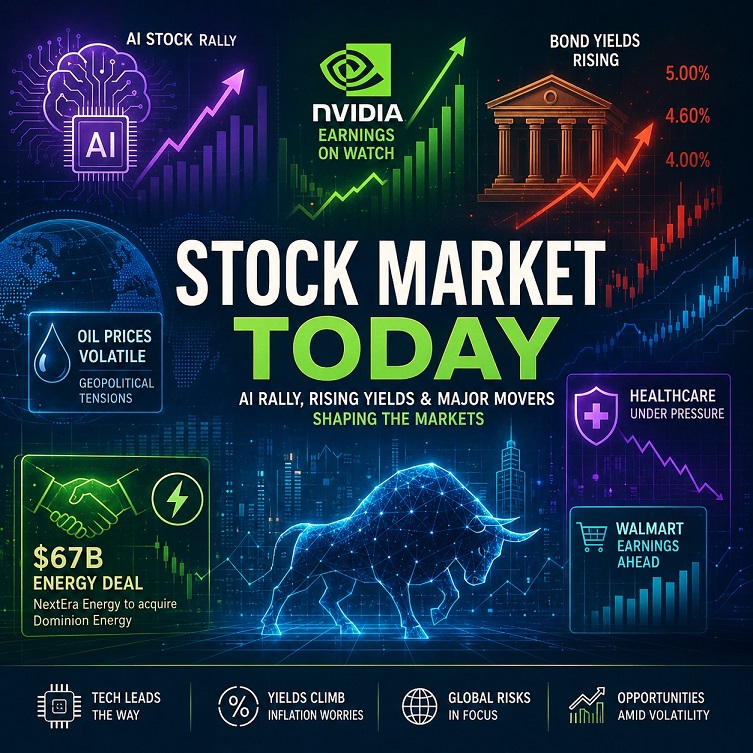
Key Highlights
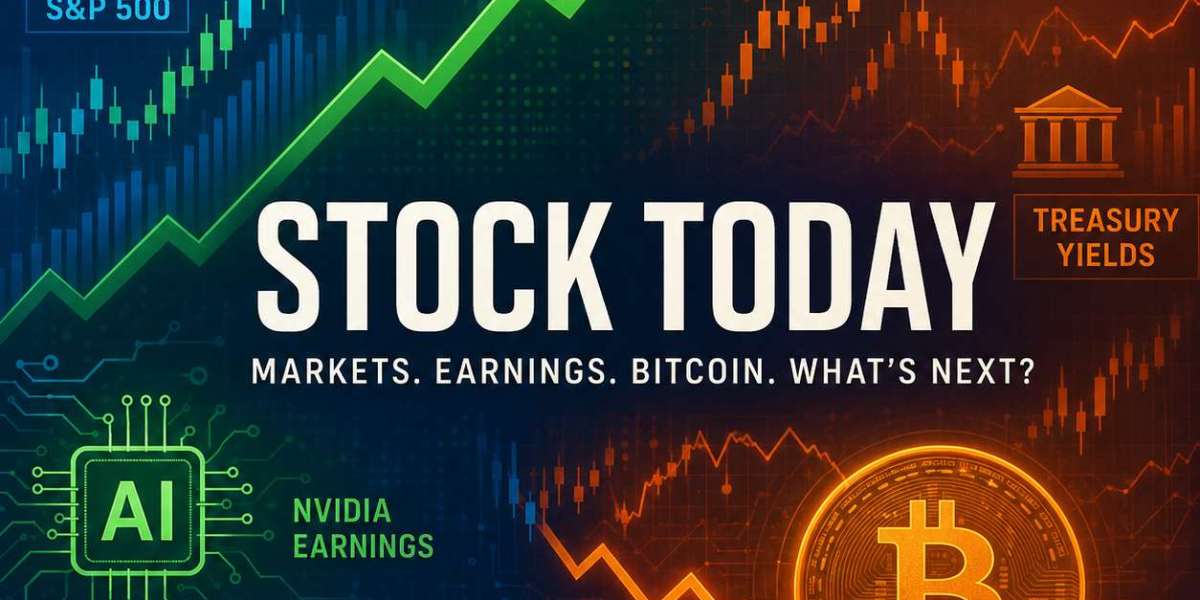
AI-related stocks continue to lead Wall Street as investors focus on Nvidia earnings and booming semiconductor demand.
Bond yields remain elevated due to inflation concerns, rising oil prices, and growing U.S. debt issuance expectations.
Major market movers include NextEra Energy’s $67 billion Dominion acquisition, Baidu’s AI-driven growth, and healthcare weakness after Regeneron’s failed drug trial.
AI stocks are showing dot-com era momentum, but analysts say today’s fundamentals may be stronger.
Nvidia earnings could impact the entire artificial intelligence ecosystem this week.
Rising Treasury yields and geopolitical tensions are creating new risks for investors.
advertisement
The stock market today reflects a powerful mix of optimism, caution, and sector rotation as investors navigate artificial intelligence enthusiasm, rising bond yields, geopolitical uncertainty, and major corporate developments. Technology and AI-related stocks continue to dominate investor attention, while healthcare and some semiconductor names face pressure amid mixed earnings and economic concerns.
Artificial intelligence remains the strongest theme driving Wall Street in 2026, with semiconductor and infrastructure companies experiencing extraordinary gains. According to Morningstar, dozens of U.S. stocks tied to the AI buildout have posted gains exceeding 100% since the end of 2024, while several have surged more than 300%. Among the top-performing stocks this year, most are directly connected to artificial intelligence infrastructure, data centers, or semiconductor production. The excitement intensified further after AI semiconductor company Cerebras debuted publicly and saw its stock soar dramatically during its first trading session.
Many analysts are now comparing the current AI rally to the dot-com bubble of 1999, but there are important differences. Morningstar strategist David Sekera explained that today’s AI boom shares similarities with the internet expansion era because both represent transformational technologies capable of reshaping the economy. He also noted that market leadership is concentrated among companies supplying critical hardware and infrastructure for data centers and AI systems, while valuations in some cases appear historically elevated. However, unlike the late-1990s bubble, Morningstar analysts believe several leading AI firms still have valuations supported by long-term earnings growth expectations. Nvidia, in particular, continues to be viewed by some analysts as undervalued despite its massive rally.
Nvidia remains the center of market attention ahead of its earnings report this week. Investors expect another potentially explosive quarter from the AI chip giant, with analysts forecasting revenue growth above 70% and earnings growth exceeding 80%. Markets are closely watching for updates regarding AI server demand, semiconductor supply constraints, and the rollout timeline for Nvidia’s next-generation Vera Rubin chip architecture. Analysts also continue to monitor whether Nvidia can maintain its streak of surpassing Wall Street expectations while raising future guidance. The company’s results are considered critical not only for its own stock performance but also for the broader AI ecosystem, including suppliers, cloud companies, and infrastructure providers.
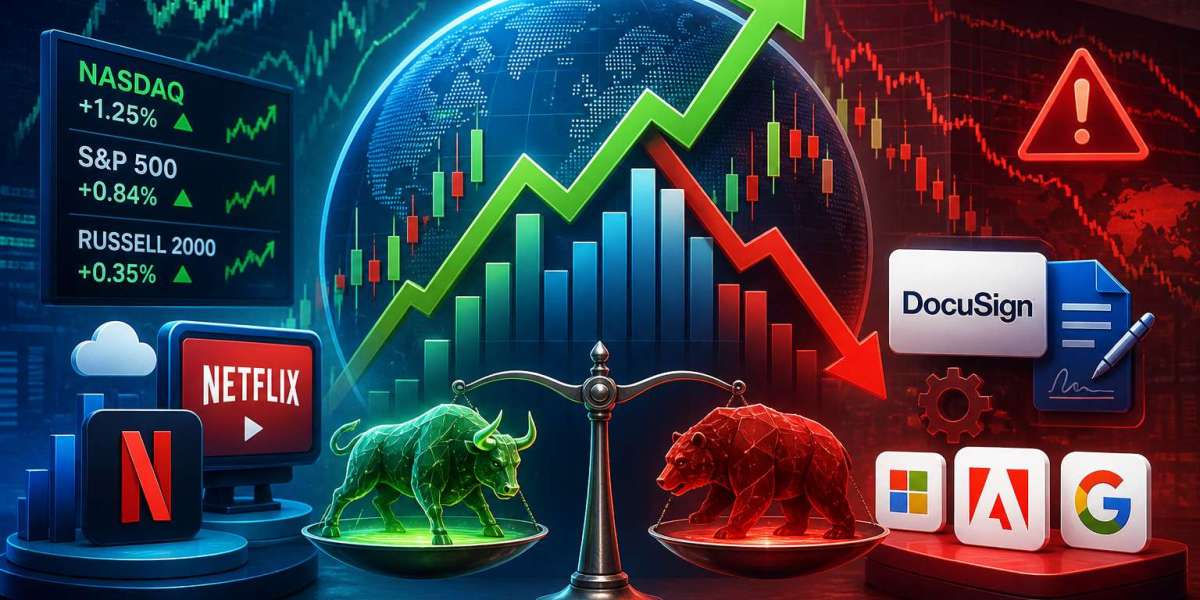
The broader technology sector showed mixed performance during trading. Google parent Alphabet posted strong gains as investors continued rewarding major internet and advertising platforms, while Amazon also advanced on confidence surrounding consumer spending and retail resilience. However, some semiconductor stocks such as Micron and AMD experienced declines, reflecting profit-taking and volatility following massive gains earlier in the year. Oracle also faced weakness despite broader enthusiasm in the software and infrastructure segment. Analysts suggest the contrasting performance within technology highlights the importance of diversification even during strong AI-driven rallies.
Bond markets are simultaneously sending a warning signal to investors. Treasury yields climbed to some of their highest levels in roughly a year as bond prices sold off sharply. The yield on the 30-year Treasury bond moved above 5%, while the benchmark 10-year Treasury yield approached 4.6%. Rising inflation fears linked to higher energy prices and ongoing geopolitical tensions are contributing to the bond market selloff. Inflation concerns intensified after recent economic data showed price pressures expanding beyond fuel costs.
Federal debt concerns are also contributing to higher yields. Strategists point out that the U.S. government is expected to issue enormous amounts of Treasury debt in the coming years as budget deficits continue expanding. Projections indicate the federal deficit could reach approximately $2 trillion in 2026, pushing total national debt toward $39 trillion. Analysts explain that larger debt issuance increases supply in the bond market, forcing investors to demand higher yields as compensation for holding long-term government debt. Despite these worries, Treasury Inflation-Protected Securities suggest investors still believe the current inflation spike may eventually moderate over time rather than become permanently entrenched.
Oil markets and geopolitical tensions involving Iran also influenced trading activity. Oil prices initially surged above $108 per barrel overnight before retreating after reports suggested the United States may consider a temporary waiver on certain oil sanctions related to Iran. Although the U.S. government did not officially confirm the reports, the news helped cool energy prices during Monday’s session. At the same time, strong rhetoric from President Donald Trump toward Iran kept geopolitical risks elevated. Investors continue monitoring Middle East developments closely because energy prices remain one of the largest contributors to inflation pressure globally.
Major corporate announcements also shaped market momentum. NextEra Energy announced a massive $67 billion acquisition of Dominion Energy, creating what companies describe as the world’s largest regulated utility business. Dominion shares surged sharply following the announcement, while NextEra stock declined as investors assessed the scale and financial implications of the acquisition. Analysts noted that Dominion successfully broke out of a technical trading range after the news, reflecting strong investor confidence in the strategic deal.
Healthcare stocks faced significant pressure during trading, led by Regeneron Pharmaceuticals. The biotech company suffered a major decline after announcing that its experimental skin cancer treatment failed to meet key goals during a Phase 3 clinical trial. Several analysts quickly downgraded the stock and reduced price targets following the disappointing results. Broader weakness in healthcare also impacted companies such as Eli Lilly and CVS, as investors grew cautious regarding sector-specific risks and regulatory concerns.
Chinese technology company Baidu delivered one of the stronger performances of the day following its earnings report. Although the company reported lower profits compared to the previous year, revenue tied to its artificial intelligence cloud infrastructure surged nearly 80%, helping offset weakness in advertising operations. Investors interpreted the results as another sign that AI-related growth opportunities continue expanding globally despite slower economic conditions in China. However, overnight Chinese economic data revealed softer-than-expected retail sales, industrial production, and fixed-asset investment numbers, raising concerns about the pace of economic recovery in the world’s second-largest economy.
Retail and consumer stocks also attracted investor focus ahead of key earnings reports. Walmart is expected to release earnings this week, with analysts forecasting moderate profit growth alongside continued revenue expansion. Investors are watching closely to determine whether Walmart can maintain its position as one of the strongest retail performers despite broader weakness affecting much of the retail industry. Other retailers scheduled to report earnings include Target, TJX, and Home Depot.
Tesla also remained active after increasing prices on several Model Y electric vehicle variants in the United States. The price hike marked Tesla’s first major increase for the Model Y in approximately two years. Analysts believe the move may reflect stabilizing demand conditions or improved pricing power within the electric vehicle market. Technically, traders continue monitoring Tesla shares for potential breakout patterns forming on both daily and weekly charts.
Financial stocks presented a mixed picture throughout the session. Bank of America and Visa posted gains, reflecting resilience in certain banking and payment-processing businesses, while American Express slipped slightly. Analysts suggest financial stocks remain highly sensitive to interest rate expectations and economic growth projections as investors continue reassessing Federal Reserve policy outlooks.
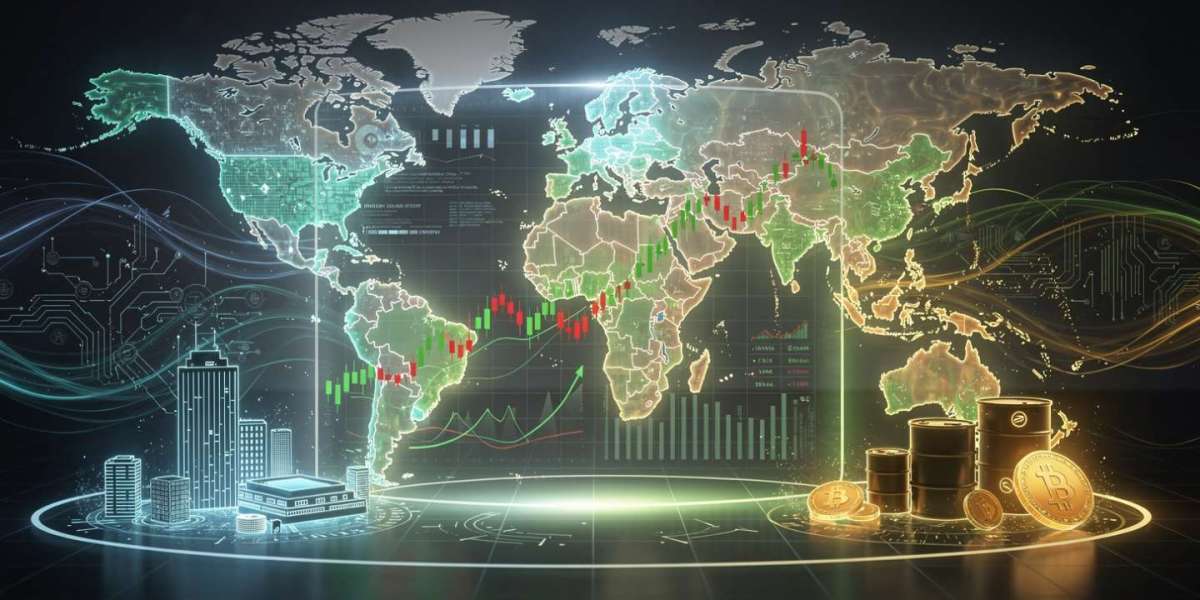
Overall, today’s stock market environment highlights both opportunity and caution for investors. Artificial intelligence continues driving some of the strongest rallies seen in years, and companies connected to cloud computing, semiconductors, and digital infrastructure remain major beneficiaries. At the same time, elevated Treasury yields, inflation worries, geopolitical risks, and uneven economic data are creating volatility across multiple sectors. Investors are increasingly balancing excitement surrounding long-term technological transformation with concerns over valuation risks and macroeconomic uncertainty.
The coming days may prove especially important for global markets. Nvidia’s earnings report, additional inflation signals, energy market developments, and upcoming retail earnings could all influence investor sentiment significantly. While some analysts believe the AI revolution still has years of growth ahead, others caution that market exuberance in certain areas may eventually require a reality check. For now, Wall Street remains caught between powerful innovation-driven optimism and the economic pressures building beneath the surface.
In conclusion, the stock market today demonstrates how rapidly technology, geopolitics, inflation, and corporate strategy are reshaping the global financial landscape. Artificial intelligence continues to redefine investor priorities, while energy markets, Treasury yields, and economic data remind traders that risks remain very real. For long-term investors, the current environment may offer both exceptional opportunities and heightened volatility. Staying diversified, informed, and disciplined could become the defining strategy as markets navigate one of the most transformative periods since the rise of the internet era.
Key Points
AI and semiconductor stocks continue leading market gains in 2026.
Nvidia earnings are expected to heavily influence the broader technology sector.
Bond yields rose due to inflation fears and expanding U.S. debt issuance.
Oil prices fluctuated amid geopolitical tensions involving Iran.
NextEra Energy announced a $67 billion acquisition of Dominion Energy.
Healthcare stocks weakened following disappointing Regeneron trial results.
Baidu reported strong AI cloud revenue growth despite weaker Chinese economic data.
Walmart earnings are closely watched for insights into consumer spending trends.
Tesla raised Model Y prices in the U.S. for the first time in two years.
Investors remain focused on balancing AI growth opportunities with macroeconomic risks.
advertisement
Frequently Asked Questions (FAQ)
Why are AI stocks rallying in 2026?
AI stocks are rallying because investors expect artificial intelligence to transform industries globally. Strong demand for data centers, semiconductors, and cloud infrastructure continues driving revenue growth for major technology companies.
Why is Nvidia so important to the stock market?
Nvidia is considered a leader in AI chips and infrastructure. Its earnings reports often influence investor sentiment across the entire technology and semiconductor sectors.
Why are Treasury yields rising?
Treasury yields are increasing due to inflation concerns, higher government debt issuance, and investor demands for greater compensation when holding long-term bonds.
How are oil prices affecting the stock market?
Higher oil prices can increase inflation and create uncertainty for businesses and consumers. Geopolitical tensions involving Iran have recently contributed to energy market volatility.
Why did healthcare stocks fall?
Healthcare stocks declined after Regeneron reported disappointing clinical trial results for an experimental cancer treatment, raising concerns across the sector.
What does the NextEra and Dominion deal mean?
The $67 billion acquisition would create the world’s largest regulated utility company, significantly reshaping the U.S. energy sector.
Sources
- Morningstar – Analysis of the AI stock rally, semiconductor performance, bond yields, and Nvidia earnings outlook
https://global.morningstar.com/en-gb/markets/markets-brief-echoes-1999-latest-ai-stock-rally - Investor's Business Daily via MSN – Coverage of stock market movements, oil prices, Nvidia, Walmart, Tesla, and energy sector developments
https://www.msn.com/en-us/money/markets/stock-market-today-dow-wavers-as-oil-falls-on-iran-news-nvidia-walmart-on-watch-live-coverage/ar-AA23u9GP - InvestingLive – Overview of technology, healthcare, and financial sector performance in today’s market
https://investinglive.com/stock-market-update/tech-stocks-rally-while-healthcare-faces-pressure-a-closer-look-at-todays-market-20260518/
Disclaimer:
This material may contain third-party opinions, none of the data and information on this webpage constitutes investment advice
The content shared in economics articles is solely for research and informational purposes.
We are not a financial advisory service, and the information provided should not be considered investment or trading advice.
Thank you !