
Nature Has a Hidden Day Job: Why Healthy Ecosystems Are the Ultimate Business Partners
Nature Has a Hidden Day Job: Why Healthy Ecosystems Are the Ultimate Business Partners
Key Points
- The Global Baseline: Over half of global GDP ($44 trillion) moderately or highly depends on nature.
- The New Zealand Breakthrough: A 2026 study of 117,000+ business observations proves a 1% increase in local natural capital directly boosts firm sales by 0.13% and profits by 0.15%.
- Primary Industry Boom: Agriculture and forestry operations in high-biodiversity areas see productivity gains between 0.71% and 0.81% above the economic average.
- Policy Profits: Environmental interventions—like New Zealand's Predator Free 2050—create an extra 0.05% post-policy business performance bump.
- The Massive Risk: Degraded ecosystems act as a hidden invoice, with the World Bank estimating a $2.7 trillion annual drag on global wealth by 2030.
advertisement
What if a tree was actually a highly efficient employee?
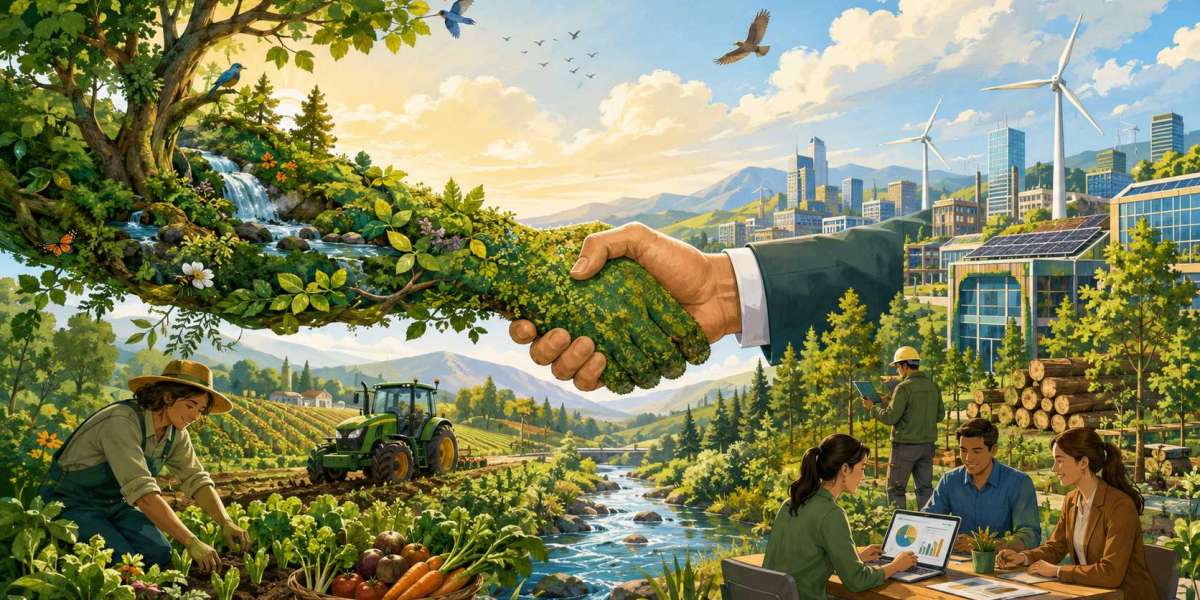
For decades, we’ve been told an exhausting lie: you can either have a booming economy or a healthy planet, but you can’t have both. But a massive new economic study tracking over 117,000 businesses has totally busted that myth! The hard data shows that green policy isn't an expensive luxury—it’s the ultimate business strategy, proving that nature is the most successful, hardworking partner the global economy has ever had.
For decades, we’ve been told an exhausting lie: you can either have a booming economy or a healthy planet, but you can’t have both. But a massive new economic study tracking over 117,000 businesses has totally busted that myth! The hard data shows that green policy isn't an expensive luxury—it’s the ultimate business strategy, proving that nature is the most successful, hardworking partner the global economy has ever had.
New data from the World Economic Forum reveals that a staggering $44 trillion of global economic value—more than half of the world’s entire GDP—is moderately or highly dependent on nature. This means if our ecosystems decide to go on strike tomorrow, more than half of the world's businesses would grind to an immediate halt.
Historically, companies treated the environment like an endless buffet with no cash register, but new research by Professors Paul Griffin and Martien Lubberink has put a real price tag on what nature contributes. By studying thousands of businesses over a 13-year period, they discovered that a simple 1% increase in local natural capital directly causes a 0.13% surge in company sales and a 0.15% jump in corporate profits. When we protect the environment, businesses don't lose money—they thrive.
This financial boost becomes an absolute powerhouse in industries like farming and forestry. Farms and forestry operations located in areas with rich biodiversity see their productivity spike by up to 0.81% above the national average. This happens because healthy ecosystems naturally provide cleaner water, richer soil, and fewer pests, which dramatically slashes a business's daily operating costs.
The data also proves that government environmental laws act as major economic stimulants rather than annoying roadblocks. Following major ecological initiatives—like New Zealand's Predator Free 2050 and new freshwater rules—affected businesses enjoyed an extra 0.05% performance boost almost immediately.
On the flip side, businesses that grow by destroying the environment are actually hurting themselves, losing out on the free productivity benefits that a healthy ecosystem organically provides. In short, the global market is waking up to a massive reality check: nature is no longer just pretty background scenery for commerce, but a hard capital asset that we must invest in to prevent a projected $2.7 trillion annual global economic loss by 2030.
advertisement
Frequently Asked Questions (FAQ)
- Q: How does a healthier environment actually make a local business more money?
- A: Healthy ecosystems provide free, high-utility services. For primary industries, this means richer soil, clean water, and fewer pests, which slashes operational overhead. For service and retail sectors, high-biodiversity regions correlate with healthier, more productive workforces and more resilient local infrastructure.
- A: Healthy ecosystems provide free, high-utility services. For primary industries, this means richer soil, clean water, and fewer pests, which slashes operational overhead. For service and retail sectors, high-biodiversity regions correlate with healthier, more productive workforces and more resilient local infrastructure.
- Q: Do strict environmental laws hurt business productivity?
- A: No, the data proves the exact opposite. When policies target ecosystem restoration (like clean water rules or pest eradication), local businesses experience a measurable performance bump of 0.05% due to the upgraded health of their operating environment.
- A: No, the data proves the exact opposite. When policies target ecosystem restoration (like clean water rules or pest eradication), local businesses experience a measurable performance bump of 0.05% due to the upgraded health of their operating environment.
- Q: What is "natural capital"?
- A: Natural capital refers to the world's stocks of geology, soil, air, water, and all living things. It is a real, productive asset—just like factory machinery, intellectual property, or human labor—that yields a flow of valuable ecosystem goods and services.
Sources
- Primary Study Source: The Conversation - Nature is good for business – and we now have numbers to show it
- Global GDP Dependency Data: World Economic Forum - Nature Action Agenda Briefing
- Economic Risk Projections: The World Bank - The Economic Case for Nature Report
Thank you !