
Light-Activated Molecules Offer Promising Side-Effect-Free Treatment for Psoriasis
Key Points:
Innovative light-activated drugs may revolutionize psoriasis treatment.
Targeted therapy reduces side effects by activating drugs only where needed.
Preclinical studies show effective inflammation reduction without systemic complications.
advertisement
Introduction
Psoriasis, a chronic skin condition affecting around 3% of the global population, has long challenged researchers and patients alike. Many treatments, especially biologics, are effective but costly and often unsuitable for localized mild cases. Now, researchers from the Institute for Advanced Chemistry of Catalonia (IQAC-CSIC) have demonstrated that light-activated molecules could provide a precise, side-effect-free therapy, marking a major breakthrough in photopharmacology.
Revolutionizing Psoriasis Treatment with Light-Activated Molecules

Image of psoriasis on the skin. / Psoriasis.com
image source: iqac.csic.es
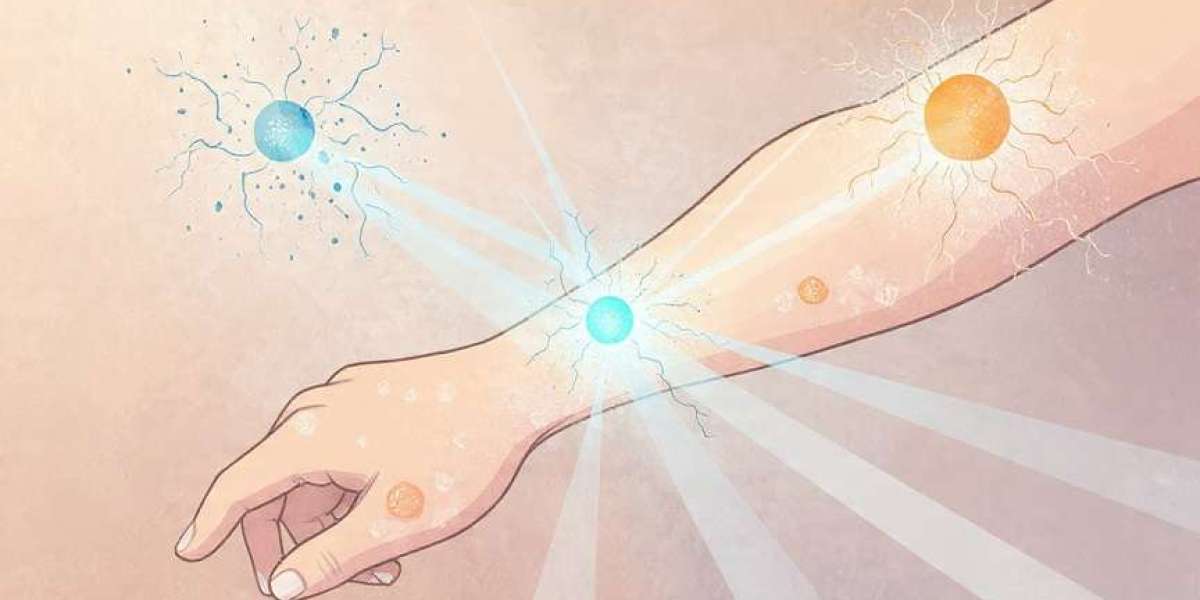
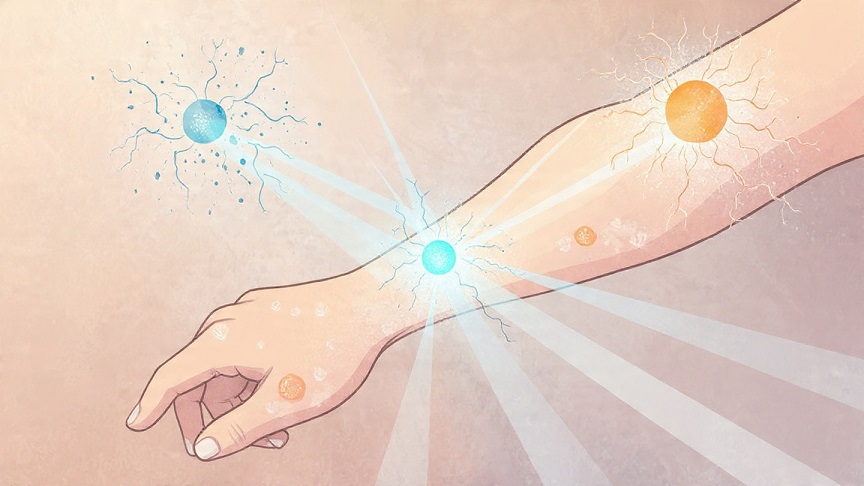
The newly developed drugs, called photocontrollable VDR agonists, remain inactive until exposed to specific wavelengths of light, including visible blue light and UVB. This approach allows external control over the drug’s activity, ensuring that therapeutic effects occur only in targeted areas. In preclinical tests using mouse models, the optimized molecule, PhotoVDRM, reduced skin inflammation without causing systemic side effects such as hypercalcemia—a serious complication that has previously limited vitamin D receptor (VDR) therapies.
Photopharmacology, the broader field underlying this innovation, harnesses photosensitive molecules to precisely control drug activity. These molecules change structure under light, activating their effects only when and where required. While the main challenge for this approach is the limited penetration of light into tissues, the skin is highly accessible, making it an ideal candidate for such therapies. Experts believe that this strategy could eventually extend beyond psoriasis, potentially improving treatments for other VDR-mediated conditions.
Addressing Unmet Needs in Skin Disease Therapies
Psoriasis treatments currently include biologics that target cytokines—immune proteins that regulate inflammation. While effective, these therapies are expensive and unsuitable for mild or localized cases. Existing topical medications are often limited in efficacy and require careful medical supervision due to narrow therapeutic windows. By contrast, light-activated molecules could provide safer, more cost-effective alternatives, particularly for sensitive or localized lesions.
advertisement
Collaborative Research and Future Implications
This breakthrough is the result of international collaboration between IQAC-CSIC, the Bellvitge Biomedical Research Institute (IDIBELL), the Institute of Neurosciences (UBneuro), Johns Hopkins University, Purdue University, and Eli Lilly and Company. According to Dr. Xavier Rovira of IQAC-CSIC, the design and synthesis of PhotoVDRM demonstrate the feasibility of using light to control VDR-targeting drugs. Amadeu Llebaría adds that the preclinical success of this therapy lays the groundwork for safer and more precise treatments in humans.
The broader implications are significant: photopharmacology could offer a blueprint for treating not only psoriasis but also other diseases where precision and safety are paramount. By controlling drug activation with light, researchers may develop therapies that avoid systemic side effects, reduce treatment costs, and improve patient quality of life.
Conclusion
The development of light-activated molecules for psoriasis represents a promising leap forward in dermatology and pharmacology. This approach combines precision, safety, and accessibility, addressing historical limitations of VDR-targeted therapies. As research progresses from preclinical models to clinical applications, patients and clinicians may soon benefit from treatments that are both effective and free from the severe side effects that have long plagued traditional therapies. The future of photopharmacology offers hope for a new era of smart, light-controlled medicines that could transform care for psoriasis and beyond.
Key Points Summary
Light-activated molecules (PhotoVDRM) target psoriasis safely.
Therapy reduces inflammation without systemic side effects.
Photopharmacology allows precise control using light.
advertisement
Frequently Asked Questions (FAQ)
What is photopharmacology?
Photopharmacology is a branch of medicine that uses light-sensitive molecules to control when and where a drug becomes active.How do light-activated drugs treat psoriasis?
These drugs remain inactive until exposed to specific light wavelengths, targeting affected areas and reducing inflammation without systemic side effects.Are there side effects?
Preclinical studies indicate that targeted activation avoids common complications like hypercalcemia, making the therapy safer than traditional VDR-targeted drugs.Can this therapy be used for other conditions?
Yes. Researchers believe photopharmacology could be applied to other VDR-mediated diseases and conditions requiring highly precise treatment.When will this be available for patients?
Currently, PhotoVDRM has shown success in preclinical studies. Clinical trials will be necessary before human treatments become widely available.
Sources
IQAC-CSIC – Study on light-activated molecules as a potential psoriasis treatment
https://www.iqac.csic.es/a-study-demonstrates-the-potential-of-light-activated-molecules-to-treat-psoriasis-without-side-effects/
Thank you !