
SpaceX's Nasdaq-100 Entry, Bitcoin Debate, and AI IPO Expectations Shape Investor Focus

Key Points
SpaceX is set to join the Nasdaq-100 Index on July 7, potentially triggering billions of dollars in passive investment inflows through index-tracking funds.
Veteran investor Jeremy Grantham renewed his criticism of Bitcoin, arguing that the cryptocurrency lacks intrinsic value and may gradually lose relevance over time.
Analysts remain divided over the implications of rapidly adding newly listed technology giants to major stock indexes, particularly as OpenAI and Anthropic prepare for potential public offerings.
Investors are balancing enthusiasm surrounding artificial intelligence (AI) with concerns about high valuations and historical performance patterns of major technology IPOs.
Market participants are increasingly watching whether today's strong appetite for AI-related companies can translate into sustainable long-term earnings growth.
advertisement
The final trading days of June continued to highlight one of the defining themes of 2026: investors' growing enthusiasm for artificial intelligence, large technology companies, and high-profile public offerings, even as experienced market veterans warned against excessive optimism.
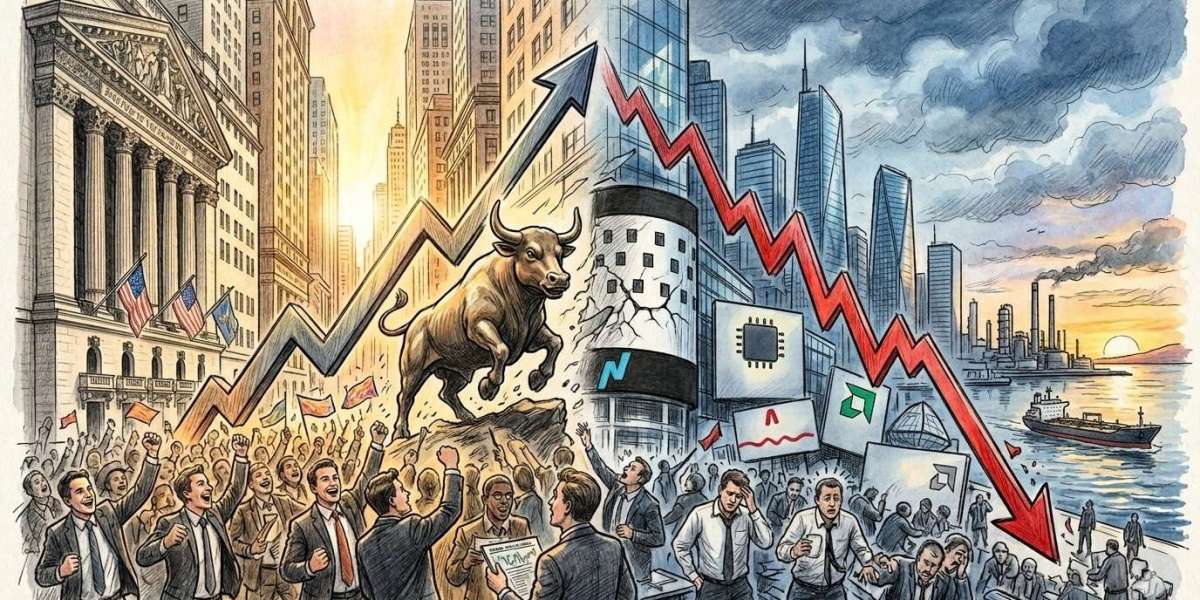
Friday's attention centered on SpaceX, whose planned inclusion in the Nasdaq-100 Index represents one of the most closely watched developments in U.S. equity markets this month. At the same time, billionaire investor Jeremy Grantham renewed his long-standing skepticism toward Bitcoin, arguing that the world's largest cryptocurrency remains a speculative asset rather than a dependable store of value.
Together, these developments illustrate the competing forces currently influencing financial markets: optimism surrounding innovation and technology versus growing concerns about valuations, speculative assets, and investor expectations.
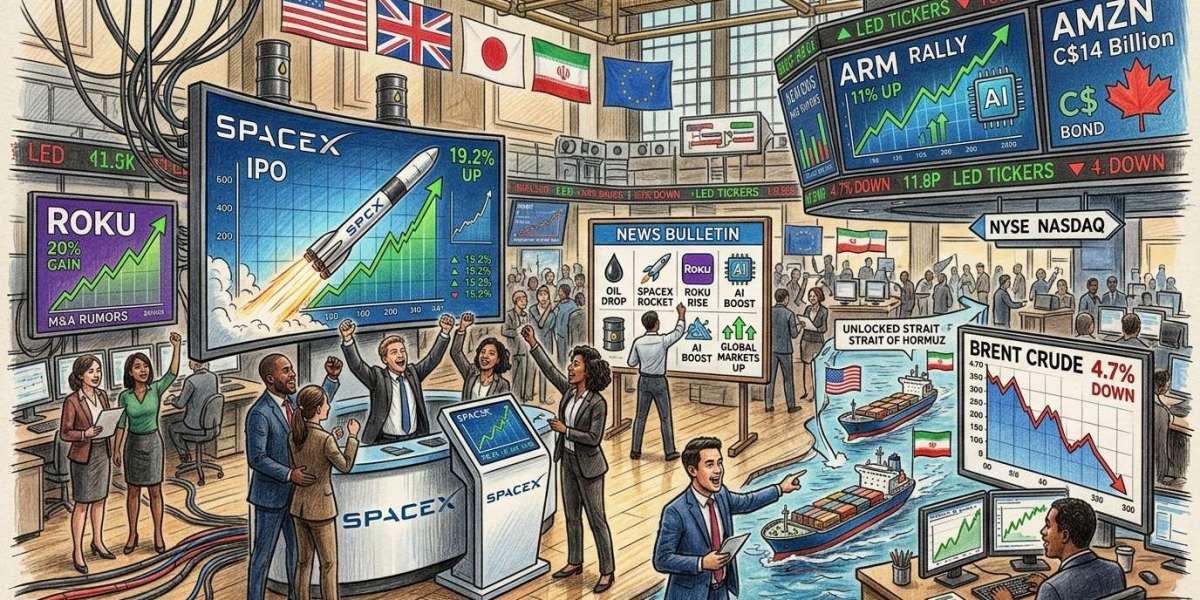
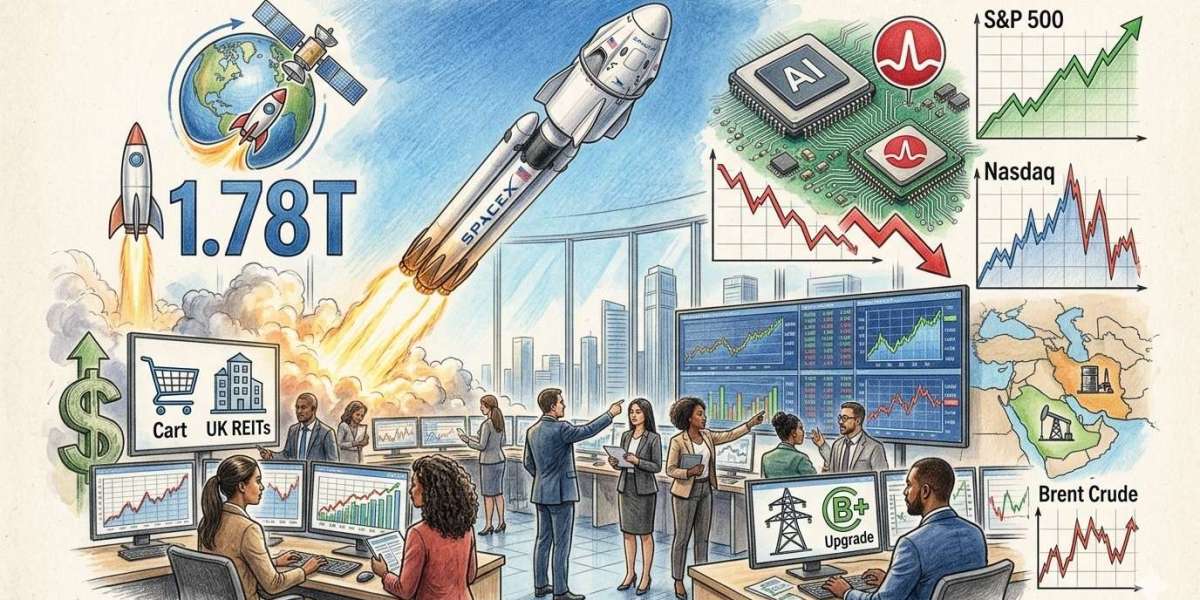
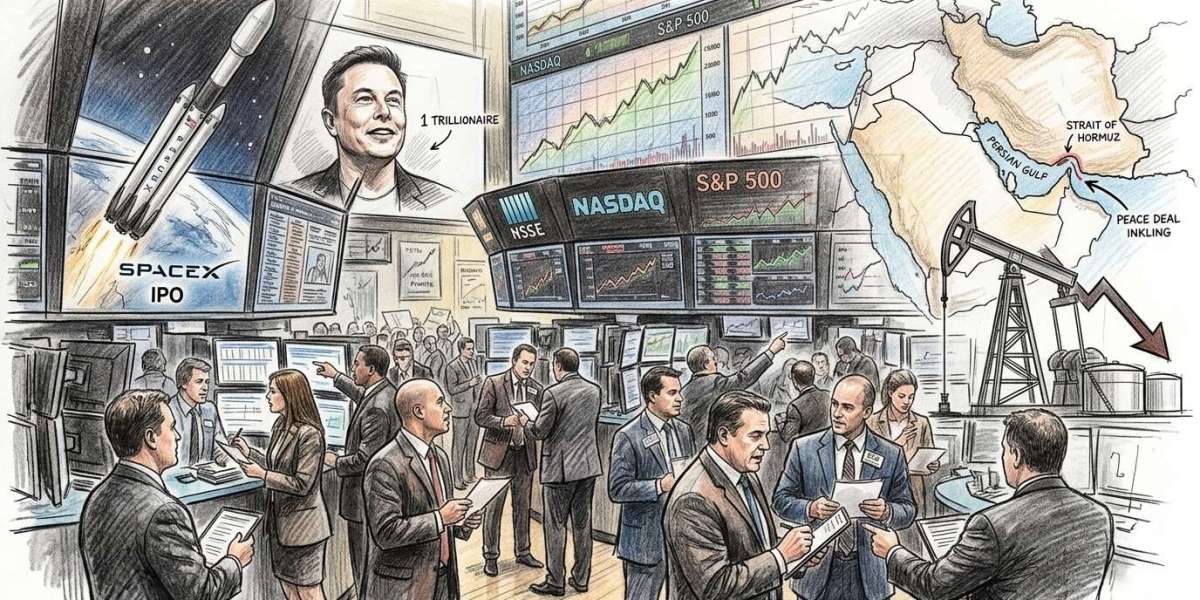
According to Reuters, Nasdaq confirmed that SpaceX will officially become part of the Nasdaq-100 Index on July 7, less than a month after the aerospace and technology company made its public market debut on June 12. The move follows recent changes by several index providers that shortened the waiting period for qualifying mega-cap initial public offerings (IPOs).
Index inclusion is significant because numerous exchange-traded funds (ETFs) and mutual funds automatically purchase shares of companies added to benchmark indexes. Funds tracking the Nasdaq-100, including some of the world's largest technology-focused ETFs, are expected to acquire substantial amounts of SpaceX stock once the company joins the index.
Analysts at J.P. Morgan, cited by Reuters, estimate that SpaceX's inclusion could generate approximately $4.3 billion in passive investment inflows as index-tracking funds rebalance their portfolios. Such buying activity often provides short-term support for newly added stocks, although long-term performance continues to depend on company fundamentals and earnings growth.
The rapid inclusion became possible after Nasdaq relaxed several eligibility requirements intended to make its indexes more attractive for newly listed companies. Similar adjustments have also been adopted by FTSE Russell, allowing qualifying large-cap IPOs to enter certain indexes much sooner than under previous rules.
However, not all major index providers have adopted the same approach. Reuters reported that S&P Global has maintained its existing standards, meaning SpaceX will not become eligible for the S&P 500 until it satisfies the index's longer-established requirements, including waiting at least 12 months before consideration.
While many investors welcomed the accelerated inclusion, market strategists cautioned that rapid index additions do not guarantee long-term investment success.
Michael Field, Chief Equity Market Strategist at Morningstar, told Reuters that the strong demand for SpaceX shares explains why the company was fast-tracked into the benchmark. Nevertheless, he also expressed reservations about valuation levels, noting that some professional investors believe the stock may already be priced aggressively relative to current financial performance.
Questions surrounding valuation have become increasingly important because SpaceX, despite its leadership in commercial space launches and satellite communications, has experienced fluctuating financial performance. According to Reuters, the company has swung between sharp losses and small profits over the past three years and reported a net loss of $4.9 billion last year, highlighting that investors continue to value the company primarily on expectations for future growth rather than current earnings.
Beyond SpaceX, investor attention remains firmly fixed on the next generation of AI-related public offerings.
Reuters reported that both OpenAI and Anthropic are widely expected to pursue IPOs either later this year or next year, with market valuations potentially exceeding $1 trillion. Such offerings would rank among the largest technology listings ever seen and could further reshape benchmark indexes and institutional investment flows.
Those expectations have fueled broader discussions about whether today's enthusiasm surrounding AI companies resembles previous periods of technology-driven market optimism.
One of the opinions attracting attention came from a Motley Fool analysis, which argued that recent rule changes allowing faster entry into major indexes could increase market volatility if newly listed technology companies experience the substantial share-price declines that have historically affected many large IPOs.
The analysis cited historical research suggesting that many highly anticipated technology IPOs have experienced significant declines during their first year as public companies. It also argued that investors frequently overestimate how quickly transformative technologies such as artificial intelligence can translate into widespread commercial profitability. Those conclusions represent analysis and opinion rather than confirmed market outcomes, but they reflect concerns increasingly discussed across Wall Street regarding elevated valuations for AI-focused companies.
At the same time, debate surrounding speculative assets returned to the spotlight after veteran investor Jeremy Grantham, co-founder of GMO, reiterated his long-standing criticism of Bitcoin during an interview with CNBC.
Grantham described Bitcoin as a "useless, speculative" asset that lacks intrinsic value and argued that it has yet to establish itself as a stable store of wealth. According to Grantham, the cryptocurrency's history of sharp price swings makes it difficult for investors to rely on it over the long term.
"Over years and years, decades and decades, it will dwindle away, I suspect — not with a bang, but a whimper," Grantham said in the interview with CNBC.
He also argued that Bitcoin has limited practical use in everyday commerce, noting that it is rarely used for routine consumer transactions despite growing institutional interest in digital assets.
Grantham contrasted Bitcoin with gold, saying the precious metal has continued to provide long-term value even after retreating from recent highs. His comments reflect his personal investment philosophy and do not represent a consensus view across financial markets, where opinions on cryptocurrencies remain sharply divided.
His latest remarks come during another challenging period for the cryptocurrency market. According to CNBC, Bitcoin has historically experienced multiple bear-market declines of at least 70% from previous peaks. At the time of the interview, the digital currency was trading roughly 52% below its October peak, illustrating the volatility that continues to characterize the asset class.
Although Grantham's outlook remains notably pessimistic, many institutional investors continue to view cryptocurrencies differently. Large asset managers, hedge funds, and financial institutions have expanded digital-asset offerings in recent years, arguing that cryptocurrencies may serve as alternative investments or portfolio diversifiers. The differing perspectives underscore the ongoing debate over the long-term role of digital assets within global financial markets.
Meanwhile, investor sentiment across broader equity markets continues to be heavily influenced by expectations surrounding artificial intelligence. Since the beginning of 2026, companies linked to AI infrastructure, software, cloud computing, semiconductor manufacturing, and advanced language models have attracted substantial investor interest, helping support major U.S. stock indexes despite periodic volatility.
The anticipated public offerings of OpenAI and Anthropic have further intensified that enthusiasm. While neither company has yet completed an IPO, both are widely viewed as potential trillion-dollar businesses based on secondary-market valuations and investor expectations for future AI adoption, according to Reuters.
Even so, experienced investors continue to caution that technological innovation and attractive investment returns do not always move in parallel. Financial history shows that many transformative technologies—including the commercial internet, cloud computing, and smartphones—experienced periods of excessive investor optimism before business models matured and long-term winners emerged.
This historical perspective forms the basis of the Motley Fool analysis, which argues that investors may once again be pricing future growth too aggressively. The analysis notes that while AI adoption has accelerated rapidly, the process of converting widespread adoption into sustained profitability may take considerably longer than many market participants currently expect. Those conclusions remain analytical opinions rather than established facts, but they highlight one of the principal debates shaping today's market outlook.
For investors, today's developments reinforce two parallel themes that have increasingly defined financial markets throughout 2026. On one hand, companies associated with technological innovation continue to attract extraordinary levels of capital, particularly when benchmark index inclusion expands demand through passive investment vehicles. On the other hand, experienced market observers continue to urge caution, warning that elevated valuations and heightened expectations can expose investors to increased volatility if corporate performance fails to keep pace.
As June draws to a close, market participants are likely to remain focused on several key issues: the impact of SpaceX's upcoming Nasdaq-100 inclusion on trading activity, continued developments surrounding potential IPOs from OpenAI and Anthropic, the sustainability of AI-driven equity valuations, and whether cryptocurrency markets can regain momentum amid continuing debate over their long-term investment case.
While enthusiasm for innovation remains one of the strongest forces supporting global equity markets, Friday's developments served as a reminder that successful investing ultimately depends not only on compelling technology and market excitement, but also on sustainable earnings, realistic valuations, and disciplined risk management.
Key Points Summary
SpaceX will join the Nasdaq-100 Index on July 7, with analysts estimating approximately $4.3 billion in passive investment inflows from index-tracking funds.
Veteran investor Jeremy Grantham reiterated his bearish view on Bitcoin, arguing that it lacks intrinsic value and remains highly speculative.
Investors continue to monitor potential future IPOs from OpenAI and Anthropic, which could further reshape technology indexes and institutional investment flows.
Analysts remain divided over whether AI-related companies can justify their current valuations as commercialization and profitability evolve.
Markets continue to balance optimism surrounding technological innovation with concerns over valuation risks and long-term earnings growth.
What This Means
Today's developments highlight how artificial intelligence, major IPOs, and passive investing continue to influence U.S. equity markets.
The upcoming SpaceX inclusion in the Nasdaq-100 demonstrates how index changes alone can attract billions of dollars in automatic investment flows, potentially affecting both share prices and broader market performance.
Meanwhile, Jeremy Grantham's renewed criticism of Bitcoin reflects the continuing debate over cryptocurrencies' long-term role in investment portfolios.
Who may be affected?
Retail investors following AI and technology stocks.
Institutional investors managing index and ETF portfolios.
Cryptocurrency investors monitoring sentiment toward digital assets.
Companies considering IPOs, particularly in the AI sector.
What readers should watch next
SpaceX's official Nasdaq-100 inclusion on July 7.
Progress toward potential IPOs by OpenAI and Anthropic.
Future earnings reports from leading AI companies.
Market reaction to continued AI investment and valuation trends.
Ongoing performance of Bitcoin and other digital assets.
advertisement
Frequently Asked Questions (FAQ)
Why is SpaceX joining the Nasdaq-100 important?
Membership in the Nasdaq-100 means many ETFs and index funds that track the benchmark will automatically purchase SpaceX shares, potentially generating billions of dollars in additional demand.
When will SpaceX join the Nasdaq-100?
According to Reuters, SpaceX is scheduled to join the index on July 7, 2026.
Why is Jeremy Grantham critical of Bitcoin?
Grantham believes Bitcoin lacks intrinsic value, remains highly volatile, and has limited practical use as a stable store of value or everyday payment method.
Are OpenAI and Anthropic going public?
According to Reuters, both companies are widely expected to pursue IPOs either later in 2026 or in 2027, although neither has completed a public offering.
Why are AI companies attracting so much investor attention?
Investors expect AI technologies to drive long-term productivity gains across many industries. However, analysts remain divided over whether current valuations fully reflect realistic earnings potential.
Does Nasdaq inclusion guarantee a stock will rise?
No. While index inclusion often increases short-term demand through passive investing, long-term stock performance ultimately depends on the company's financial results, profitability, and business execution.
Sources
Disclaimer:
This material may contain third-party opinions, none of the data and information on this webpage constitutes investment advice
The content shared in economics articles is solely for research and informational purposes.
We are not a financial advisory service, and the information provided should not be considered investment or trading advice.