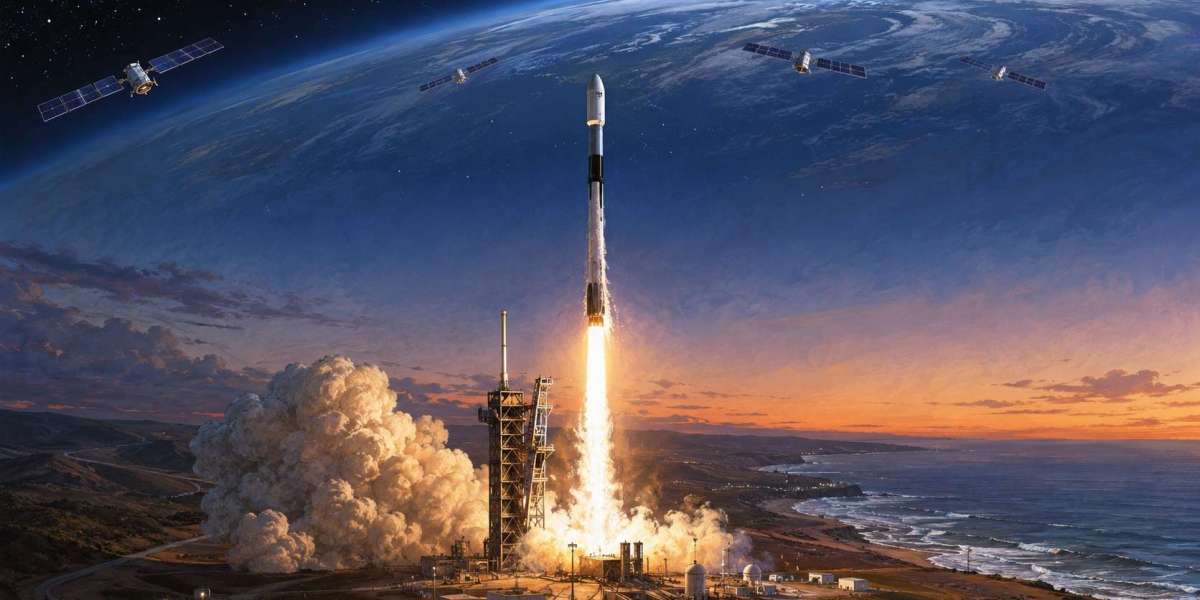

SpaceX Continues Starlink Expansion With Falcon 9 Launch as Launch Cadence Accelerates on June 25, 2026
LIVE | SpaceX Launches Falcon 9 Rocket Carrying 24 Starlink Satellites From California - APT
Key Points
SpaceX carried out another Falcon 9 Starlink mission from Vandenberg Space Force Base, California, around June 24–25, 2026.
The launch supports the continued expansion of the company's Starlink broadband satellite network.
The mission featured a reusable Falcon 9 first-stage booster and a planned droneship recovery in the Pacific Ocean.
The launch highlights SpaceX's rapid launch cadence, which remains unmatched in the commercial space industry.
The company continues to strengthen its position in satellite deployment while pursuing additional programs including Starfall, cargo return systems, and future Starship missions.
advertisement
SpaceX continued the expansion of its rapidly growing Starlink satellite internet constellation with another Falcon 9 launch from Space Launch Complex 4 East (SLC-4E) at Vandenberg Space Force Base in California, marking one of the company's latest missions during an exceptionally busy period for commercial spaceflight. According to mission schedules published by SpaceX and launch coverage from Spaceflight Now, the mission was conducted during a launch window extending into June 24–25, 2026, carrying a new batch of Starlink satellites into low Earth orbit. (SpaceX)
The launch underscores the central role that Starlink continues to play in SpaceX's business strategy. The satellite network is designed to provide broadband internet access across the globe, including underserved and remote regions where traditional connectivity infrastructure remains limited. Over the past several years, the constellation has grown into the largest satellite network ever deployed, with thousands of operational spacecraft orbiting Earth. Recent industry estimates indicate that more than 10,600 active Starlink satellites are now in service, supporting consumer, enterprise, aviation, maritime and direct-to-cell connectivity initiatives. (Space)
For this mission, Falcon 9 once again demonstrated the reusability model that has become a defining feature of SpaceX's launch operations. As with previous Starlink flights from California, the rocket's first stage was expected to separate shortly after liftoff and return to Earth for a controlled landing aboard one of the company's autonomous droneships positioned in the Pacific Ocean. Reusability has allowed SpaceX to reduce launch costs while maintaining an aggressive schedule that far exceeds that of most competitors. (Space)
The California launch followed a series of other recent SpaceX missions, illustrating the company's ability to conduct launches only days apart. Among those missions was the debut of Starfall, a new uncrewed cargo return vehicle launched earlier in the week from Cape Canaveral Space Force Station in Florida. Designed to transport scientific and industrial payloads to and from low Earth orbit, Starfall represents another effort by SpaceX to expand beyond satellite deployment and crew transportation into new commercial space services. (Space)
Industry observers view the continuing pace of Starlink launches as critical to maintaining network capacity while expanding coverage. Each new batch of satellites enhances redundancy, increases available bandwidth and helps replace older spacecraft as the constellation evolves. The system has become a significant revenue generator for SpaceX, supporting both commercial customers and government users around the world. The network is increasingly being integrated into aviation services, maritime operations and emergency communications infrastructure. (Space)
The latest launch also reflects the broader transformation occurring within the space industry. Once dominated by government agencies, orbital launch activity is now increasingly driven by private companies. SpaceX remains at the forefront of this shift, conducting dozens of missions each year while continuously improving launch reliability and turnaround times. Recent reports indicate that the company has now launched more spacecraft into orbit than all other organizations combined throughout the history of the space age, a milestone that highlights the scale of its operations. (Space)
Mission schedules published by SpaceX showed multiple Starlink launches planned throughout June 2026, with flights originating from both California and Florida. The frequent launches demonstrate how the company has turned orbital transportation into a highly routine operation, a goal that founder Elon Musk has long described as essential for expanding humanity's access to space. (SpaceX)
Beyond Starlink, attention across the aerospace industry remains focused on Starship, the next-generation fully reusable launch system being developed by SpaceX. Although Starship was not involved in today's mission, many analysts view the continued success of Falcon 9 operations as providing the operational experience and financial foundation necessary to support the larger vehicle's development. Future Starship missions are expected to target lunar exploration, deep-space cargo transportation and eventually human missions to Mars. (Space)
The latest launch also demonstrates the strategic importance of Vandenberg Space Force Base, which has become one of the most active launch sites in the world. Its location along the California coast allows rockets to fly southward over the Pacific Ocean, making it particularly suitable for missions requiring polar and sun-synchronous orbits. These trajectories are frequently used for Earth-observation satellites, national security payloads and many Starlink deployments. (SpaceX)
As of June 25, 2026, the mission appears to have proceeded as planned according to launch schedules and mission coverage. The successful deployment of additional Starlink satellites further strengthens the network while reinforcing SpaceX's position as the world's most active launch provider. Industry watchers will now turn their attention to upcoming Starlink missions, continued progress on Starfall, and future milestones in the development of Starship, all of which are expected to shape the next phase of commercial spaceflight. (SpaceX)
Key Points Summary
SpaceX launched another Falcon 9 Starlink mission from California.
The mission supports expansion of the Starlink broadband network.
A reusable booster was utilized as part of the flight profile.
SpaceX continues one of the highest launch rates in the aerospace industry.
Attention is increasingly focused on future Starship and Starfall developments.
What This Means
Today's launch demonstrates how SpaceX is continuing to build and maintain the world's largest satellite internet constellation.
The mission matters to:
Starlink customers seeking improved coverage and capacity.
Businesses relying on satellite communications.
Governments and emergency-response organizations using satellite connectivity.
The broader aerospace sector monitoring launch efficiency and reusable rocket technology.
Readers should watch for:
Upcoming Starlink deployments.
Additional Starfall test missions.
New developments involving Starship.
Continued growth of commercial space infrastructure.
advertisement
Frequently Asked Questions (FAQ)
What did SpaceX launch today?
SpaceX launched a Falcon 9 mission carrying additional Starlink satellites into low Earth orbit from Vandenberg Space Force Base, California. (SpaceX)
What is Starlink?
Starlink is a satellite internet network operated by SpaceX that provides broadband connectivity worldwide. (Space)
Why are Starlink launches so frequent?
Regular launches help expand network coverage, increase capacity and replace older satellites. (Space)
Did the Falcon 9 booster land successfully?
The mission profile included a planned droneship recovery, consistent with recent Starlink missions. (Space)
What is Starfall?
Starfall is a new SpaceX cargo return vehicle designed to transport scientific and industrial payloads to and from orbit. (Space)
Sources
Additional Verified Sources
Thank you !