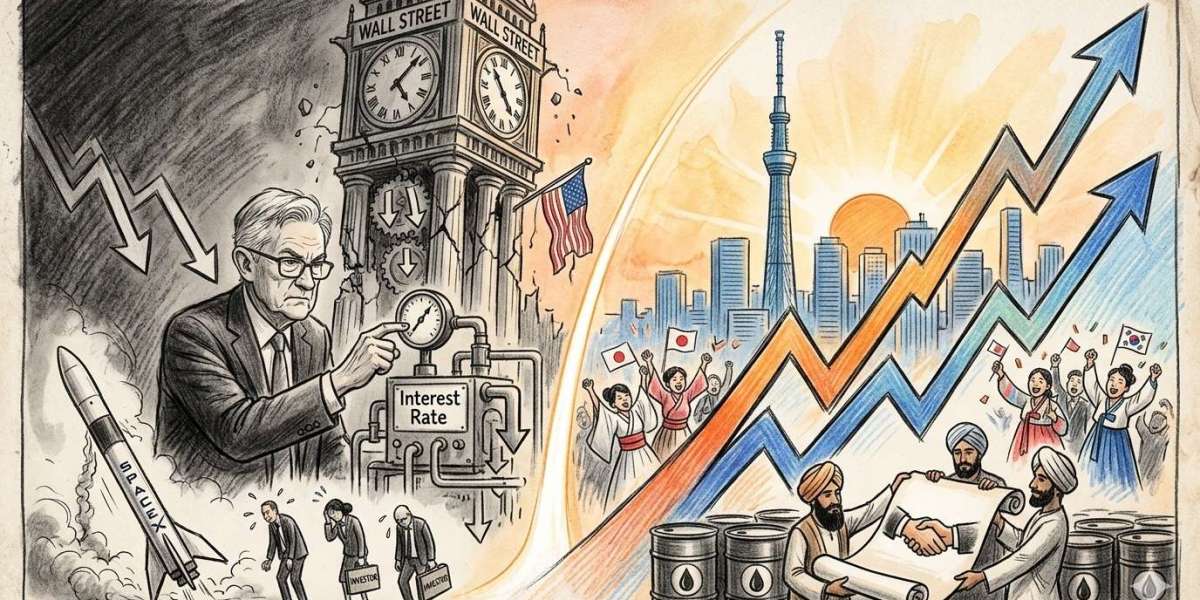

Global Market Shockwave: Wall Street Sinks as Fed Signals Surprise 2026 Rate Hikes, While Asian Stocks Hit Historic Highs on US-Iran Peace Accord
Key Points
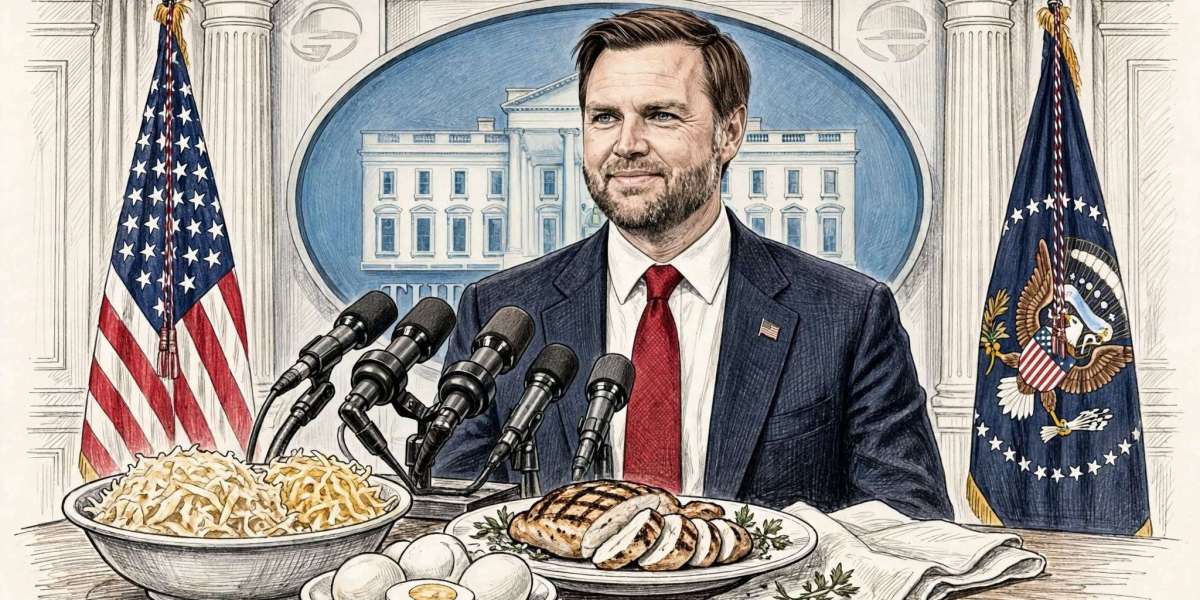
Fed Policy Reversal: Under new Federal Reserve Chair Kevin Warsh, the central bank held rates steady at 3.50% to 3.75% but removed language hinting at rate cuts, with nearly half of the policymakers now projecting a surprise interest rate hike in late 2026 to curb sticky inflation.
Wall Street Slump: All 11 major S&P 500 sectors closed deeply in the red following the hawkish Fed announcement, with communication services and consumer discretionary leading the market's retreat.
Historic Asian Stock Rally: Contrasting Wall Street's losses, major Asian markets staged a massive rally with Japan's Nikkei 225 shattering the 71,000 mark and South Korea's Kospi tripling its value year-over-year after the official signing of an initial US-Iran peace agreement to end hostilities.
Geopolitical & Commodity Impact: Crude oil prices fluctuated following warnings from Washington that the peace agreement requires strict compliance or conflict could resume, while the deal immediately waives U.S. sanctions allowing Iran to export oil freely.
Corporate Headliners: Individual stock movements shook the tape as SpaceX erased early gains to drop 4.9%, footwear-turned-AI company Allbirds (rebranded as Smartbird) skyrocketed following a new CEO appointment, and CME Group fell after announcing the stepping down of its long-term CEO.
advertisement
Global financial markets are experiencing a powerful, two-sided tug-of-war today, June 18, 2026, driven by a sharp hawkish pivot from the U.S. Federal Reserve and a historic geopolitical breakthrough in the Middle East that has triggered opposing reactions across Western and Eastern exchanges.
In New York, the major indices suffered a significant broad-based selloff after the Federal Reserve left its benchmark interest rate unchanged at the 3.50% to 3.75% range but drastically altered its future outlook; under the aggressive leadership of the newly appointed Fed Chair Kevin Warsh, the central bank officially removed previous language that flagged upcoming interest rate cuts and shocked traders by revealing that nine out of twenty central bank officials now foresee at least one aggressive interest rate hike by the end of 2026 to combat lingering inflation.
This hawkish reality check completely deflated recent market momentum, sending the S&P 500 down by 1.21% to close at 7,420.10, while the tech-heavy Nasdaq Composite shed 1.35% to finish at 26,021.66 and the blue-chip Dow Jones Industrial Average plummeted by 507.12 points, or 0.98%, to settle at 51,492.55.
Every single one of the 11 primary S&P 500 sectors finished deep in negative territory, with communication services dropping 2.98% and consumer discretionary sliding 2.69% to lead the laggards on a day where declining issues heavily outnumbered advancers on the Nasdaq by a 1.76-to-1 ratio, and high-profile stocks suffered heavy damage, including Elon Musk's SpaceX which erased its early morning market gains to plunge 4.9% by the closing bell.
Adding to the domestic market anxiety, fresh U.S. economic data revealed that retail sales increased much faster than expected in May, proving that American households are continuing to buy big-ticket items like cars and trucks despite paying drastically higher gas prices at the pump—a sign of economic resilience that gives the Fed even more leverage to raise borrowing costs later this year.
Meanwhile, corporate boardrooms saw massive shakeups as exchange operator CME Group saw its stock slide after announcing that long-time Chief Executive Terry Duffy will step down on March 1 to transition to executive chairman, whereas micro-cap footwear manufacturer Allbirds saw its shares soar exponentially after a wild rebranding into an artificial intelligence firm called Smartbird alongside hiring former Amazon executive Nadia Carlsten as its new CEO.
While Wall Street grappled with high-interest-rate anxieties, a completely different story unfolded across Asia on Thursday morning, where equity markets erupted in a massive, historic celebration following the post-market announcement that the United States and Iran have officially signed an initial agreement to permanently end the war, starting a strict 60-day negotiating clock to finalize a freeze on Tehran's highly enriched uranium stockpile.
Because the historic accord immediately waives U.S.-backed economic sanctions and allows Iran to freely sell its crude oil on the global market, regional economic confidence skyrocketed, driving Japan’s Nikkei 225 up a staggering 1.9% to close at a record-breaking 71,235.78, conquering the psychological 70,000 threshold for the first time in history.
Similarly, South Korea's Kospi index surged 1.6% to an unprecedented 9,007.95—effectively tripling its entire market value over the past twelve months—propelled by a massive buying frenzy in global semiconductor heavyweights like Samsung Electronics which jumped 1.9% and SK Hynix which surged 6.0% on the back of the ongoing artificial intelligence boom and expectations of cheaper global energy costs.
Taiwan's Taiex index capitalized on the chip rally to jump 1.2%, though Hong Kong's Hang Seng index bucked the regional trend by shedding 1.8% to close at 23,968.66.
However, global energy investors are remaining highly cautious as crude oil prices began to edge back up following warnings from Washington that the peace agreement is not yet entirely final, emphasizing that severe geopolitical hostilities could instantly resume if the strict permanent verification terms are not met.
Simultaneously, international corporate mergers are pressing forward despite the volatility, highlighted by Japanese construction titan Obayashi Corporation announcing a 100% stock acquisition of Multiplex Global Limited to absorb its multi-billion dollar building operations across Australia, Canada, and the United Kingdom.
Key Points Summary
Wall Street Bleeds: S&P 500 (-1.21%), Nasdaq (-1.35%), and Dow Jones (-0.98%) plummeted on fears of higher borrowing costs.
The Warsh Effect: Fed Chair Kevin Warsh halted rate-cut talk; projections indicate interest rates will stay higher or rise through 2026.
Peace Dividend in Asia: The signing of the US-Iran peace pact sent the Nikkei 225 above 71,000 and the Kospi above 9,000 to reach historic all-time highs.
Corporate Shocks: SpaceX slid 4.9%, CME Group fell on CEO departure news, while Allbirds (Smartbird) skyrocketed on an AI pivot.
advertisement
Frequently Asked Questions [FAQ]
Q: Why did Wall Street drop if the Federal Reserve kept interest rates the same today?
A: Even though the Fed kept the current rate at 3.50%–3.75%, they shocked investors by changing their future plans. They deleted language that promised interest rate cuts this year, and nearly half of the voting officials explicitly stated they now expect to raise interest rates later in 2026 to curb stubborn inflation. Higher interest rates slow down corporate growth and make stocks less attractive.
Q: Why are Asian stock markets breaking records while US markets are crashing?
A: Asian markets are reacting directly to the historic signing of a peace treaty between the US and Iran, which happened right after US markets closed. This deal lifts economic sanctions on Iran, allowing oil to flow freely again. This lowers expected energy costs for energy-dependent Asian economies like Japan and South Korea, causing their stock indices (Nikkei and Kospi) to skyrocket to all-time highs.
Q: What is driving the massive growth in South Korean tech stocks today?
A: South Korea's Kospi index is heavily weighted with computer chip manufacturers like Samsung and SK Hynix. The combination of the global artificial intelligence boom and the prospect of lower manufacturing costs due to the newly signed US-Iran peace accord caused global investors to heavily buy into these companies, pushing SK Hynix up by 6%.
Sources
The Straits Times: Wall Street closes lower on Fed rate hike bets (Published June 18, 2026)
KSAT News / Associated Press: Asian shares shrug off Wall St blues following signing of US-Iran deal on ending the war (Published June 18, 2026)
China.org.cn / Xinhua: U.S. stocks close lower - June 18, 2026 (Published June 18, 2026)
Obayashi Corporation Official Release: Notice Concerning the Acquisition of Shares of Multiplex Global Limited (Published June 18, 2026)
Disclaimer:
This material may contain third-party opinions, none of the data and information on this webpage constitutes investment advice
The content shared in economics articles is solely for research and informational purposes.
We are not a financial advisory service, and the information provided should not be considered investment or trading advice.
Thank you !