
Lyrebirds Are More Than Master Mimics: New Study Reveals They “Farm” the Forest Floor
Attenborough: the amazing Lyre Bird sings like a chainsaw! Now in high quality - BBC Earth
-----------------------------
Although this BBC footage was published years before the 2025 study, it features the same species—the superb lyrebird—whose remarkable behavior continues to surprise scientists. New research published in 2025 found that lyrebirds may effectively "farm" their invertebrate prey by reshaping the forest floor and creating ideal habitat conditions.
Key Points
New 2025 research reveals that lyrebirds actively create ideal conditions for their prey, effectively acting as "forest farmers."
Scientists found lyrebirds move an average of 155 tonnes of soil and leaf litter per hectare annually.
Their foraging behavior increases the abundance and diversity of worms, spiders, centipedes, and other invertebrates.
Researchers describe this behavior as a rare example of non-human farming.
Lyrebirds are already famous for their extraordinary ability to mimic natural and human-made sounds.
The birds play a major role as ecosystem engineers, helping maintain healthy forests and biodiversity.
Findings were published in the Journal of Animal Ecology in 2025.
advertisement
The lyrebird, one of Australia's most iconic birds and widely celebrated for its astonishing ability to imitate everything from other bird calls to camera shutters, chainsaws, and car alarms, has now been linked to an entirely different ecological superpower. According to groundbreaking research published in 2025, these remarkable birds may also be among nature's most sophisticated non-human farmers.
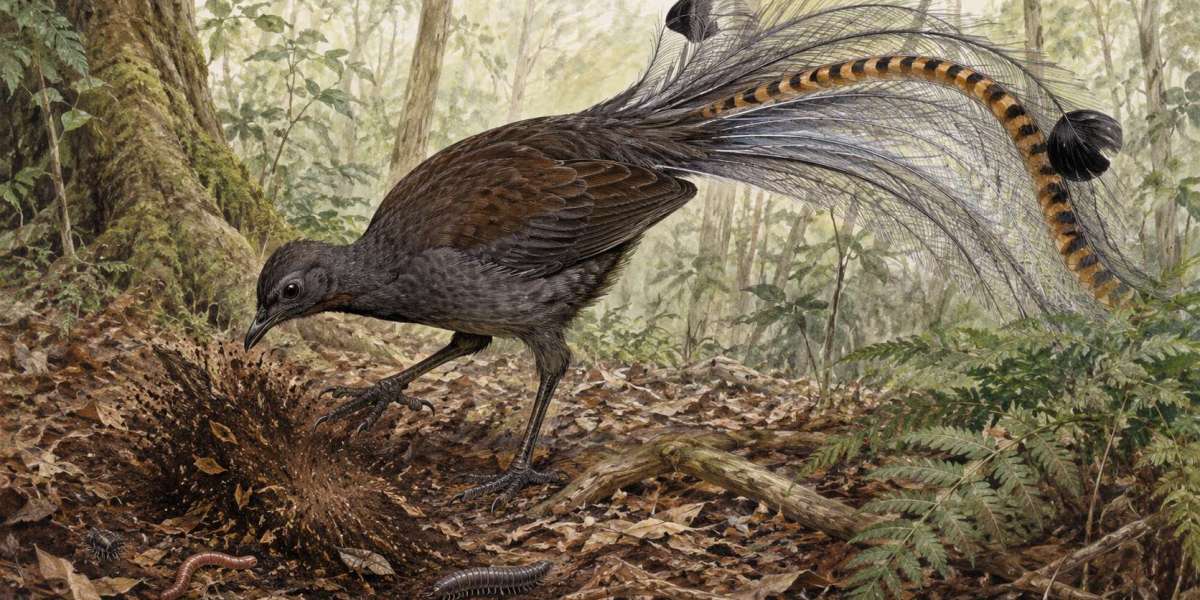
Researchers from La Trobe University in Australia conducted a multi-year study examining the foraging behavior of the superb lyrebird (Menura novaehollandiae). Their findings revealed that when lyrebirds rake and scratch the forest floor searching for food, they are not simply hunting. Instead, they create ideal living conditions for the worms, spiders, centipedes, amphipods, and other invertebrates they later consume. Scientists concluded that this behavior functions similarly to farming because it encourages prey populations to grow and thrive before being harvested.
The study found that lyrebirds move approximately 155 tonnes of soil and leaf litter per hectare every year, making them one of the most powerful ecosystem engineers among vertebrates. Their powerful claws turn over leaf litter, expose patches of soil, and mix organic material throughout the forest floor. This process creates a mosaic of habitats that boosts both the biomass and diversity of invertebrate communities. Researchers say the scale of this environmental modification is unprecedented among known non-human vertebrate "farmers".
Scientists observed that areas disturbed by lyrebirds contained larger and more diverse populations of prey species compared to areas where the birds were excluded. The findings suggest that lyrebirds effectively cultivate food resources through habitat management, much like leafcutter ants cultivate fungi. While the birds ultimately consume these invertebrates, their continual soil disturbance allows prey populations to recover and flourish, creating a sustainable food source over time.
Beyond feeding themselves, lyrebirds provide significant ecological benefits to Australia's forests. Their digging activity improves soil aeration, accelerates nutrient cycling, promotes decomposition of leaf litter, and helps maintain diverse invertebrate communities. These invertebrates, in turn, support countless birds, reptiles, mammals, and plant species throughout the ecosystem. Researchers argue that without lyrebirds, many Australian forest environments would look dramatically different.
The discovery adds another layer to the bird's already extraordinary reputation. Lyrebirds are famous worldwide for their unparalleled vocal mimicry. Males can imitate dozens of bird species and even replicate human-made sounds with astonishing accuracy. Their performances often include chainsaws, camera clicks, alarms, barking dogs, and mobile phone ringtones. During breeding displays, males combine these sounds with elaborate dances and displays of their spectacular lyre-shaped tail feathers.
The latest research highlights how much remains to be discovered about even well-known wildlife species. Scientists now view the superb lyrebird not only as one of the world's greatest mimics but also as a critical architect of Australian forest ecosystems. The findings demonstrate that animal intelligence and environmental engineering can take forms far more complex than previously understood, reinforcing the importance of conserving the forests where these remarkable birds live.
Key Points Summary
Lyrebirds are famous for mimicking natural and artificial sounds.
New 2025 research shows they also "farm" their prey by modifying forest habitats.
Their foraging activity increases prey abundance and biodiversity.
They move around 155 tonnes of soil and litter per hectare annually.
Scientists consider them major ecosystem engineers.
Their actions improve soil health, nutrient cycling, and forest biodiversity.
The discovery is considered one of the most remarkable recent findings in animal behavior research.
advertisement
Frequently Asked Questions (FAQ)
What is a lyrebird?
A lyrebird is a ground-dwelling bird native to Australia, famous for its extraordinary ability to mimic sounds from its environment.
Why are lyrebirds called master mimics?
They can accurately imitate dozens of bird species and even human-made sounds such as chainsaws, camera shutters, alarms, and mobile phone ringtones.
What new discovery did scientists make in 2025?
Researchers found that lyrebirds create favorable conditions for their prey, effectively "farming" invertebrates by modifying the forest floor.
How do lyrebirds farm their prey?
They rake and disturb leaf litter and soil, creating habitats where worms, spiders, centipedes, and other invertebrates thrive.
Why is this discovery important?
It shows that lyrebirds play a much larger ecological role than previously understood and help maintain healthy forest ecosystems.
Where do lyrebirds live?
They are native to southeastern Australia, including parts of New South Wales, Victoria, Queensland, and Tasmania.
Are lyrebirds endangered?
The superb lyrebird is currently not classified as endangered, but habitat loss and major bushfires remain concerns for conservationists.
Sources
British Ecological Society (March 11, 2025): Lyrebirds, famed for their mimicry, are also forest farmers
Journal of Animal Ecology (2025): Foraging activity by an ecosystem engineer, the superb lyrebird, 'farms' its invertebrate prey
Biographic (April 24, 2025): The Birds Who Farm the Forest Floor
Thank you !