
Top Stargazing and Astronomical Events of June 2026: Venus–Jupiter Conjunction, Planet Parade, Lunar Occultation, Summer Solstice, and NASA Skywatching Tips
What's Up: June 2026 Skywatching Tips from NASA - NASA Jet Propulsion Laboratory
Key Points
Venus and Jupiter appear extremely close together on June 9, 2026.
Mercury joins Venus and Jupiter from June 11–15, creating a mini planetary parade.
A rare lunar occultation of Venus occurs on June 17 for parts of North and South America.
The June Solstice arrives on June 21, marking astronomical summer in the Northern Hemisphere.
The famous Summer Triangle becomes prominent in the evening sky.
Deep-sky objects including the Dumbbell Nebula, Ring Nebula, North America Nebula, and Veil Nebula become excellent observing targets.
Mars returns to the morning sky while Saturn rises before dawn.
The Strawberry Moon reaches full phase on June 29, 2026.
NASA recommends observing shortly after sunset and using safe viewing practices when observing near the Sun.
June offers some of the best astrophotography opportunities of 2026.
advertisement
June 2026 is shaping up to be one of the most exciting months of the year for astronomy enthusiasts, casual skywatchers, photographers, and families looking to enjoy the night sky. According to NASA's latest June 2026 skywatching guide, the month features a spectacular lineup of planetary encounters, a rare lunar occultation, the arrival of astronomical summer, and several deep-sky treasures that become visible during warm evening nights.
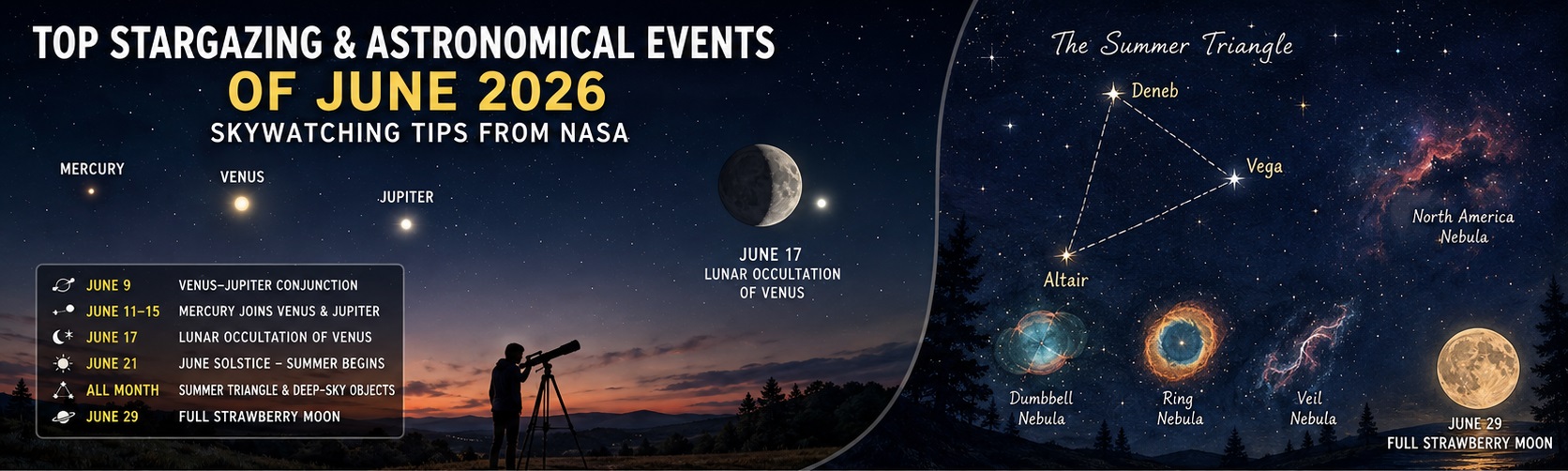
One of the month's biggest highlights occurs on June 9, when brilliant Venus and Jupiter appear exceptionally close together in the western sky after sunset. Although the two planets remain millions of miles apart in space, they will appear nearly side by side from Earth's perspective, creating a stunning planetary conjunction easily visible without any telescope. Venus will shine as the brightest object, while Jupiter appears nearby, making this one of the easiest astronomical events for beginners to enjoy.
The celestial show becomes even more impressive between June 11 and June 15, when Mercury joins Venus and Jupiter, forming what NASA describes as a mini planetary parade. Observers with a clear western horizon will be able to see all three planets aligned along the ecliptic shortly after sunset. Mercury will sit lower on the horizon and may require darker skies and unobstructed views to spot successfully.
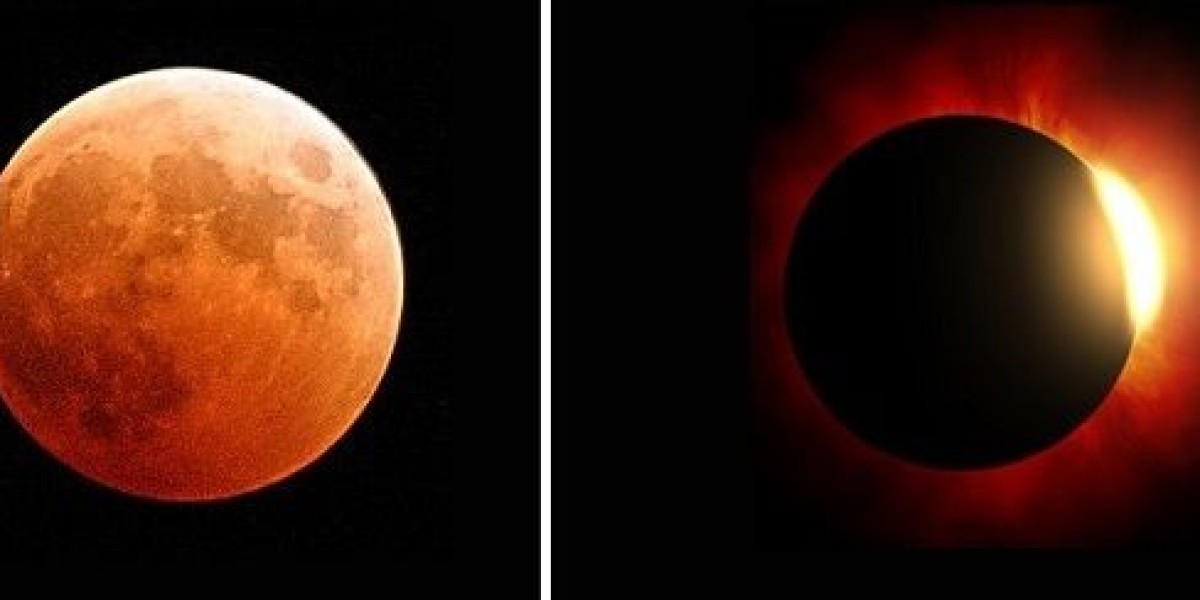
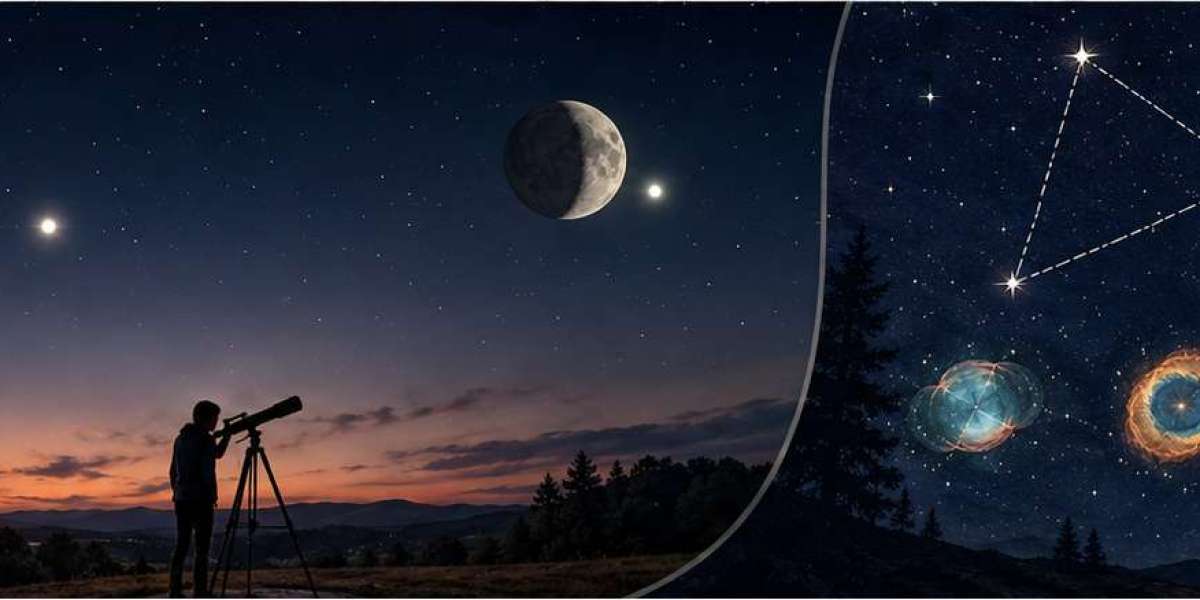
Another rare event arrives on June 17, when the Moon passes directly in front of Venus, creating a lunar occultation visible from parts of the United States, Canada, Brazil, and Venezuela. During the event, Venus will temporarily disappear behind the Moon before reappearing later. Even observers outside the occultation path may witness a beautiful close pairing between the Moon and Venus. NASA emphasizes that some portions of the event occur during daylight hours and warns observers never to point binoculars, telescopes, or cameras near the Sun without proper solar protection.
The month also marks an important seasonal milestone. On June 21, the June Solstice officially begins astronomical summer in the Northern Hemisphere and winter in the Southern Hemisphere. For northern observers, this brings the longest day and shortest night of the year. Although nights become shorter, the warm weather and comfortable viewing conditions make June one of the most enjoyable months for outdoor astronomy.
As darkness falls later in the evening, skywatchers can look toward the east and southeast to find the famous Summer Triangle, formed by the bright stars Vega, Altair, and Deneb. This giant pattern serves as a guide to some of the most impressive deep-sky objects visible during summer. Through telescopes and long-exposure photography, observers can explore the Dumbbell Nebula (M27), Ring Nebula (M57), North America Nebula, and Veil Nebula, revealing colorful clouds of gas, dying stars, and stellar nurseries scattered across our galaxy. NASA notes that the Dumbbell Nebula was the first planetary nebula ever discovered.
The morning sky also offers rewarding targets. Saturn becomes increasingly visible before dawn, displaying its beautiful ring system through small telescopes, while Mars returns to the pre-dawn sky after nearly a year of limited visibility. Toward the end of June, Mars approaches the Pleiades star cluster, creating an attractive scene for observers and astrophotographers.
Astrophotographers will find June particularly rewarding because the period around the June 14–15 New Moon provides darker skies for capturing galaxies, star clusters, nebulae, and the Milky Way. Many experts consider the days surrounding the New Moon among the best opportunities of the month for deep-sky imaging. Additionally, the conjunctions involving Venus, Jupiter, Mercury, Mars, and the Moon create multiple chances for striking wide-angle photographs.
The month concludes with the beautiful Strawberry Moon on June 29, 2026, the first full moon of astronomical summer in the Northern Hemisphere. Named by Indigenous traditions to mark the strawberry harvesting season, the moon will rise around sunset and provide excellent viewing and photography opportunities. While not unusually large, it remains one of the year's most anticipated full moons because of its seasonal significance and picturesque appearance near the horizon.
Overall, June 2026 delivers an outstanding combination of planetary alignments, lunar events, seasonal transitions, deep-sky observing opportunities, and astrophotography targets. Whether using only your eyes, a pair of binoculars, or a telescope, there will be something worth watching nearly every week of the month. NASA encourages observers to check local weather conditions, find dark-sky locations when possible, and enjoy one of the year's most rewarding months for skywatching.
Key Points Summary
June 9: Venus–Jupiter conjunction.
June 11–15: Mercury joins Venus and Jupiter.
June 17: Lunar occultation of Venus.
June 21: June Solstice begins astronomical summer.
Throughout June: Summer Triangle dominates evening skies.
Best Deep-Sky Targets: Dumbbell Nebula, Ring Nebula, North America Nebula, Veil Nebula.
Morning Sky: Saturn and Mars become easier to observe.
June 14–15: New Moon provides ideal dark skies.
June 29: Full Strawberry Moon.
advertisement
Frequently Asked Questions [FAQ]
What is the most important astronomy event in June 2026?
The Venus–Jupiter conjunction on June 9 and the lunar occultation of Venus on June 17 are considered the month's headline events.
Do I need a telescope to see the Venus–Jupiter conjunction?
No. Both planets will be easily visible to the naked eye shortly after sunset.
What is a planetary parade?
A planetary parade occurs when multiple planets appear grouped together along the ecliptic from Earth's perspective.
What is a lunar occultation?
A lunar occultation happens when the Moon passes directly in front of a planet or star, temporarily blocking it from view.
What is the Summer Triangle?
The Summer Triangle is a large star pattern formed by Vega, Altair, and Deneb that becomes prominent during Northern Hemisphere summers.
When is the Full Strawberry Moon in June 2026?
The Strawberry Moon occurs on June 29, 2026.
Is June 2026 good for astrophotography?
Yes. The New Moon period around June 14–15 provides some of the darkest skies of the month, ideal for photographing deep-sky objects and the Milky Way.
What safety precautions should skywatchers follow?
Never point binoculars, telescopes, or cameras near the Sun without proper solar filters and safety equipment.
Sources
Thank you !