
Global Markets on Edge: Record-High Wall Street Confronts Geopolitical Headwinds, Sky-High Tech Rallies, and Mega-Cap IPO Disruption
Key Points
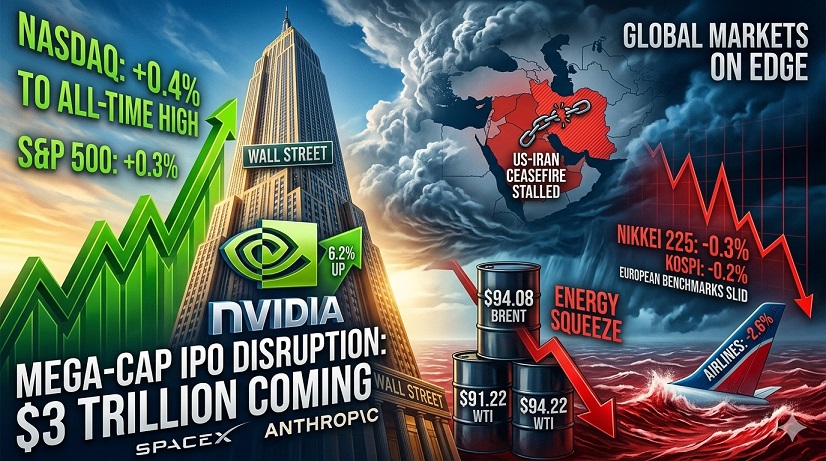
Geopolitical Strains: Fragile U.S.-Iran ceasefire negotiations face severe friction due to conflicting signals and regional escalations, directly dragging down major Asian and European equity indices.
Nvidia Lifts Wall Street: Nvidia shares surged 6.2% following major AI product announcements by CEO Jensen Huang, anchoring the S&P 500 and Nasdaq at historical all-time highs despite global unrest.
IPO Market Earthquake: Spaced-themed behemoth SpaceX and AI pioneer Anthropic have formalised their public listing tracks, with combined private valuations approaching an unprecedented $3 trillion that could trigger dramatic tracking dislocations across index providers.
Energy Market Squeeze: Brent crude and WTI crude hover at elevated levels of $94.08 and $91.22 per barrel respectively; the rising cost of fuel has initiated aggressive run-reductions across worldwide refineries and heavily penalized airline stocks.
Macroeconomics and Currencies: The U.S. Dollar index stands stable at 99.19 as currency and bond markets brace for imminent central bank policy decisions and global employment indicators.
advertisement
The financial world is witnessing a dramatic tug-of-war as international stock markets attempt to reconcile record-breaking equity peaks with multi-front macroeconomic turbulence.
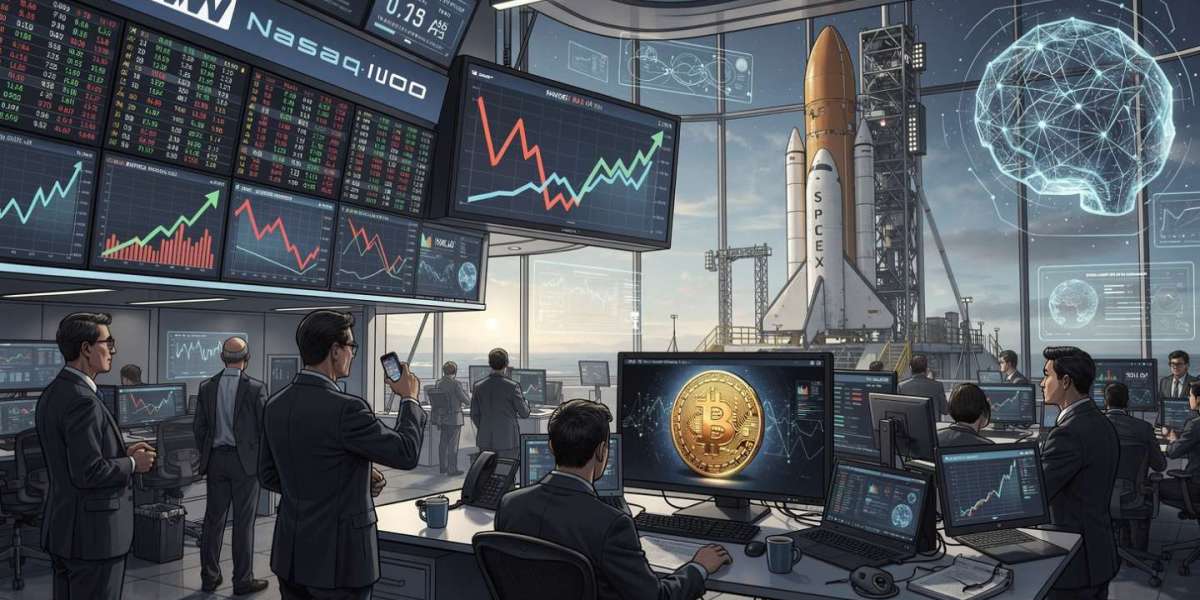
On June 1 and June 2, 2026, Wall Street safely concluded its opening sessions of the month at stunning historical highs, where the S&P 500 added 0.3% to close at 7,599.96, the Dow Jones Industrial Average ticked up 0.1% to 5,107.88, and the tech-heavy Nasdaq Composite jumped 0.4% to finish at 27,086.81.
This relentless domestic momentum was fueled almost single-handedly by semiconductor kingpin Nvidia, which skyrocketed 6.2% after its Chief Executive Officer, Jensen Huang, unveiled next-generation artificial intelligence hardware architectures at a global developer conference.
However, this American tech euphoria failed to cleanly translate across borders on Tuesday morning; Asian and European benchmarks broadly slid as the fragile U.S.-Iran diplomatic dialogue suffered severe breakdowns, with Iran's Foreign Ministry publicly accusing Washington of presenting contradictory demands and prolonging ceasefire negotiations.
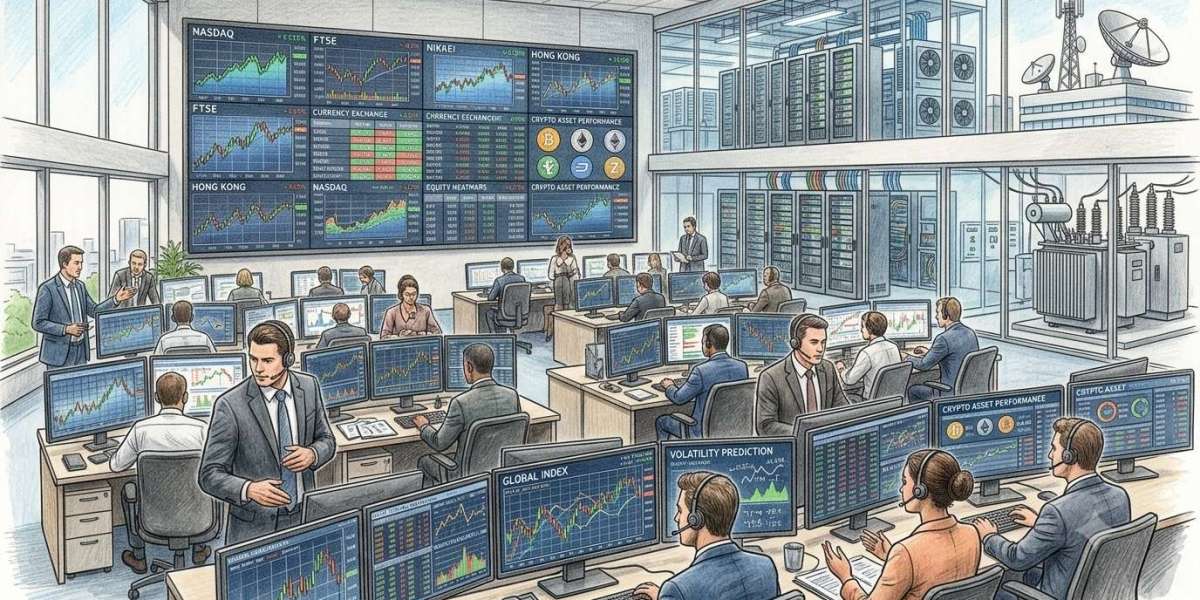
This escalating geopolitical instability has injected sudden risk-off sentiment into global capital channels, pushing Japan’s Nikkei 225 down 0.3% to 66,734.24 and dropping South Korea’s Kospi by 0.2% to 8,772.08, while simultaneously driving international oil benchmarks like Brent crude to an elevated $94.08 per barrel and West Texas Intermediate (WTI) crude to $91.22 per barrel.
The persistent energy crunch is no longer confined to crude stockpiles; refined fuel squeezes are actively forcing regional refineries to scale down production, which immediately hammered consumer-sensitive equities, triggering a 2.6% loss for United Airlines and a 3.3% drop for Alaska Air Group due to exploding operational overheads.
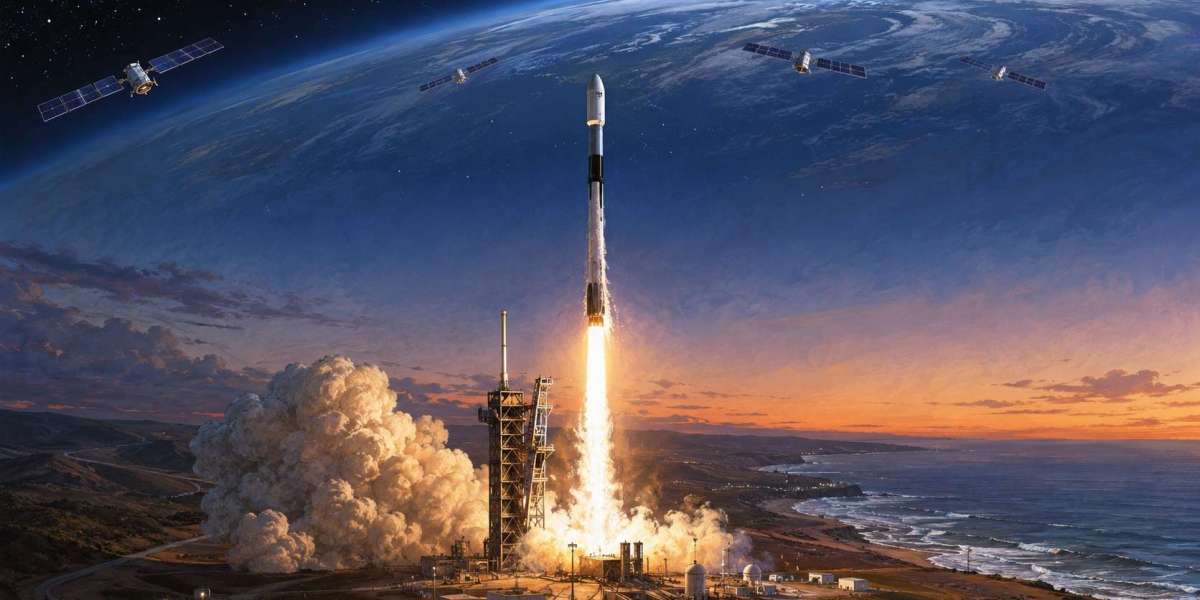
Beyond the immediate trading desks, a colossal structural shift is brewing inside the primary listings market as the U.S. Securities and Exchange Commission (SEC) processed revised filings for SpaceX's impending IPO, carrying an expected market capitalization between $1.75 trillion and $2 trillion.
Simultaneously, AI innovator Anthropic filed a draft registration statement with the SEC for a public listing, fresh off a massive funding round valuing the enterprise at $965 billion.
These incoming mega-cap public listings are presenting index institutions with an architectural challenge, forcing the Nasdaq to rapidly introduce quarterly index reconstructions to prevent massive tracking dislocations among institutional portfolio models.
As the week progresses, global capital markets are completely locking focus onto vital macroeconomic data releases—specifically the U.S. JOLTS Job Openings report and upcoming central bank rate statements—to see whether underlying global consumer demand can withstand this high-yield, high-inflation environment.
Key Points Summary
| Market Catalyst | Current Status / Metric | Broader Economic Impact |
| Wall Street Indices | S&P 500 at 7,599.96 (+0.3%) | Supported heavily by AI equity mania, though futures point lower. |
| Geopolitical Relations | U.S.-Iran Ceasefire Stalled | Triggers risk-off sentiment across European and Asian equity panels. |
| Energy & Oil Sector | Brent Crude holding strong at $94.08 | Sparks run-reductions at refineries; severely hurts airline profit margins. |
| AI & Tech Catalysts | Nvidia climbs 6.2% on product news | Solidifies tech as a defensive growth sector during macro unrest. |
| IPO Capital Influx | SpaceX and Anthropic target public listings | Forces index providers to alter balancing rules for a $3T influx. |
advertisement
Frequently Asked Questions [FAQ]
Why are global stock markets falling if Wall Street is hitting record highs?
While domestic American mega-caps like Nvidia are shielding the major U.S. indexes with massive market value weightings, international equity markets are far more sensitive to global energy flows and localized geopolitical gridlocks. The stagnation in the U.S.-Iran ceasefire negotiations directly threatens international trade corridors and escalates energy vulnerabilities across Europe and Asia.
How do the upcoming SpaceX and Anthropic IPOs affect everyday retail investors?
When multi-trillion-dollar companies list publicly, it acts like dropping an aircraft carrier into a small lake. Major passive mutual funds and Exchange-Traded Funds (ETFs) that track major indexes will be forced to sell off chunks of existing top-tier holdings (such as Meta, Tesla, or Micron) to free up liquid capital to buy shares of the newly listed entities. This structural rebalancing can trigger near-term volatility across the entire stock landscape.
Why are airline stocks losing value while technology stocks continue to rise?
Airlines run on thin operational margins where jet fuel is the largest variable expense. With Brent crude climbing past $94 a barrel due to Middle East uncertainties, airline profits shrink immediately. Technology and AI companies, on the other hand, are valued based on long-term software licensing, cloud architecture scaling, and infrastructure deployment, making their core operations completely isolated from immediate fuel fluctuations.
Sources
Associated Press / Financial Reporting (June 2, 2026): Asian Shares Mostly Slip as Latest Fighting Undermines Ceasefire
Global Finance Magazine (June 2, 2026): Mega-Cap IPOs Make Major Waves for Index Investors
Blackstone Corporate Press (June 2, 2026): Blackstone Raises its Largest Asia Private Equity Fund at $13.1 Billion
HDFC SKY Financial Wire (June 2, 2026): Sensex and Nifty Decline as Iran Diplomacy Unravels; IT Holds Firm
Disclaimer:
This material may contain third-party opinions, none of the data and information on this webpage constitutes investment advice
The content shared in economics articles is solely for research and informational purposes.
We are not a financial advisory service, and the information provided should not be considered investment or trading advice.
Thank you !