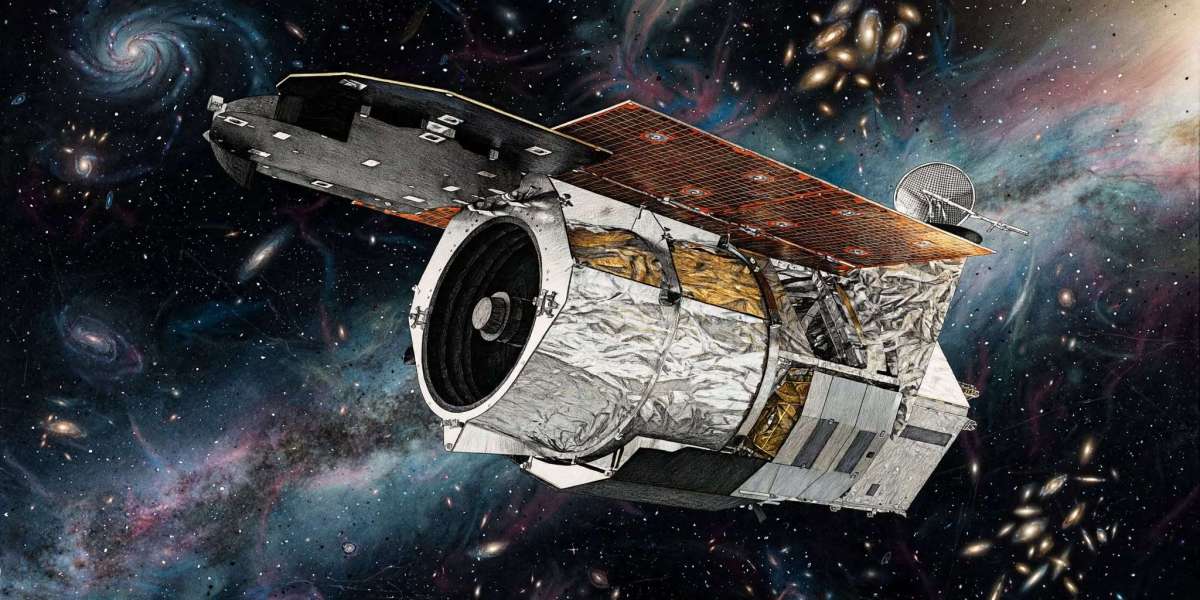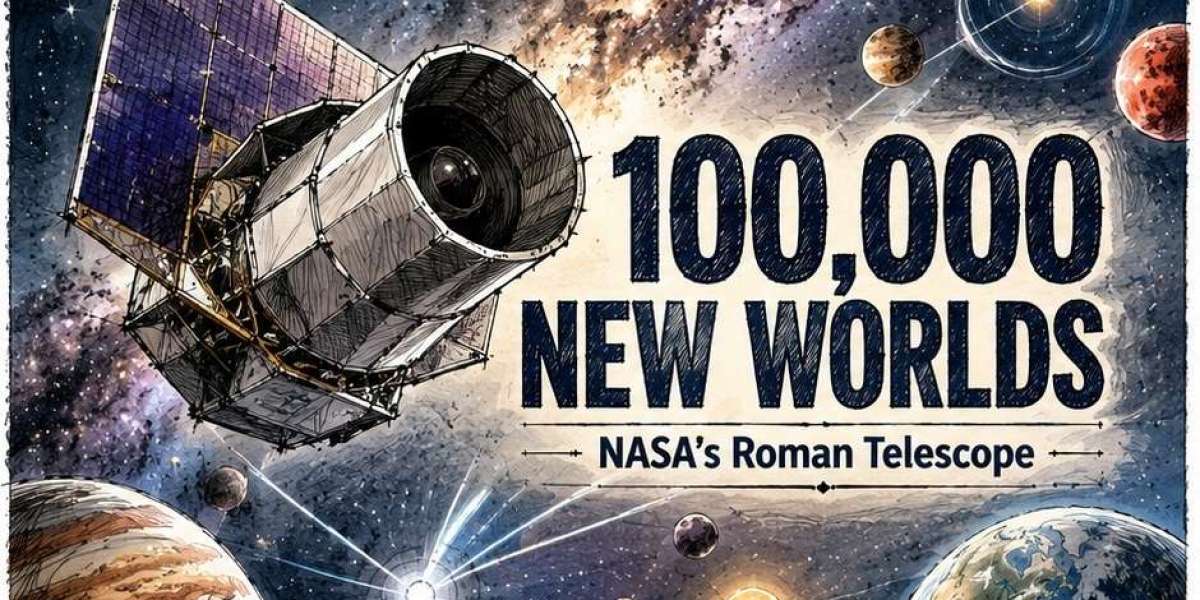

NASA’s Roman Space Telescope Set to Discover 100,000 New Worlds Across the Milky Way
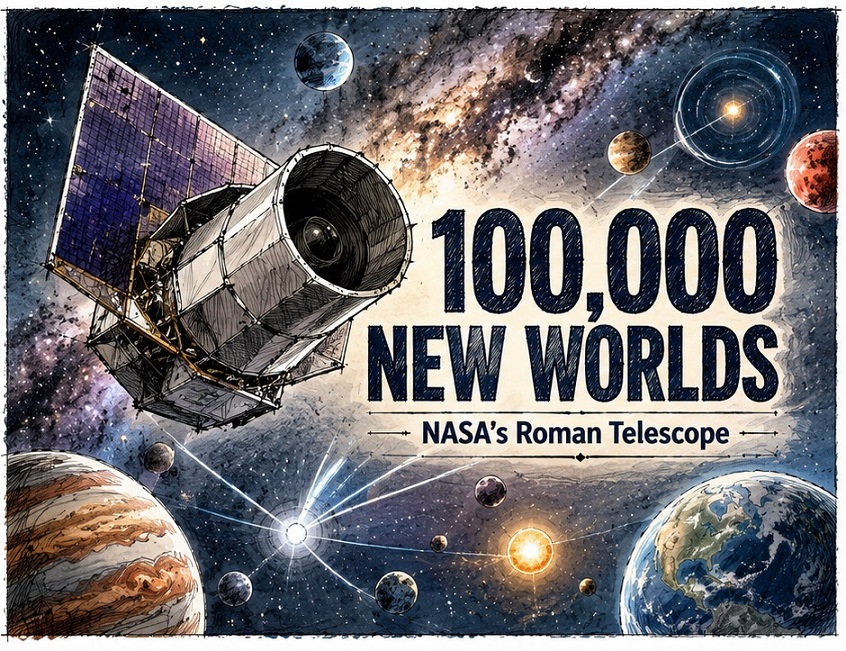
One Last Look at Roman's Mirror - NASA Goddard
Key Points
NASA’s Nancy Grace Roman Space Telescope is preparing to revolutionize exoplanet science.
Scientists expect Roman to discover around 100,000 new planets beyond our solar system.
The telescope will explore largely uncharted regions of the Milky Way, including the dense galactic bulge.
Roman will use both transit and gravitational microlensing techniques to find distant worlds.
The mission could detect planets as small as Earth and Mars.
Researchers will compare planetary systems across different parts of the galaxy.
Roman may study the atmospheres and climates of thousands of exoplanets.
All mission data will be publicly available to scientists and citizen researchers worldwide.
The observatory is currently undergoing final testing ahead of a planned launch window as early as late 2026.
advertisement
NASA is preparing for one of the most ambitious planet-hunting missions ever attempted with the upcoming Nancy Grace Roman Space Telescope, a next-generation observatory expected to dramatically expand humanity’s understanding of worlds beyond our solar system. According to newly released mission details, Roman could discover approximately 100,000 exoplanets, a staggering increase compared with the nearly 6,300 confirmed exoplanets identified so far through NASA missions and international observatories.
Unlike many previous planet-searching missions that focused mainly on stars relatively close to Earth, Roman will investigate distant and largely unexplored regions of the Milky Way, including the crowded galactic bulge near the galaxy’s center. Scientists believe this broader survey could reveal how planetary systems differ depending on where they form within the galaxy.
One of the mission’s primary goals is to determine whether planets form differently in various galactic environments. Researchers suspect that stars closer to the Milky Way’s center contain larger amounts of heavy elements such as silicon, oxygen, and magnesium—materials essential for building rocky planets. These chemical differences could influence the size, composition, and abundance of planets throughout the galaxy.
Roman will employ two powerful planet-detection techniques simultaneously. The first, known as the transit method, detects tiny dips in a star’s brightness when a planet passes in front of it. Through this method alone, scientists expect Roman to identify roughly 100,000 worlds, particularly large planets orbiting close to their stars.
The second technique, gravitational microlensing, will allow Roman to find planets that are difficult or impossible for most telescopes to detect. This method occurs when the gravity of a star and its planets temporarily magnifies the light of a more distant star. Scientists expect Roman to uncover more than 1,000 additional planets through microlensing, including worlds similar in size to Earth and Mars located in or near their stars’ habitable zones.
Roman’s Galactic Bulge Time-Domain Survey will monitor around 100 million stars and capture more than 50,000 microlensing events. Beyond exoplanets, the survey could also reveal black holes, neutron stars, trans-Neptunian objects, and other exotic cosmic phenomena. Researchers say the enormous dataset will transform multiple fields of astronomy.
Another major objective is understanding the history of our own solar system. Scientists believe the Sun originally formed approximately 10,000 light-years closer to the Milky Way’s center before gradually migrating outward to its current position about 27,000 light-years from the galactic core. By examining planets around stars in different galactic neighborhoods, Roman may help explain how planetary systems like ours developed over billions of years.
The telescope will also investigate alien climates and atmospheric conditions on thousands of worlds. While it will not analyze atmospheres with the same detail as the James Webb Space Telescope, Roman will provide large-scale statistical measurements of planetary temperatures, weather patterns, and heat circulation across many exoplanets simultaneously. This broad survey could identify especially interesting targets for future detailed observations.
Particular attention will be given to so-called “hot Jupiters,” giant gas planets orbiting extremely close to their stars. Roman’s infrared instruments will detect heat emitted by these worlds, allowing scientists to estimate atmospheric temperatures, study winds, and map differences between their day and night sides. Such observations could offer unprecedented insights into planetary weather systems outside our solar system.
The mission represents a major technological leap for NASA. Roman features a 2.4-meter mirror comparable in size to the one aboard the Hubble Space Telescope but pairs it with a much wider field of view, enabling it to survey huge portions of the sky far faster than previous observatories. The telescope is also expected to play a significant role in studying dark matter, dark energy, and the large-scale structure of the universe.
Construction of Roman has been completed, and the observatory is currently undergoing final testing before launch preparations. NASA says the telescope remains on track for launch no later than May 2027, with teams working toward a possible launch as early as late 2026. Once operational, Roman is expected to generate an unprecedented flood of scientific data that could reshape our understanding of planets, galaxies, and humanity’s place in the cosmos.
Key Points Summary
Roman could discover 100,000 new exoplanets.
The telescope will study distant regions of the Milky Way rarely explored before.
It will use both transit and microlensing planet-detection methods.
Scientists hope to learn how planetary systems differ across the galaxy.
Roman may identify Earth-sized and Mars-sized worlds in habitable zones.
The mission will study planetary climates and atmospheric behavior.
Researchers will monitor roughly 100 million stars.
Roman is also designed to investigate dark matter and dark energy.
Launch could occur as early as late 2026, with May 2027 remaining the official deadline.
advertisement
Frequently Asked Questions [FAQ]
What is NASA’s Roman Space Telescope?
The Nancy Grace Roman Space Telescope is NASA’s next major space observatory designed to study exoplanets, dark matter, dark energy, and the evolution of the universe.
How many planets is Roman expected to discover?
Scientists estimate Roman could discover approximately 100,000 exoplanets, making it one of the most productive planet-hunting missions ever launched.
How will Roman find exoplanets?
The telescope will use the transit method and gravitational microlensing to detect planets around distant stars.
Can Roman find Earth-like planets?
Yes. Through microlensing, Roman may discover planets similar in size to Earth and Mars, including some located in habitable zones around their stars.
Will Roman replace the James Webb Space Telescope?
No. Roman and Webb are designed for different scientific goals and will complement one another. Roman will survey vast numbers of objects, while Webb specializes in detailed observations of selected targets.
When will the Roman Space Telescope launch?
NASA currently targets launch no later than May 2027, with the possibility of launching as early as late 2026 if preparations remain on schedule.
Sources
Thank you !