
Stock Market Today: Sensex Surge, Oil Price Volatility & Iran-US Ceasefire Talks Drive Global Markets
Key Highlights
Markets rebound sharply as ceasefire hopes between the US and Iran boost investor sentiment
Oil prices retreat after recent surge, easing inflation concerns for global economies
Volatility remains high as traders weigh geopolitical risks and macroeconomic uncertainty
advertisement
Introduction: Global Markets React to Geopolitical Shifts

Stock market movements today reflect a complex interplay of geopolitical tensions, energy price fluctuations, and investor sentiment.
Global equity indices, including India’s benchmark indices, staged a strong recovery after early losses, driven largely by optimism surrounding potential de-escalation between the United States and Iran.
At the same time, oil prices, currency markets, and investor positioning continue to signal caution, highlighting a market environment that remains highly reactive and volatile—particularly for active traders and long-term investors.
Stock Market Rally: Sensex and Nifty Reverse Losses
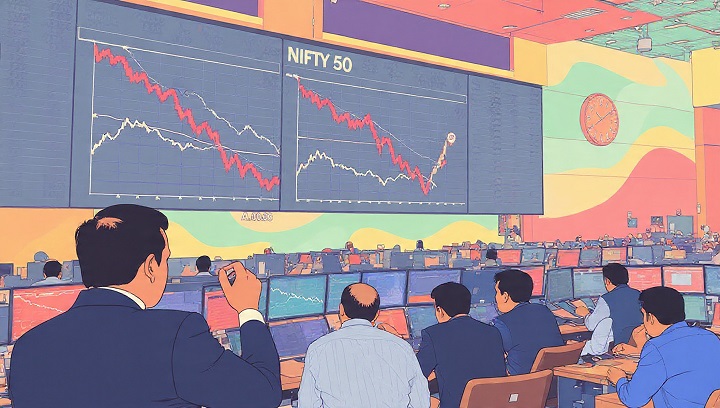
India’s stock market witnessed a sharp intraday turnaround.
The Sensex surged over 600 points, trading near 73,934 after falling nearly 750 points earlier in the day.
Similarly, the Nifty 50 climbed close to 22,916 after dropping to an intraday low of 22,542—marking a swing of nearly 370 points.
This dramatic reversal underscores the current market environment:
Highly sensitive to global developments
Prone to sharp intraday volatility
Driven by sentiment rather than strong structural trends
Broad-based buying across sectors supported the rally, particularly in:
Banking and financial stocks
Consumer goods
Infrastructure companies
Top gainers included companies like Trent, Titan, Axis Bank, L&T, UltraTech Cement, and Bajaj Finance, which rose between 2% and 7%.
However, not all stocks participated equally, with Reliance Industries acting as a drag, limiting broader index gains.
Key Driver #1: Iran-US Ceasefire Hopes

The most significant catalyst for today’s market rebound was news of a potential ceasefire framework between the United States and Iran.
According to reports, a two-stage proposal—possibly called the “Islamabad Accord”—has been shared with both nations.
Key elements of the proposal include:
An immediate ceasefire to halt hostilities
Reopening of the Strait of Hormuz, a critical oil transit route
A broader agreement within 15–20 days
Possible sanctions relief in exchange for nuclear commitments
The proposal is being mediated through Pakistan, with ongoing diplomatic engagement involving senior officials from multiple countries.
However, perspectives differ across sources:
Some reports suggest active negotiations and optimism around a quick ceasefire
Others indicate Iran has not yet committed, and talks may be stalled
Certain sources even describe the situation as a deadlock, with no immediate resolution
This divergence highlights the uncertainty traders must navigate when reacting to geopolitical headlines.
Key Driver #2: Oil Prices Cool After Recent Surge

Oil markets, which had surged sharply in recent sessions, showed signs of cooling.
Brent crude fell to around $107–108 per barrel
WTI crude dropped to approximately $109–110 per barrel
This decline follows:
A prior surge of up to 11% in WTI and 8% in Brent
Ongoing uncertainty around supply disruptions
The easing in oil prices is largely linked to ceasefire expectations, which could:
Restore supply flows
Reduce shipping disruptions
Stabilize global energy markets
However, risks remain elevated:
The Strait of Hormuz remains partially closed
Supply chains are still disrupted
Refiners are actively seeking alternative crude sources
Additionally, OPEC+ has announced a modest production increase, though analysts suggest this may have limited real-world impact due to ongoing conflict constraints.
Key Driver #3: Currency Markets Signal Caution

Currency markets reflect a more cautious tone compared to equities.
The US dollar remained steady, supported by:
Safe-haven demand amid geopolitical tensions
Uncertainty around global growth
Meanwhile:
The Japanese yen hovered near 160 per dollar, close to multi-month lows
The euro and British pound showed limited movement
The Australian dollar edged slightly higher
Market participants are closely watching:
Potential US Federal Reserve policy shifts
Inflation risks driven by oil prices
Broader macroeconomic impacts of prolonged conflict
Notably, traders are now pushing expectations for rate cuts further into the future, reflecting concerns over persistent inflation and geopolitical instability.
Volatility Ahead: What Traders and Investors Should Watch

Despite today’s rally, the broader outlook remains uncertain.
Key factors to monitor include:
Official confirmation of a ceasefire agreement
Reopening of the Strait of Hormuz
Oil price trajectory and supply stability
Foreign investor flows and capital movement
Central bank policy expectations
Markets are currently driven more by headlines than fundamentals, making risk management crucial for traders.
Conclusion: A Market Driven by Headlines, Not Certainty

Today’s stock market rally is best understood as a relief-driven rebound rather than a confirmed trend reversal.
While optimism around a potential Iran-US ceasefire has boosted sentiment, conflicting reports and ongoing geopolitical risks suggest that uncertainty remains deeply embedded in global markets.
For investors, this environment presents both opportunity and risk:
Short-term traders may benefit from volatility and rapid price swings
Long-term investors should remain cautious, focusing on fundamentals and diversification
Ultimately, the direction of global markets will depend heavily on geopolitical outcomes, particularly developments in the Middle East and their impact on energy markets.
In times like these, disciplined strategies, informed decision-making, and a close watch on global signals are more important than ever.
Key Points Summary
Stock markets rebounded sharply after early losses due to ceasefire optimism
Oil prices declined but remain volatile amid supply concerns
Currency markets signal caution despite equity gains
Geopolitical developments continue to drive global market direction
Today’s rally appears to be a short-term relief, not a confirmed trend
advertisement
Frequently Asked Questions (FAQ)
1. Why did the stock market rise today?
The market rebounded due to optimism about a potential ceasefire between the United States and Iran, which improved investor sentiment and eased concerns about rising oil prices.
2. Will oil prices continue to decline?
Not necessarily. Prices dropped due to ceasefire expectations, but risks remain because of ongoing supply disruptions and the partial closure of the Strait of Hormuz.
3. What is the Strait of Hormuz and why is it important?
It is a critical global oil transit route through which a significant portion of the world’s oil supply passes. Any disruption directly impacts energy prices and global markets.
4. Is this a good time to invest?
It depends on your strategy. Short-term traders may benefit from volatility, while long-term investors should focus on fundamentals and risk management.
5. What are the biggest risks for markets right now?
Key risks include geopolitical escalation, oil supply disruptions, inflation pressures, and uncertainty around central bank policies.
Sources
India Today – Stock market rally and Sensex surge analysis
https://www.indiatoday.in/business/market/story/sensex-jumps-why-stock-market-rose-today-april-6-nifty-oil-prices-iran-ceasefire-impact-2892174-2026-04-06Reuters – Iran-US ceasefire proposal and geopolitical developments
https://www.reuters.com/world/china/iran-us-receive-plan-end-hostilities-immediate-ceasefire-source-says-2026-04-06/Asharq Al-Awsat – Oil price movements and supply disruption insights
https://english.aawsat.com/business/5259293-oil-prices-fall-us-iran-receiving-peace-proposalAsharq Al-Awsat – Currency market trends and dollar outlook
https://english.aawsat.com/business/5259280-dollar-steady-traders-weigh-escalating-iran-war-ceasefire-hopes
Disclaimer:
This material may contain third-party opinions, none of the data and information on this webpage constitutes investment advice
The content shared in economics articles is solely for research and informational purposes.
We are not a financial advisory service, and the information provided should not be considered investment or trading advice.
Thank you !