
Stock Market Today: Inflation, Oil Volatility, and What to Expect for the S&P 500 in 2026

Key Points:
Inflation readings and oil price spikes are key drivers shaping market movements this week.
The Iran conflict’s impact on oil prices is testing the resilience of US equities and inflation metrics.
Historical data and earnings forecasts suggest a lower risk of a deep S&P 500 crash in 2026, despite current volatility.
advertisement
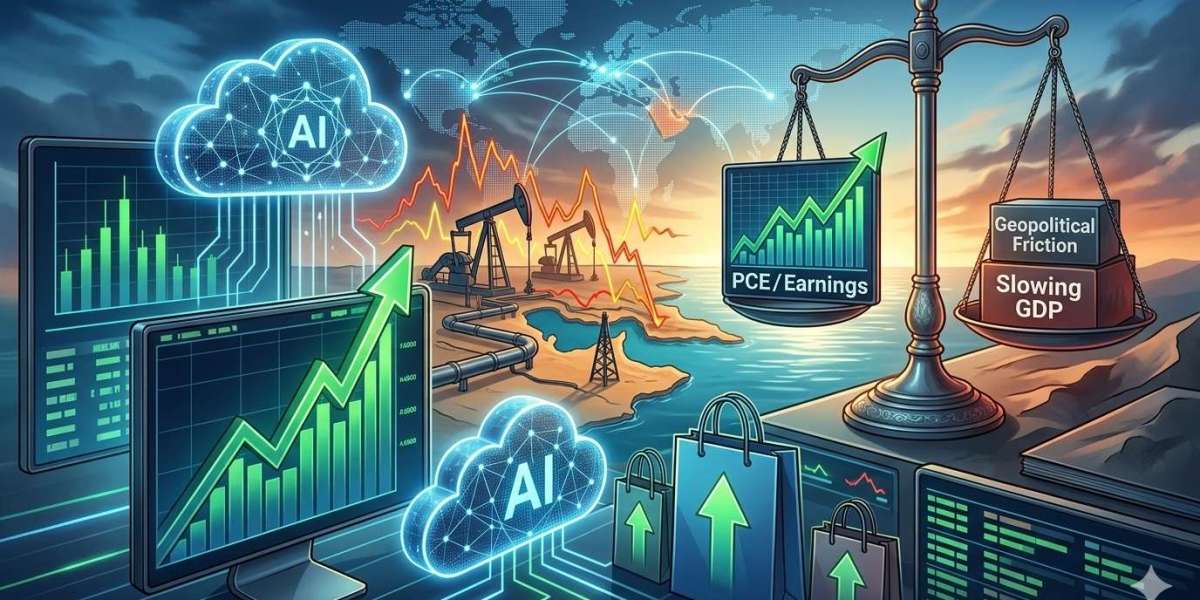
The stock market is navigating a complex landscape as inflation reports, oil price volatility, and corporate earnings come into focus this week. After a rollercoaster of geopolitical tensions, particularly surrounding the Iran conflict, and fluctuating oil prices, investors are closely watching how these factors are affecting the S&P 500 and broader US equities.
The S&P 500 managed to close the recent week with a modest gain of 1.6%, recovering from earlier dips, while the Dow gained 1.2% and the Nasdaq Composite led with a 2.2% increase. Despite these gains, both the Dow and S&P 500 are still down more than 3% year-to-date, reflecting ongoing uncertainty in the markets.
Inflation Data and Economic Indicators in Focus

This week, two crucial inflation indicators are scheduled for release: the Personal Consumption Expenditures (PCE) index for February on Thursday and the Consumer Price Index (CPI) for March on Friday. These figures will provide fresh insights into how inflationary pressures—especially those driven by soaring oil prices—are influencing the economy.
Consumer spending data, corporate earnings, and sentiment readings from the University of Michigan’s April preliminary report will round out a busy week on the economic calendar. Analysts expect core CPI to hold steady at 2.5% annually, a critical figure for predicting the Federal Reserve's next moves.
advertisement
Oil Prices and Geopolitical Risks

Oil prices have surged over 50% since the Iran conflict escalated, with crude futures frequently crossing the $100 per barrel threshold. The closure of the Strait of Hormuz, a vital energy shipping route, has compounded fears about supply shortages.
Despite tentative signals that both sides might seek a resolution, market sentiment currently leans toward further escalation. President Trump’s recent speech threatening severe action against Iran pushed oil prices even higher, intensifying market anxiety.
Delta Air Lines’ upcoming earnings report will provide a key barometer of how rising jet fuel costs are impacting industries vulnerable to energy prices.
Jobs Report Shows ‘Balance’ Amid Volatility

The March jobs report surprised on the upside, showing an addition of 178,000 jobs, significantly beating expectations after a loss in February. Experts highlight this as a sign of balance in the economy — steady hiring eases worries about recession but doesn’t negate the broader cooling trend.
As JPMorgan Chase’s chief US economist Michael Feroli noted, “This gives us a little more confidence that economic growth can weather the ongoing energy price shock without too much enduring damage.”
Earnings and Sector Insights

This week’s earnings reports from Levi Strauss, Constellation Brands, Delta Air Lines, and BlackBerry will offer insights into consumer behavior, travel demand, and enterprise spending amid this volatile environment. In tech, the HumanX AI Conference in San Francisco keeps the spotlight on AI developments, featuring major players like Nvidia, Microsoft, Amazon, and Alphabet.
advertisement
Historical Perspective: Will the S&P 500 Crash in 2026?

Despite the recent pullback of nearly 9% from its all-time high, history suggests the current market correction is within normal bounds under strong earnings growth conditions.
The table below shows past instances where the S&P 500 experienced corrections while earnings continued to grow:
| Year | S&P 500 EPS Growth | Market Event |
|---|---|---|
| 1994 | +39.8% | 9% pullback in the first half of year |
| 1997 | +2.6% | 10% correction late in the year |
| 1999 | +27.7% | 12% correction in second half of year |
| 2004 | +20.1% | 8% pullback in mid-year |
| 2011 | +12.4% | 19% correction; near-bear market |
| 2018 | +20.5% | 20% correction in the fourth quarter |
Corrections are expected and often contained during periods of earnings growth. Notably, after the 2011 and 2018 corrections, the market rebounded quickly, reaching new highs within months.
Conversely, deeper bear markets of 20% or more generally coincide with significant earnings contractions or recessions, as shown here:
| Year | Event | Result |
|---|---|---|
| 2000-2002 | Tech bubble | Earnings fell 51% in 2001; S&P 500 dropped 49% |
| 2007-2009 | Housing crisis | Earnings fell 19% in '07 and 77% in '08; S&P 500 down 51% |
| 2020 | COVID-19 pandemic | Earnings fell 32%; S&P 500 down 32% |
| 2022 | Inflation spike | Earnings fell 13%; S&P 500 down 24% |
FactSet currently projects strong earnings growth of 17% in both 2026 and 2027. If these estimates hold, it indicates a lower risk of a market crash this year, although the Iran conflict’s impact on these projections remains a watchpoint.
Investment Strategies Amid Uncertainty
Expert analysis suggests maintaining a defensive stance by favoring cash and energy sector stocks, particularly outside the Middle East. Exposure to bonds and gold should be cautious given potential overvaluation and risks in corporate bonds.
The outlook for industrial metals and cyclical value stocks remains cautious due to global recession fears.
Conclusion: Navigating Volatility with Informed Confidence
This week’s economic data, inflation readings, and corporate earnings come at a critical juncture for investors. While geopolitical tensions and oil price shocks continue to test market resilience, historical trends and robust earnings growth suggest that corrections are a natural part of market cycles and deeper bear markets typically require more severe economic disruptions.
Staying informed, monitoring inflation and earnings closely, and maintaining a flexible investment strategy can help investors weather uncertainty and capitalize on long-term growth opportunities. The market’s past teaches us that while volatility can be unsettling, it also paves the way for eventual recovery and progress.
Key Points Summary
Inflation data and oil price volatility drive market focus this week.
March jobs report shows balanced economic growth despite uncertainty.
Historical trends and earnings forecasts suggest lower risk of a major S&P 500 crash in 2026.
advertisement
Frequently Asked Questions (FAQ)
Q1: How are oil prices affecting the stock market right now?
Oil prices have surged over 50% due to the Iran conflict and the closure of the Strait of Hormuz, impacting inflation and sectors like airlines sensitive to fuel costs.
Q2: Will the recent stock market volatility lead to a crash in 2026?
Historical data and strong projected earnings growth (17% in 2026) indicate a lower risk of a deep crash, though geopolitical risks could change conditions rapidly.
Q3: What inflation data should investors watch this week?
The Personal Consumption Expenditures (PCE) index and Consumer Price Index (CPI) are key inflation indicators coming out this week, influencing Fed policy expectations.
Q4: How does earnings growth impact market corrections?
Strong earnings growth often limits the severity of market corrections and supports quicker rebounds after downturns.
Q5: What sectors are recommended to focus on amid current uncertainties?
Energy stocks, especially outside the Middle East, and cash holdings are advised, while caution is suggested for industrial metals and cyclical value stocks.
Sources
Yahoo Finance – Inflation readings, oil volatility, and airline earnings: What to watch this week
https://finance.yahoo.com/news/inflation-readings-oil-volatility-and-airline-earnings-what-to-watch-this-week-100027649.htmlSeeking Alpha – Wall Street Week Ahead
https://seekingalpha.com/article/4888470-wall-street-week-aheadThe Motley Fool – Will the S&P 500 Crash in 2026? History Offers a Clear Answer
https://www.fool.com/investing/2026/04/05/will-sp-500-crash-2026-history-offers-answer/
Disclaimer:
This material may contain third-party opinions, none of the data and information on this webpage constitutes investment advice
The content shared in economics articles is solely for research and informational purposes.
We are not a financial advisory service, and the information provided should not be considered investment or trading advice.
Thank you !