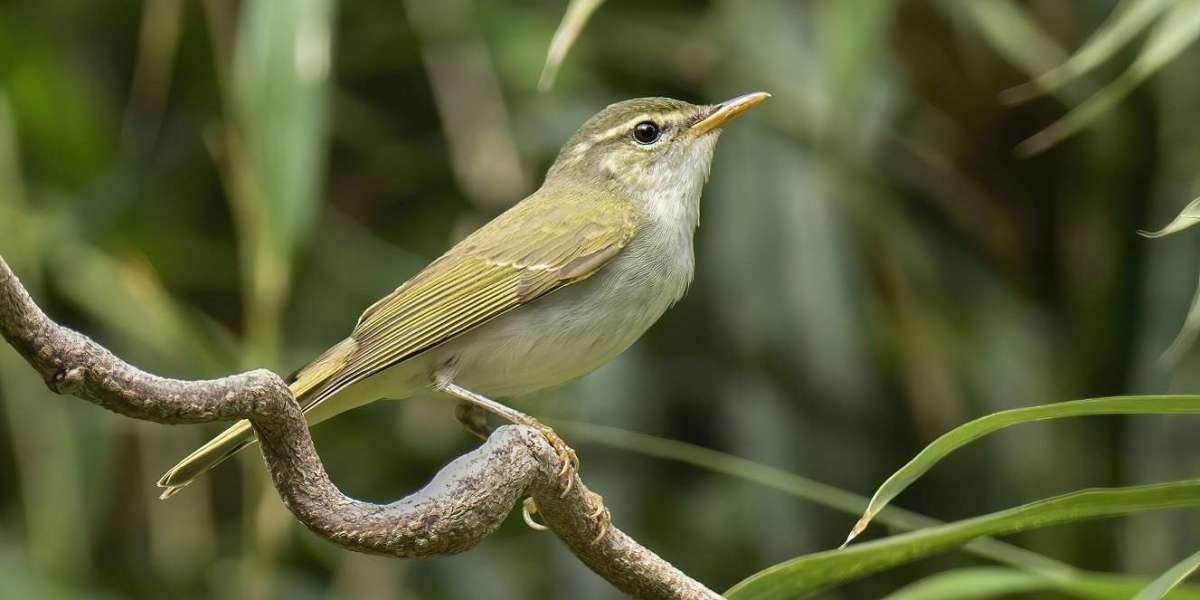

article image source: phys.org (Link)
New Rare Bird Species Discovered in Japan: The Tokara Leaf Warbler Reveals Hidden Biodiversity
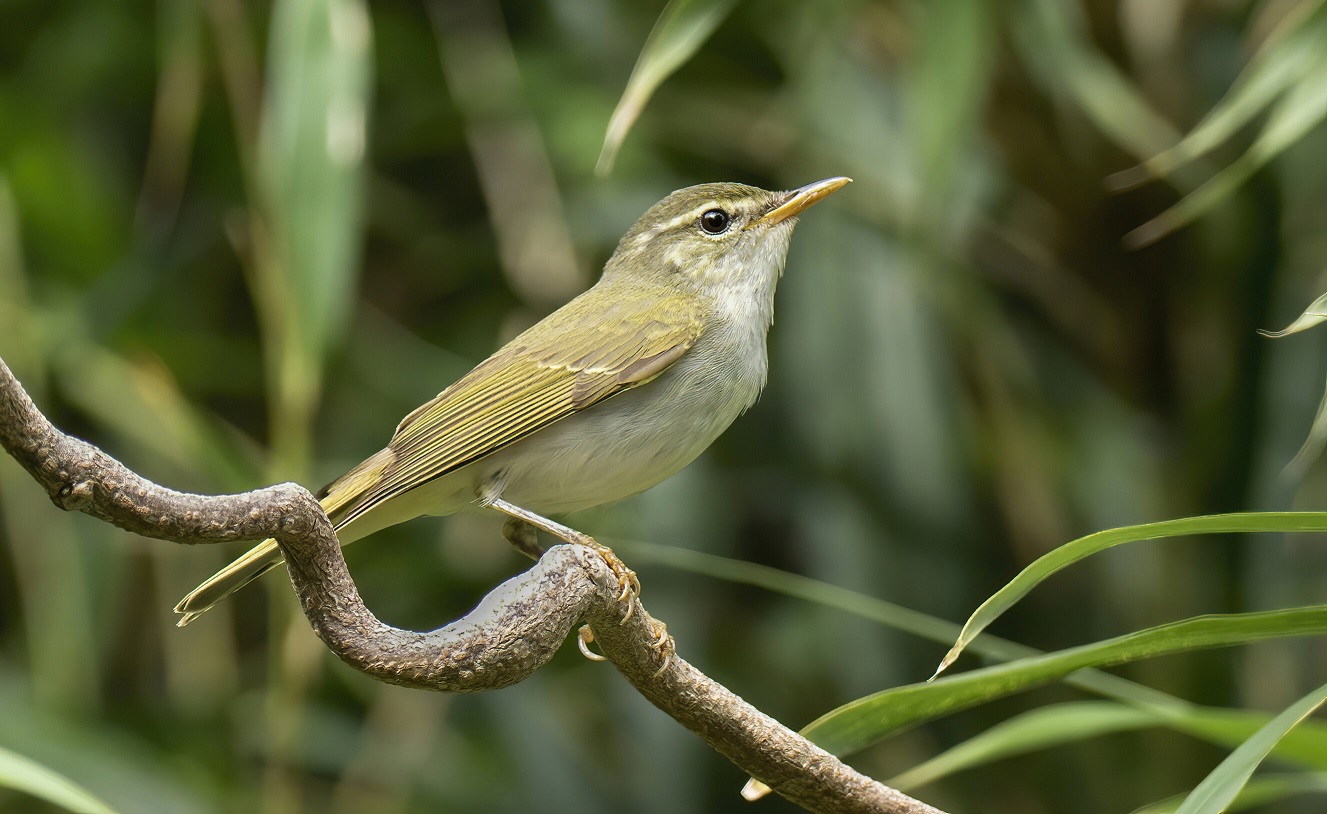
Tokara Leaf Warbler Nakanoshima Phylloscopus tokaraensis (the same individual as in photo labeled A singing male Tokara Leaf Warbler). Credit: Per Alström, Uppsala University
image source: phys.org
Tokara Leaf Warbler Song Nakanoshima, Japan 11 June 2017 The song of Tokara Leaf Warbler Phylloscopus tokaraensis is rather simple. Nakanoshima, Tokara Islands, June 2017.
Sound recording: Per Alström. Credit: Per Alström, Uppsala University
source: phys.org
Key Points:
DNA and song analyses reveal the Tokara Leaf Warbler as a distinct species from Ijima’s Leaf Warbler.
Populations are tiny, genetically vulnerable, and limited to small Japanese islands.
Discovery highlights the importance of genomics in conservation and protecting hidden biodiversity.
advertisement
A remarkable discovery in Japan has revealed a previously unknown species of leaf warbler, the Tokara Leaf Warbler (Phylloscopus tokaraensis), distinguishing it from the closely related Ijima’s Leaf Warbler (Phylloscopus ijimae).
These rare migratory birds inhabit two distinct archipelagos separated by roughly 1,000 km: the Izu Islands southeast of Tokyo and the Tokara Islands southwest.

Tokara Islands, Japan June 2017 View from Nakanoshima, Tokara Islands, Japan, June 2017. Credit: Per Alström
image source: phys.org
Although visually nearly identical, careful DNA analyses and song recordings have demonstrated that the Tokara population represents a separate species, a finding published in the journal PNAS Nexus.
Researchers from Uppsala University, the University of Gothenburg, and two Japanese institutions confirmed that the two lineages diverged approximately 2.8 to 3.2 million years ago, with no evidence of gene flow despite overlapping seasonal migration routes.
The Tokara Leaf Warbler was first observed on Nakanoshima Island in 1988, with breeding confirmed on four other small nearby islands, yet sightings remain limited, emphasizing its rarity.

Per Alström, researcher birds taxonomy Researcher at Department of Ecology and Genetics; Animal Ecology, Uppsala University https://www.uu.se/en/contact-and-organisation/staff?query=N99-636. Credit: Mikael Wallerstedt, Uppsala University
image source: phys.org
Both species show low genetic diversity and signs of past population declines, but limited inbreeding suggests some recovery is possible.
Differences in vocalizations and genome-wide analyses were key to recognizing the Tokara population as a distinct species, highlighting how traditional morphology alone can obscure hidden biodiversity.
With populations confined to small islands—Tokara Islands cover just over 100 square kilometers—the birds face risks from environmental changes, habitat disturbance, invasive predators, and disease.
The Ijima’s Leaf Warbler is already classified as Vulnerable by the IUCN and protected as a Japanese Natural Monument, and scientists recommend that the Tokara Leaf Warbler receive similar conservation attention.
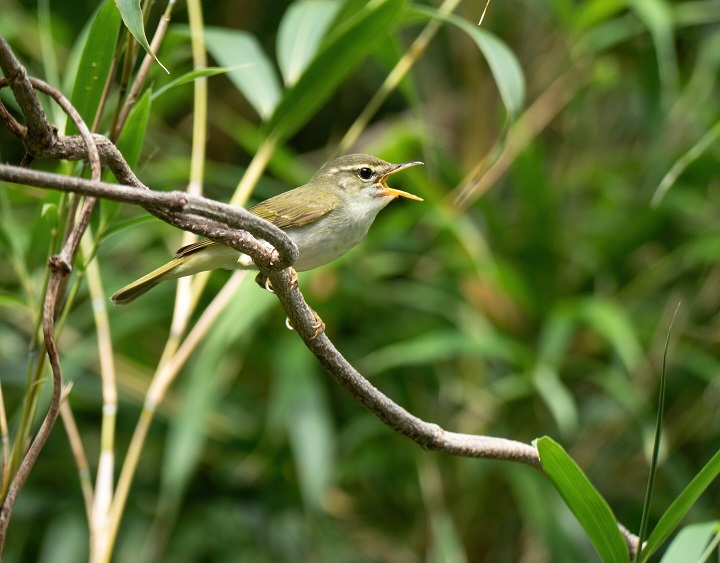
Tokara Leaf Warbler Nakanoshima 11June2017-1 Per Alstrom. A singing male Tokara Leaf Warbler Phylloscopus tokaraensis on Nakanoshima, Tokara Islands, in June 2017. P. Credit: Per Alström, Uppsala University
image source: phys.org
This discovery underscores the critical role of genomic research in identifying cryptic species, providing essential data for conservation planning, and safeguarding island ecosystems where undiscovered and vulnerable species may still exist.
The study further emphasizes that many species remain unrecognized and unprotected, and rapid scientific assessment is vital to prevent biodiversity loss in an era of global ecological crisis.
Key Points Summary:
Tokara Leaf Warbler confirmed as a new species using genetic and acoustic evidence.
Populations are tiny, island-restricted, and vulnerable to environmental changes.
Discovery emphasizes genomics as a tool for uncovering hidden biodiversity and guiding conservation.
advertisement
Frequently Asked Questions (FAQ):
Q1: What is the Tokara Leaf Warbler?
A1: The Tokara Leaf Warbler (Phylloscopus tokaraensis) is a newly described bird species in Japan, distinct from the Ijima’s Leaf Warbler based on DNA and song differences.
Q2: Where is it found?
A2: It breeds on small islands in the Tokara archipelago, including Nakanoshima, and is separated from the Izu Islands population by about 1,000 km.
Q3: How was it identified as a new species?
A3: Scientists used genome-wide DNA analyses and recordings of the birds’ songs to detect differences that are not visible in their appearance.
Q4: Are these birds endangered?
A4: Yes, both the Ijima’s and Tokara Leaf Warblers have small populations and low genetic diversity. The Tokara Leaf Warbler is recommended to be classified as Vulnerable.
Q5: Why is this discovery important?
A5: It highlights the role of genomics in revealing cryptic species and informs conservation strategies, ensuring that small, isolated populations are protected before they decline further.
Sources:
- Phys.org – Discovery of the Tokara Leaf Warbler in Japan and its distinction from Ijima's Leaf Warbler using DNA and song analyses
https://phys.org/news/2026-03-rare-bird-species-japan.html - Sci.News – Genetic and acoustic evidence reveal the Tokara Leaf Warbler as a new species and highlight conservation implications
https://www.sci.news/biology/phylloscopus-tokaraensis-14629.html
Thank you !