
Stock Market Today: War, Inflation, and Fed Signals Shake Wall Street Outlook in 2026

Key Highlights
Strong U.S. jobs data is reducing expectations of Federal Reserve rate cuts
Markets remain surprisingly stable despite the ongoing Middle East war
Inflation and oil prices are becoming the biggest drivers of market direction
advertisement
Introduction: What’s Driving the Stock Market Today?
The stock market today is navigating a complex mix of economic strength, geopolitical tensions, and rising inflation concerns.
From resilient labor data in the United States to the ongoing Middle East conflict and surging oil prices, investors are facing a market environment filled with both uncertainty and surprising stability.
While volatility exists, the broader picture reveals a market that is reacting cautiously rather than panicking — a pattern consistent with historical behavior.
Strong Jobs Data Pushes Back Rate Cut Expectations

Recent developments in the U.S. bond market highlight a major shift in investor expectations.
Treasuries declined after stronger-than-expected labor market data signaled that the economy remains robust.
As a result, traders have significantly reduced their bets on interest rate cuts by the Federal Reserve in 2026.
Yields rose by approximately three to five basis points, led by the policy-sensitive two-year Treasury.
Before the report, markets had already priced in minimal easing — about four basis points — but those expectations have now been almost entirely erased.
Additionally, expectations for rate cuts in 2027 have also been trimmed, reflecting growing confidence in economic resilience.
This shift suggests that the Federal Reserve may maintain higher interest rates for longer, especially if economic strength continues.
Why the Stock Market Isn’t Panicking Over War

Despite the ongoing conflict involving Iran, the stock market’s reaction has been relatively muted.
Since late February, major indices have declined modestly:
S&P 500: down 4.31%
Dow Jones: down 5.05%
Nasdaq: down 3.57%
While these losses may feel significant in the short term, they remain relatively small in historical context.
Experts note that markets often react to geopolitical events with short-term volatility, but quickly return to focusing on long-term fundamentals.
Historically, major market crashes — such as those in 1929, 2000, and 2008 — were driven by structural economic issues rather than external geopolitical shocks.
Even during major global crises like World War II or the Korean War, markets often recovered within weeks or months.
This pattern helps explain why today’s investors are not reacting with extreme panic.
Oil Prices and Inflation Take Center Stage
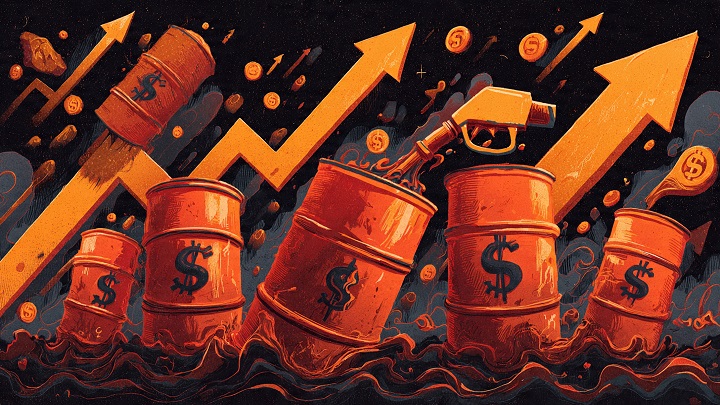
While the war itself hasn’t caused a dramatic market collapse, its impact on oil prices is becoming a critical concern.
Crude oil prices have surged above $100 per barrel, even briefly exceeding $110 — levels not seen since 2022.
This spike is largely tied to disruptions in the Strait of Hormuz, a vital global oil shipping route.
As oil prices rise, inflationary pressures are building rapidly.
The U.S. average gasoline price has climbed above $4 per gallon for the first time in over three years, signaling a direct impact on consumers.
Investors are now closely watching upcoming inflation data, particularly the Consumer Price Index (CPI) report scheduled for April 10.
Forecasts suggest:
Monthly CPI increase: 0.9%
Core CPI (excluding food and energy): 0.3%
Analysts expect the first wave of energy-driven inflation to appear in this report, with broader economic effects potentially emerging in the coming months.
Markets Caught Between Conflicting Signals

The current market environment is shaped by competing forces:
Strong economic data supporting higher rates
War-driven uncertainty impacting investor sentiment
Rising oil prices fueling inflation concerns
This has created a “push-and-pull” effect, with markets moving within a relatively tight range.
For example:
One day saw a major rally, with the Dow jumping over 1,100 points
Shortly after, markets fell sharply due to uncertainty around geopolitical developments
Yet, overall movement remains contained within a 3–5% range
This behavior reflects a market that is uncertain — but not collapsing.
Earnings Season and Economic Data in Focus

Looking ahead, investors are turning their attention to two key catalysts:
1. Inflation Reports
The upcoming CPI data will be a crucial indicator of how deeply rising oil prices are affecting the economy.
A higher-than-expected reading could pressure markets further and reinforce expectations of prolonged high interest rates.
2. Corporate Earnings
The first-quarter earnings season is about to begin, with major companies set to report results.
Early reports from firms like Delta Air Lines and Constellation Brands will offer insight into how businesses are handling rising costs and economic uncertainty.
Despite concerns, analysts expect strong earnings growth of approximately 14.4% year-over-year for S&P 500 companies.
This optimism could provide support for the market if results meet expectations.
Historical Perspective: Why Markets Stay Resilient

History shows that markets are more resilient than they may appear during times of crisis.
Short-term declines are common, even in strong bull markets.
In fact, 5% pullbacks occur frequently — often multiple times per year — without leading to long-term downturns.
The key factor that tends to drive major crashes is not geopolitical events, but deeper economic imbalances.
However, risks remain.
If the current conflict significantly disrupts global oil supplies or damages energy infrastructure, it could evolve into a more serious economic threat — similar to past oil crises.
Conclusion: Navigating Uncertainty with Long-Term Perspective
The stock market today reflects a delicate balance between resilience and risk.
On one hand, strong economic fundamentals and corporate earnings expectations are supporting investor confidence.
On the other, rising inflation, elevated oil prices, and geopolitical tensions continue to cloud the outlook.
The key takeaway for investors is that markets often absorb shocks more calmly than expected — but that doesn’t eliminate underlying risks.
Staying informed, focusing on long-term trends, and understanding historical patterns can help navigate periods like this.
In times of uncertainty, the market’s message is clear: volatility is temporary, but informed decision-making is essential.
Key Points Summary
Strong U.S. jobs data has reduced expectations of Federal Reserve rate cuts
Stock markets remain stable despite geopolitical tensions
Oil prices and inflation are the biggest current risks
CPI data and earnings season will shape near-term market direction
Historical trends show markets often recover quickly from geopolitical shocks
advertisement
Frequently Asked Questions (FAQ)
Q1: Why hasn’t the stock market crashed because of the war?
Because investors typically view geopolitical conflicts as temporary and focus more on long-term economic fundamentals.
Q2: What is the biggest risk to markets right now?
Rising oil prices and inflation, especially if they persist and impact global economic growth.
Q3: Are interest rate cuts still expected in 2026?
Current market expectations suggest that rate cuts are now unlikely due to strong economic data.
Q4: What should investors watch next?
Upcoming CPI inflation data and corporate earnings reports, which will provide insight into the economy’s direction.
Q5: Can the situation get worse?
Yes, especially if the war disrupts oil supplies further or significantly increases inflation.
Sources
- Bloomberg – US bonds fall as strong jobs data reduces Fed rate cut expectations
https://www.bloomberg.com/news/articles/2026-04-03/treasuries-fall-as-strong-jobs-data-undermines-fed-cut-outlook - Los Angeles Times – Analysis of stock market reaction to Iran war and historical context
https://www.latimes.com/business/story/2026-04-03/why-isnt-stock-market-freaking-out-more-over-iran-war-heres-why - Reuters – Inflation outlook, oil prices, and upcoming earnings shaping Wall Street
https://www.reuters.com/world/us/wall-st-week-ahead-inflation-focus-markets-jostled-by-middle-east-war-signals-2026-04-03/
Disclaimer:
This material may contain third-party opinions, none of the data and information on this webpage constitutes investment advice
The content shared in economics articles is solely for research and informational purposes.
We are not a financial advisory service, and the information provided should not be considered investment or trading advice.
Thank you !