
How Mosquitoes Find and Attack You: Secrets Behind Their Deadly Precision

Key Points:
Mosquitoes independently track humans using carbon dioxide and visual cues.
Dark colors and elevated CO2 levels make you their prime target.
Female Aedes aegypti mosquitoes focus on head and shoulder areas when feeding.
advertisement
Introduction
Ever wondered why mosquitoes seem to find you no matter where you go? It’s not luck—they have a highly tuned system for locating humans. Recent research from Georgia Tech and MIT reveals that female mosquitoes, particularly the Aedes aegypti species, rely on a combination of carbon dioxide and visual cues to decide whom to bite. Understanding these behaviors could reshape mosquito control and reduce the spread of diseases like malaria, yellow fever, and Zika, which collectively cause over 700,000 deaths annually.
How Mosquitoes Track You
Independent Yet Coordinated
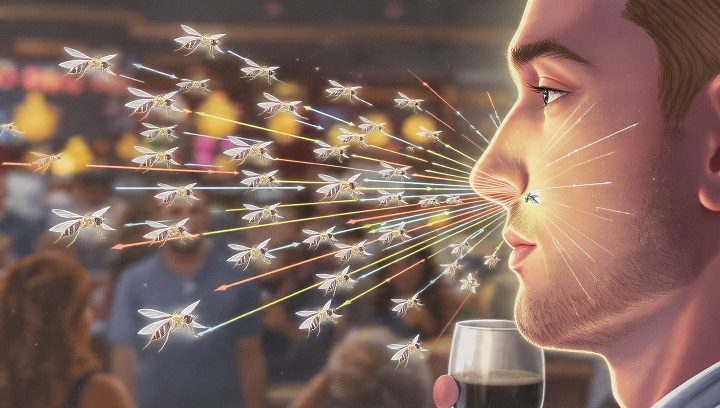
Contrary to the common myth that mosquitoes follow one another, studies show that each mosquito acts independently. When hundreds of insects cluster around a person, they do so because each responds to the same environmental signals—not because they are following a leader.
David Hu, a professor at Georgia Tech, likens it to a crowded bar: “Customers aren’t there because they followed each other in; they’re drawn by the same cues—drinks, music, and atmosphere. Mosquitoes behave in a similar way, following signals like CO2 and dark colors.”
Carbon Dioxide: The Invisible Magnet

Mosquitoes can detect the carbon dioxide (CO2) we exhale from meters away. This gas acts as a primary guide, signaling the presence of a potential host. However, CO2 alone is not always enough to trigger an attack—its combination with visual cues dramatically increases attraction.
Visual Cues Amplify the Attraction
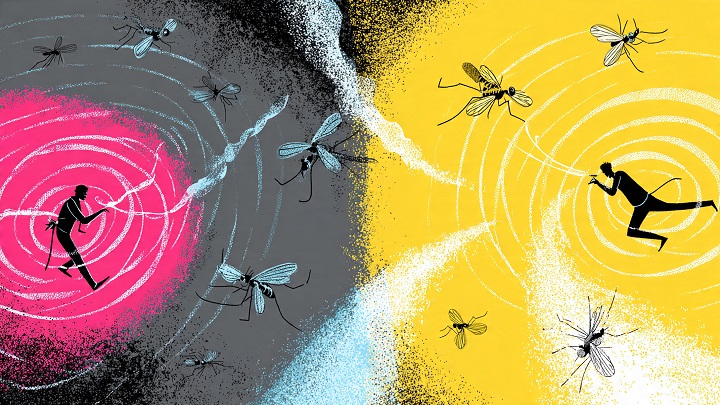
Researchers used 3D infrared cameras in controlled chambers to monitor mosquito behavior. They discovered that dark colors, especially black clothing, make humans more noticeable to mosquitoes. When CO2 and dark visual targets are combined, mosquitoes not only swarm the area but also linger and attempt to bite.
In experiments where the subject wore light-colored clothing or CO2 levels were absent, mosquito activity dropped significantly, indicating the importance of the dual signal.
Where Mosquitoes Attack
Female Aedes aegypti mosquitoes target areas that maximize blood flow and feeding success. Observations show that the head and shoulders are the most common points of attack. Arms and legs receive fewer bites, while clothing and protective gear can significantly reduce exposure.
Insights for Mosquito Control

The research also offers practical implications for reducing mosquito bites:
Intermittent Traps: Suction traps using continuous CO2 or light sources may work better if activated intermittently, mimicking natural cues rather than static signals.
Clothing Choices: Wearing lighter colors and covering exposed skin reduces visual contrast and attractiveness.
Spatial Awareness: Knowing that mosquitoes respond to independent signals rather than swarming behavior can help in designing targeted repellents and interventions.
Interactive 3D models created by the research team allow users to simulate different conditions, including CO2 levels and clothing colors, to understand mosquito behavior firsthand.
Conclusion

Mosquitoes are far more precise hunters than most people realize. By decoding the signals they respond to—carbon dioxide and visual cues—we not only uncover the hidden mechanics of their attacks but also gain strategies to protect ourselves. Every detail, from clothing color to environmental cues, plays a role in preventing bites. With this knowledge, humans can design smarter traps, more effective repellents, and safer outdoor experiences, turning the mosquito’s deadly precision into an advantage for public health.
Key Points Summary
Mosquitoes do not follow one another; they independently track hosts.
CO2 and dark visual cues together create the strongest attraction.
Female Aedes aegypti mosquitoes focus attacks on the head and shoulders.
Understanding mosquito behavior aids in better traps, repellents, and protective measures.
advertisement
Frequently Asked Questions (FAQ)
Q1: Do mosquitoes really follow humans by smell?
Yes. They detect carbon dioxide and body odors, which signal a nearby host.
Q2: Are dark clothes more likely to attract mosquitoes?
Yes. Studies show that dark colors, especially black, significantly increase mosquito attraction when combined with CO2.
Q3: Do mosquitoes swarm because they follow each other?
No. Each mosquito acts independently, responding to environmental cues. Swarming is coincidental, not social.
Q4: Which mosquito species is most aggressive toward humans?
The Aedes aegypti mosquito is particularly persistent and targets humans for feeding.
Q5: Can wearing long sleeves and light clothing prevent bites?
Yes. Covering skin and wearing lighter colors reduces visual contrast, lowering the likelihood of bites.
Sources
Science Daily – How mosquitoes find humans using CO2 and visual cues
https://www.sciencedaily.com/releases/2026/03/260322020247.htmNDTV – Study reveals how mosquitoes choose who to bite
https://www.ndtv.com/feature/study-finds-how-mosquitoes-decide-to-attack-someone-attracted-by-same-cues-11266880
Thank you !