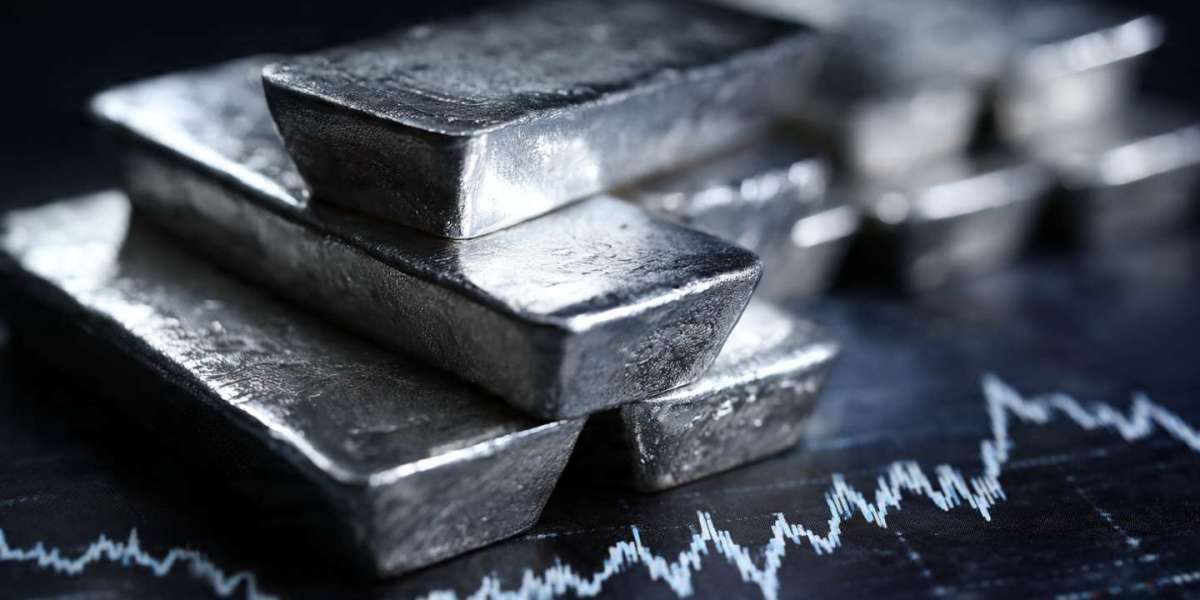

Silver Price Surge: Why the Market Is Entering a Historic New Era
Silver Price Surge: Why the Market Is Entering a Historic New Era
Silver has stepped into the global spotlight once again. After breaking multiple historical records in December 2025, the metal is no longer viewed merely as gold’s quieter companion. Instead, silver is increasingly recognized as a strategic industrial metal and a powerful investment asset, driven by structural supply shortages, accelerating industrial demand, and renewed investor interest.
Trading near $64–$65 per ounce, silver has more than doubled in value in 2025 alone, significantly outperforming gold. Analysts now debate whether current levels represent a temporary peak — or just the beginning of a multi-year rally that could push prices toward $100 per ounce and beyond.
advertisement
A Market Defined by Deficits: Five Years of Supply Shortfall
One of the strongest pillars behind silver’s rally is a persistent structural supply deficit. According to data cited by the Silver Institute, 2025 marks the fifth consecutive year in which global silver demand exceeds supply, with the shortfall estimated at roughly 117 million ounces.
Mine production has remained largely flat, hovering around 813 million ounces annually. This stagnation is largely structural: most silver is produced as a by-product of mining for other metals such as copper, lead, and zinc. As a result, even rising prices do not automatically translate into rapid increases in supply.
Recycling contributes additional material, but not nearly enough to close the gap. This imbalance has tightened physical markets worldwide, draining inventories and creating pressure across bullion exchanges.
Industrial Demand Is Reshaping Silver’s Identity
Silver’s role in the modern economy has evolved dramatically. Today, industrial applications account for more than half of global silver consumption, fundamentally changing the way the metal is valued.
Key demand drivers include:
Solar energy, where silver is essential for photovoltaic cells
Electric vehicles, which use significantly more silver than conventional cars
Electronics, 5G infrastructure, semiconductors, and AI data centers
Medical devices and advanced electrical components
The solar sector alone is projected to consume over 230 million ounces annually by 2026, and possibly 250 million ounces by 2030. Despite ongoing efforts to reduce silver content per unit, the sheer scale of global clean-energy deployment continues to push demand higher.
This industrial reliance has led many analysts to describe silver as irreplaceable in high-performance technologies, with few viable substitutes offering comparable conductivity and efficiency.
Investor Momentum and the Return of Silver as a Store of Value
Beyond industry, silver has reasserted itself as a store of value during a period of inflation concerns, geopolitical uncertainty, and shifting monetary policy.
As real yields narrow and markets anticipate potential interest-rate cuts, investors have increased allocations to silver through physical holdings and ETFs. Several analysts note that silver’s dual nature — industrial necessity and monetary hedge — makes it especially attractive compared to gold, which has become less accessible to some investors.
Silver futures and spot prices have surged more than 110% since January, with analysts observing that silver has quietly outperformed gold during much of 2025.
Breaking Records: A Timeline of the Rally
Silver’s ascent accelerated sharply in late 2025:
Early 2025: prices near $28 per ounce
November: trading in the upper $50s
December 9: silver breaks $60 for the first time
December 10–11: spot prices hit $62.88 and then $64.20
December 12: prices consolidate near $64–$65
The rally was accompanied by record ETF inflows, tightening physical supply, and disruptions such as suspended silver coin production due to blank shortages.
Some analysts caution that momentum has become overheated, suggesting prices may be temporarily ahead of fundamentals. Others argue that any pullback would likely represent a buying opportunity within a broader uptrend.
Can Silver Really Reach $100 an Ounce? Analysts Weigh In
Opinions differ on how far the rally can extend — but optimism dominates.
Bank of America raised its 12-month target to $65 per ounce, citing ETF inflows and lower real yields.
BNP Paribas and Solomon Global argue silver could reach $100 per ounce by the end of 2026, pointing to undervaluation, structural deficits, and accelerating industrial use.
Standard Chartered highlights ongoing regional inventory imbalances and multi-year shortages as key price drivers.
More conservative voices warn of volatility, noting that profit-taking could cause sharp corrections before higher levels are reached.
Despite differing timelines, most analysts agree on one point: the fundamental supply-demand imbalance is not resolved.
Winners and Losers in a High-Price Silver Environment
A sustained silver price above $60–$65 reshapes entire industries.
Beneficiaries include:
Primary silver miners with low production costs
Streaming companies that lock in supply at fixed prices
Emerging producers bringing high-grade projects online
Facing pressure are:
Solar panel manufacturers
EV makers
Electronics and semiconductor companies
For manufacturers, rising silver prices translate into higher input costs that cannot always be passed on to consumers. For miners, higher prices dramatically expand margins and make previously uneconomical projects viable.
Silver as a Strategic Metal in a Changing World
Silver’s surge reflects a deeper transformation. Governments and institutions increasingly view it as a strategic material, essential for energy security, digital infrastructure, and technological leadership.
Proposals to designate silver as a critical mineral underscore its growing importance. Meanwhile, nations are exploring stockpiling and domestic supply strategies, which could further tighten global markets.
Historically, silver rallies were often speculative and short-lived. The current cycle is different: it is driven by structural demand, long-term deficits, and technological necessity.
Conclusion: More Than a Rally — A Repricing of Silver’s Role
Silver’s historic rise is not simply a story of price momentum. It represents a fundamental repricing of the metal’s role in the global economy. Once seen primarily as a monetary hedge, silver is now recognized as a cornerstone of the green energy transition and the digital age.
While volatility is inevitable and short-term corrections are possible, the underlying forces — constrained supply, relentless industrial demand, and renewed investor interest — remain firmly in place. Whether silver pauses at $65 or continues toward $100, its importance has been permanently redefined.
For investors, policymakers, and industries alike, silver is no longer optional. It is strategic — and its story is only beginning.
Sources
Thank you !