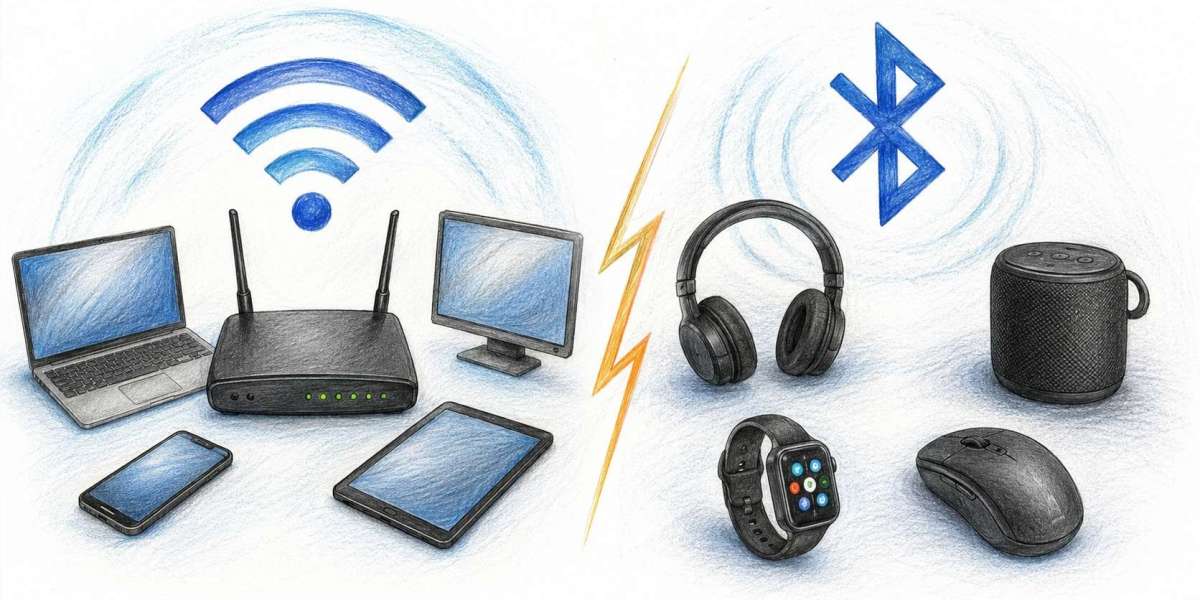

Difference Between Wi-Fi and Bluetooth: Which Wireless Technology Should You Use?
Bluetooth vs WiFi: What’s the REAL Difference? - Explaining Tech Like You're Five
Key Points
Wi-Fi and Bluetooth are both wireless technologies, but they serve different purposes.
Wi-Fi is designed for high-speed networking and internet access.
Bluetooth is optimized for direct device-to-device communication with low power consumption.
Wi-Fi generally offers greater range, higher speeds, and support for many connected devices.
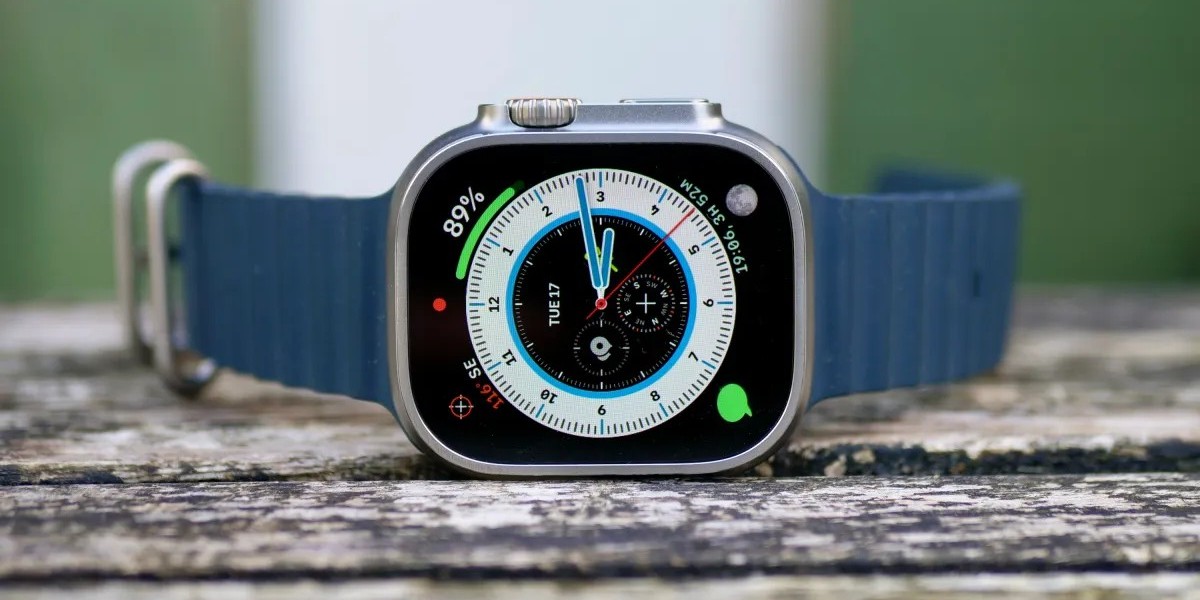
Bluetooth consumes less battery and is ideal for accessories such as headphones, keyboards, smartwatches, and speakers.
Modern devices often use both technologies simultaneously.
New Wi-Fi and Bluetooth standards continue to improve speed, reliability, security, and efficiency.
advertisement
Wireless technology has become an essential part of everyday life, allowing billions of devices to connect without cables. Among the most widely used wireless technologies are Wi-Fi and Bluetooth, both of which use radio waves to transmit data. Although many people use them daily, there is often confusion about how they differ and when one should be used instead of the other.
Wi-Fi is primarily designed for networking and internet connectivity, enabling smartphones, laptops, tablets, smart TVs, gaming consoles, and countless other devices to connect to local networks and the internet. It operates through wireless access points or routers and is built to handle large amounts of data at high speeds. Modern Wi-Fi standards can support gigabit-level performance, making them suitable for video streaming, online gaming, cloud applications, and large file transfers.
Bluetooth, by contrast, focuses on direct communication between devices. Instead of connecting devices to the internet, Bluetooth creates short-range wireless links between products such as headphones, speakers, keyboards, mice, smartwatches, fitness trackers, and smartphones. This allows devices to exchange information or stream audio without requiring a Wi-Fi network or internet connection.
One of the biggest differences between the two technologies is power consumption. Bluetooth was specifically developed to use very little energy, making it ideal for battery-powered accessories that may need to operate for days, weeks, or even months between charges. Modern Bluetooth Low Energy (BLE) technology has further improved efficiency, helping support the growing ecosystem of wearable and Internet of Things (IoT) devices.
Speed is another major distinction. Wi-Fi is significantly faster than Bluetooth and can transfer large files, stream ultra-high-definition video, and support multiple users simultaneously. Bluetooth is generally intended for smaller data transfers and audio streaming, prioritizing efficiency and convenience rather than maximum throughput.
Range also varies considerably. Wi-Fi networks typically cover homes, offices, public hotspots, and large facilities, while Bluetooth usually works over shorter distances between nearby devices. Although modern Bluetooth versions have improved range, Wi-Fi remains the preferred choice when broader coverage and network access are required.
Another important difference involves how devices connect. Wi-Fi generally requires a router or access point, allowing numerous devices to share a network connection. Bluetooth uses a pairing process that creates direct links between compatible devices. This makes Bluetooth especially convenient for accessories and personal electronics.
Interestingly, Wi-Fi and Bluetooth often operate in similar frequency bands, particularly around 2.4 GHz. Despite sharing portions of the radio spectrum, they use different communication protocols and techniques to reduce interference and maintain reliable performance. Bluetooth relies heavily on adaptive frequency hopping, while Wi-Fi uses networking protocols designed to manage large amounts of traffic from multiple devices.
The latest wireless developments continue to enhance both technologies. Recent Bluetooth versions have introduced features such as Auracast, which allows audio broadcasting to multiple listeners, along with improved efficiency, security, and tracking capabilities. Meanwhile, emerging Wi-Fi generations focus not only on faster speeds but also on greater reliability, lower latency, and better performance in crowded environments filled with connected devices.
For most users, the choice is simple. Use Wi-Fi when you need internet access, high-speed networking, video streaming, gaming, or large downloads. Use Bluetooth when connecting accessories, sharing small amounts of data, or conserving battery life. Rather than competing technologies, Wi-Fi and Bluetooth are complementary tools that work together to support the modern wireless world. Many smartphones, laptops, and smart devices rely on both simultaneously to deliver a seamless user experience.
Key Points Summary
Wi-Fi = Internet and networking
Bluetooth = Device-to-device communication
Wi-Fi offers faster speeds and wider coverage.
Bluetooth offers lower power consumption and simpler pairing.
Wi-Fi is ideal for streaming, gaming, and large file transfers.
Bluetooth is ideal for headphones, wearables, keyboards, mice, and speakers.
Both technologies continue evolving with improved performance and security.
Most modern devices use both technologies together.
advertisement
Frequently Asked Questions (FAQ)
What is the main difference between Wi-Fi and Bluetooth?
Wi-Fi is mainly used for internet and network connectivity, while Bluetooth is primarily used for direct wireless communication between nearby devices.
Which is faster: Wi-Fi or Bluetooth?
Wi-Fi is significantly faster and is designed to handle larger amounts of data.
Which uses less battery power?
Bluetooth generally uses less power, especially Bluetooth Low Energy (BLE).
Can Wi-Fi and Bluetooth work together?
Yes. Many devices use Wi-Fi for internet access while simultaneously using Bluetooth for accessories such as headphones, keyboards, and smartwatches.
Is Bluetooth safer than Wi-Fi?
Both technologies include modern security protections. Keeping devices updated and using secure settings is important regardless of which technology you use.
Do Wi-Fi and Bluetooth use the same frequency?
Both commonly use the 2.4 GHz spectrum, but they employ different protocols and communication methods.
Sources
BGR – Difference Between Wi-Fi and Bluetooth Explained
https://www.bgr.com/2186843/wi-fi-bluetooth-differences-explained/- Britannica – What's the Difference Between Bluetooth and Wi-Fi?
https://www.britannica.com/story/whats-the-difference-between-bluetooth-and-wi-fi Intel – How Does Bluetooth Technology Work?
https://www.intel.com/content/www/us/en/products/docs/wireless/how-does-bluetooth-work.htmlGeeksforGeeks – Difference Between Bluetooth and Wi-Fi
https://www.geeksforgeeks.org/computer-networks/difference-between-bluetooth-and-wi-fi/WIRED – The WIRED Guide to Bluetooth
https://www.wired.com/story/what-is-bluetooth/
Thank you !