
Global Market Pulse: SpaceX Historic $1.78T IPO and Broadcom Outlook Shake Tech Sector as S&P 500 Defies Global AI Valuation Fears
Key Points
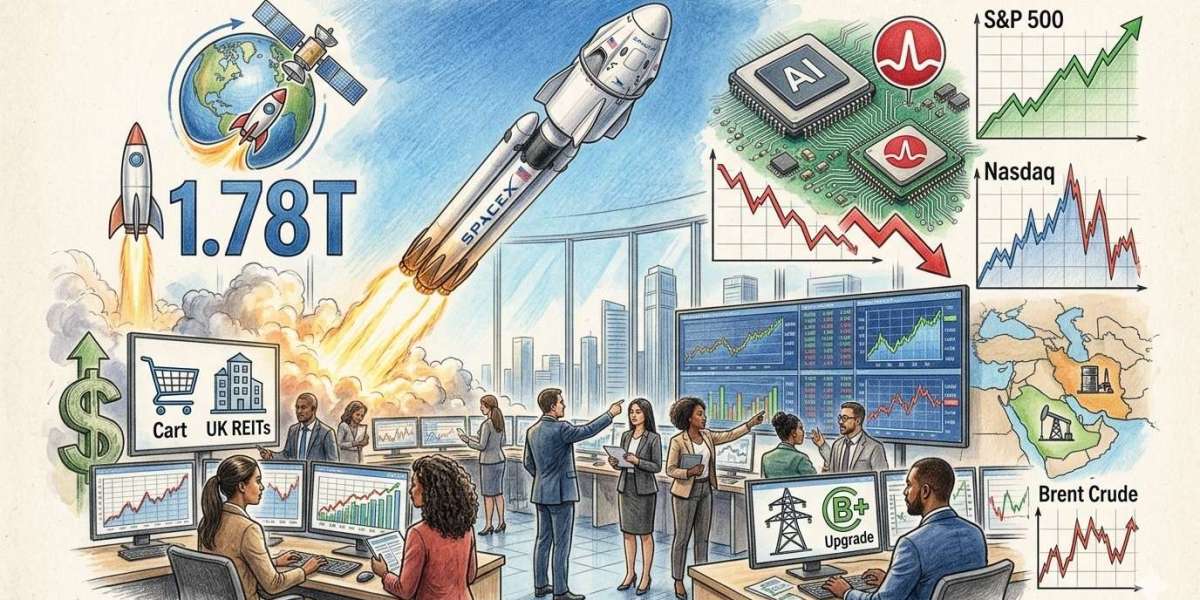
SpaceX Makes History: Elon Musk’s aerospace giant launched the largest IPO in financial history with a groundbreaking valuation of $1.78 trillion, injecting massive trading volume into the markets.
Broadcom Triggers Tech Caution: Tech futures and global chip stocks faced cooling pressures after Broadcom issued a sales growth forecast that fell short of Wall Street's aggressive targets.
Inflation and Geopolitical Volatility: US Headline Inflation hit a 3-year high of 4.2% driven by persistent Middle East geopolitical tensions, causing Brent Crude oil prices to swing heavily before settling around $86.5 per barrel.
Global Market Deviations: While Asian indices like South Korea's Kospi plunged nearly 9% early in the week on AI spending fears, the S&P 500 managed a robust 16% recovery from its March lows, proving corporate earnings remain resilient.
advertisement
The financial landscape is witnessing an extraordinary structural shift as SpaceX (Space Exploration Technologies Corp.) completely redefines the public markets with a monumental Initial Public Offering (IPO) valued at $1.78 trillion, successfully raising a staggering $75 billion and triggering immediate ripple effects across global technology, aerospace, and satellite equities.
This massive influx of capital arrives at a critical juncture where investors are forced to balance explosive innovation against restrictive macroeconomic pressures, highlighted by US Headline Inflation surging to a three-year high of 4.2% due to severe energy market spikes, alongside a core inflation reading of 2.9%.
Simultaneously, the semiconductor and artificial intelligence sectors are navigating a intense positioning reset; Broadcom Inc. (AVGO) sparked a brief tech-heavy Nasdaq pullback after its forward-looking sales guidance failed to satisfy the market's exceptionally lofty expectations, highlighting sudden anxieties regarding corporate capital expenditure discipline.
The resulting volatility quickly bled into international markets, where a sharp tech sell-off early in the week caused South Korea's Kospi index to crater by nearly 9%—briefly triggering an automated trading halt—led by heavy declines in chipmaking giants Samsung Electronics and SK Hynix, while European giants like ASML Holding and BE Semiconductor Industries (Besi) shed over 3% amid growing fears that highly expensive AI infrastructure investments could face long-term obsolescence before yielding clear monetization streams.
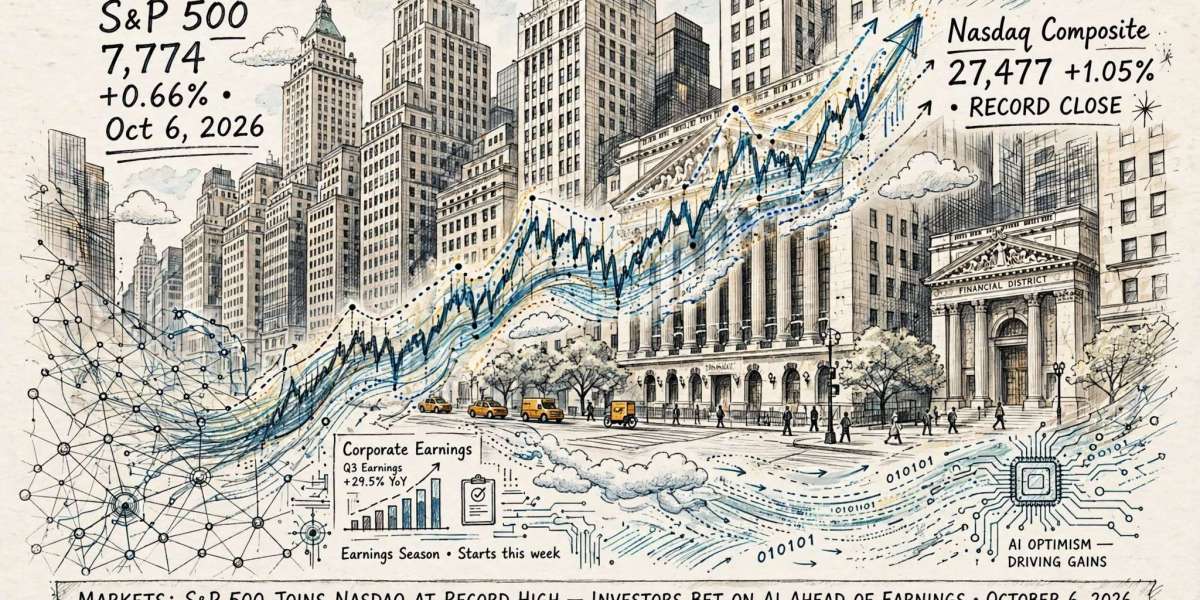
However, the broader markets have displayed stunning underlying durability; the S&P 500 Index has defiantly recovered 16% from its March corrections to push comfortably above the 7,600 mark, fiercely insulated by spectacular first-quarter corporate earnings growth that averaged over 28%.
Meanwhile, energy and commodity traders are tracking dramatic fluctuations as Brent Crude oil dropped over 4% to approximately $86.5 per barrel following a wave of speculative optimism surrounding potential de-escalation and diplomatic breakthroughs between the US and Iran.
In individual equity news, UK retail and real estate sectors offered unexpected havens for passive income hunters, with Supermarket Income REIT (SUPR) offering a resilient 7.3% dividend yield despite interest rate headwinds, while high-street bakery giant Greggs Plc (GRG) surged in popularity as analysts drew glowing comparisons to Warren Buffett's favorite high-moat, consumer-defensive business models.
Concurrently, international credit markets notched a major win as Fitch Ratings officially upgraded South African power utility Eskom's credit rating to B+ with a Stable Outlook, directly reflecting a broader sovereign upgrade for South Africa rooted in disciplined fiscal consolidation and improving macroeconomic conditions.
Key Points Summary
| Category | Key Indicator / Event | Market Impact |
| Mega IPO | SpaceX debuts at $1.78T valuation | Massive volume injection; boosts global aerospace and satellite sectors. |
| Tech / AI Shift | Broadcom soft guidance; Kospi plunges 9% | Investors demanding stricter capital expenditure discipline and clear AI monetization. |
| Macroeconomics | US Inflation hits 4.2%; Core sits at 2.9% | Increases pressure on central banks to keep interest rates elevated for longer. |
| Commodities | Brent Crude pulls back 4% to $86.5/bbl | Geopolitical relief swings oil lower, helping ease immediate energy inflation fears. |
| Credit Markets | Fitch upgrades Eskom utility rating to B+ | Signals stabilizing infrastructure and positive macroeconomic progress in South Africa. |
advertisement
Frequently Asked Questions [FAQ]
Why did the SpaceX IPO cause such a massive stir in the stock market?
SpaceX completed the largest Initial Public Offering (IPO) in history, valued at $1.78 trillion. Because of its sheer size, many institutional investors had to adjust their portfolios to allocate funds for it, causing widespread trading volume changes across tech, aerospace, and defense stocks.
Why are semiconductor stocks like Broadcom, Samsung, and ASML falling if AI is booming?
The market is shifting from "pure enthusiasm" to a "positioning reset." Tech companies are spending an enormous amount of money on AI infrastructure. When Broadcom issued an outlook that didn't beat high expectations, it made investors nervous that these expensive investments might take longer to generate actual profits.
How is inflation impacting standard consumers and corporate earnings?
Driven heavily by past energy and supply chain disruptions, US inflation hit 4.2%. While this is raising the cost of everyday goods like groceries and fuel for everyday families, large companies (especially in the S&P 500) have managed to pass these costs along, maintaining an average profit growth of over 28%.
Why did oil prices drop if there is ongoing geopolitical tension?
Brent Crude oil prices fell by more than 4% down to $86.50 a barrel because traders are reacting to news of potential diplomatic progress and peace talks between the United States and Iran. If a deal is reached, it reduces the risk of shipping disruptions in crucial global oil channels.
Sources
Zacks Investment Research: Stock Market News for June 12, 2026 (Published June 12, 2026 / Active Market Context June 14, 2026)
The Motley Fool: Stock Market Today, June 12: SpaceX Mega IPO Soars (Published June 12, 2026 / Active Market Context June 14, 2026)
The Guardian Financial: Stock markets fall as concerns persist over tech firms at heart of AI boom (June 2026 Market Dynamics Tracker)
James Sharp Financial Analysts: June 2026 Macroeconomic and Equity Market Highlights (Published June 12, 2026 / Sunday Briefing June 14, 2026)
SAnews Government Official: Fitch Upgrades Eskom Credit Rating to B+ Following Sovereign Recovery (Published Sunday, June 14, 2026)
Disclaimer:
This material may contain third-party opinions, none of the data and information on this webpage constitutes investment advice
The content shared in economics articles is solely for research and informational purposes.
We are not a financial advisory service, and the information provided should not be considered investment or trading advice.
Thank you !