
Earth’s Outer Core May Be Moving in the Opposite Direction — And Scientists Still Don’t Fully Understand Why
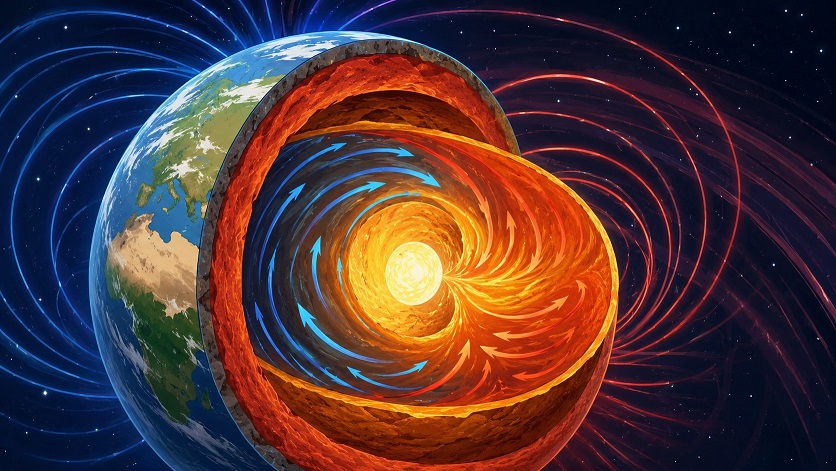
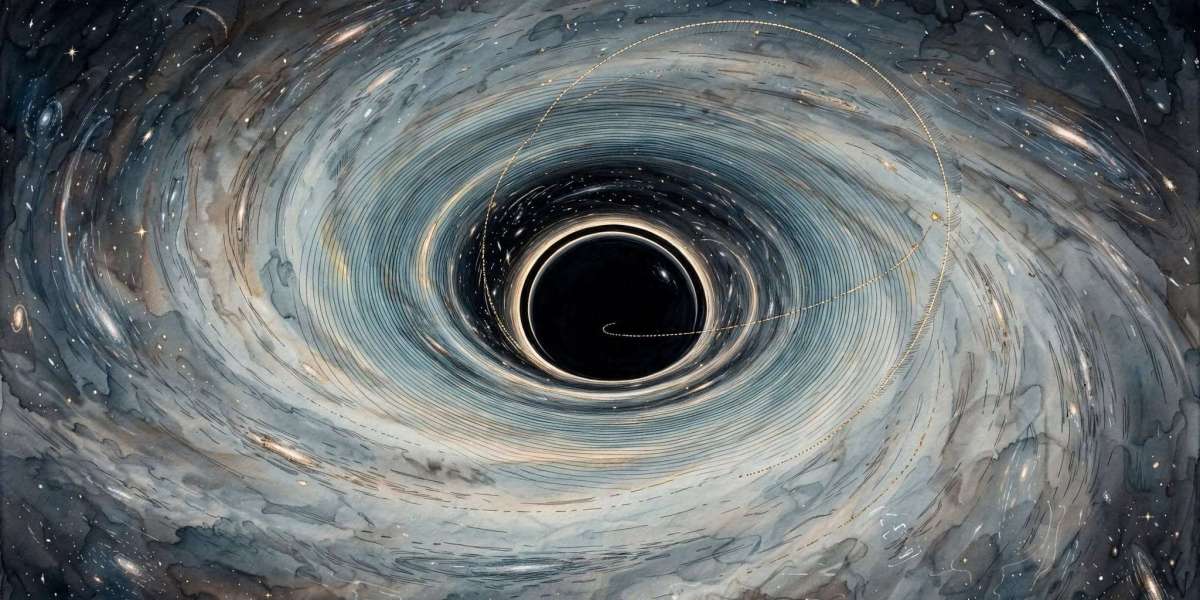
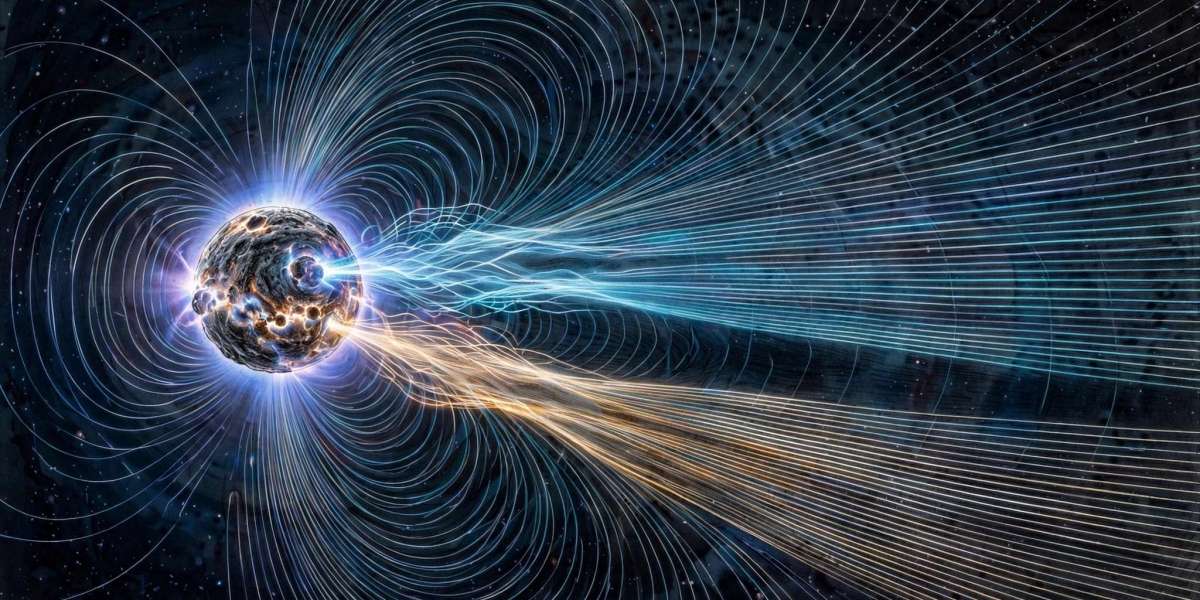
(This photo is generated through AI - not real )
Earth's Core Just Started Spinning Backwards - Astrum Earth
Key Points
Scientists discovered that parts of Earth’s molten outer core changed direction around 2010.
The reversal was detected beneath the Pacific Ocean using satellite and seismic data.
Earth’s outer core is made of liquid iron and nickel that generates the planet’s magnetic field.
Researchers say the movement unexpectedly shifted from westward flow to strong eastward flow.
The exact reason behind the reversal remains unknown.
Scientists believe the phenomenon may be linked to deep magnetic and gravitational forces inside Earth.
Recent studies also suggest Earth’s inner core slowed down and may be “backtracking” relative to the planet’s surface.
Researchers stress there is no immediate danger to people on Earth.
The discovery could improve understanding of Earth’s magnetic field, earthquakes, and changes in day length.
advertisement
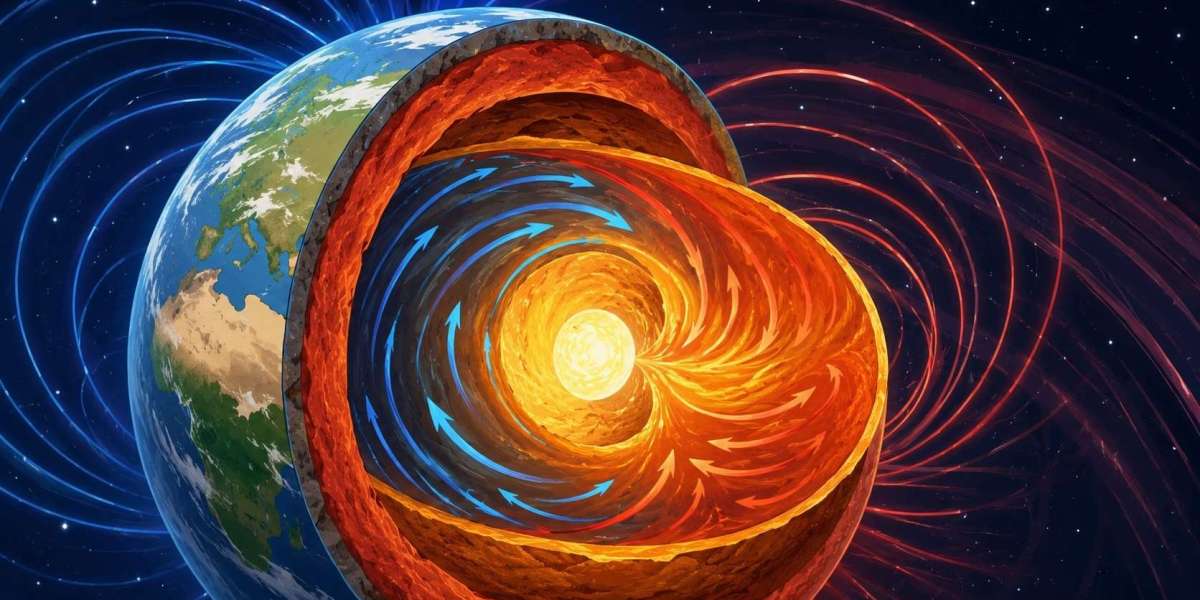
Scientists studying the deep interior of Earth have uncovered a mysterious phenomenon that is surprising the global scientific community: parts of Earth’s outer core appear to have changed direction, and researchers still do not fully understand why this happened. Recent findings from the European Space Agency (ESA) and multiple geophysics studies revealed that molten iron flows deep beneath the Pacific Ocean reversed course around 2010, shifting from their long-observed westward motion to a strong eastward movement.
The Earth’s outer core is an enormous ocean of liquid iron and nickel located roughly 2,200 kilometers (1,367 miles) beneath the surface. This molten metal constantly moves and swirls due to heat escaping from Earth’s center. These motions generate Earth’s magnetic field — the invisible shield that protects the planet from dangerous solar radiation and helps navigation systems function. Scientists have monitored the behavior of the outer core for decades, and until recently, they believed its large-scale movement was relatively stable. However, satellite missions including ESA’s Swarm satellites detected an unexpected reversal in the flow direction beneath the Pacific region.
Researchers say the discovery is significant because the outer core plays a direct role in controlling Earth’s magnetic field. Any unusual movement deep inside the planet could help scientists better understand magnetic pole behavior, fluctuations in Earth’s rotation, and long-term geological changes. Despite the breakthrough, experts admit they still cannot fully explain what triggered the reversal. Some scientists suspect that interactions between magnetic forces, heat flow, Earth’s mantle, and turbulent liquid iron currents may all contribute to the strange shift.
At the same time, scientists have also been investigating unusual behavior in Earth’s inner core — the solid iron sphere located at the center of the planet. Studies published in recent years found evidence that the inner core slowed down around 2010 and may now be rotating more slowly than Earth’s surface, a phenomenon often described as “backtracking.” Researchers used earthquake-generated seismic waves to observe these changes because direct observation of the core is impossible.
Newer research published in 2025 added another mystery: Earth’s inner core may also be changing shape. Scientists analyzing decades of seismic data found evidence that the surface of the inner core could be deforming or shifting due to pressure from the liquid outer core surrounding it. Some researchers compared the movement to slow “landslides” occurring thousands of kilometers below Earth’s surface.
Although headlines about Earth’s core reversing direction sound alarming, scientists emphasize that there is no evidence of an immediate catastrophe or danger to humanity. The changes are extremely slow and occur deep within the planet over years or decades. Experts say the effects on daily life are tiny, potentially influencing the length of a day by only milliseconds. However, these discoveries are extremely important for understanding how Earth works internally and how its magnetic field evolves over time.
The findings also highlight how little humanity still knows about the planet beneath our feet. Earth’s core remains one of the least understood regions in science because it cannot be reached directly. Instead, researchers rely on seismic waves from earthquakes, magnetic field measurements, computer simulations, and satellite observations to study it. Many scientists now believe the core is far more dynamic and complex than previously thought.
Scientists plan to continue analyzing earthquake records and satellite data to determine whether the directional reversal is temporary, cyclical, or part of a much larger process occurring deep within Earth. Future discoveries could help researchers better predict magnetic field changes and improve understanding of Earth’s internal structure. For now, one thing is clear: the center of our planet is still full of mysteries.
Key Points Summary
Earth’s molten outer core unexpectedly changed flow direction around 2010.
The reversal was detected using satellite observations and seismic research.
Scientists still do not know the exact cause of the phenomenon.
The outer core generates Earth’s magnetic field.
Research also suggests Earth’s inner core slowed down and may be deforming.
The effects on daily life are extremely small.
Experts say there is no immediate threat to humanity.
The discovery reveals how complex and dynamic Earth’s interior truly is.
advertisement
Frequently Asked Questions (FAQ)
What is Earth’s outer core?
Earth’s outer core is a massive layer of liquid iron and nickel located between the mantle and the solid inner core. It generates Earth’s magnetic field through constant motion of molten metal.
Did Earth’s core really reverse direction?
Not completely. Scientists found that certain large-scale flows within the outer core reversed direction relative to their previous movement patterns, especially beneath the Pacific Ocean.
Is Earth in danger because of this discovery?
No. Scientists say the changes are slow and occur deep underground. There is no evidence of immediate danger to people or the planet.
How do scientists study Earth’s core?
Researchers use seismic waves from earthquakes, satellite measurements, magnetic field observations, and computer simulations to study Earth’s interior.
What is the inner core “backtracking” phenomenon?
Studies suggest Earth’s solid inner core slowed around 2010 and may now rotate more slowly than Earth’s surface relative to previous decades.
Could this affect Earth’s magnetic field?
Possibly. Since the outer core generates Earth’s magnetic field, changes in its movement may influence magnetic behavior over long periods.
Could the changes affect the length of a day?
Scientists say the effects are extremely tiny — possibly only milliseconds over long time periods.
Sources
European Space Agency (ESA) – Insights into Earth’s molten outer core from space
ScienceDaily – The rotation of Earth's inner core has slowed
ScienceAlert – Earth’s Inner Core Is Mysteriously Changing Shape
Cornell Chronicle – Earth’s inner core is less solid than previously thought
Thank you !