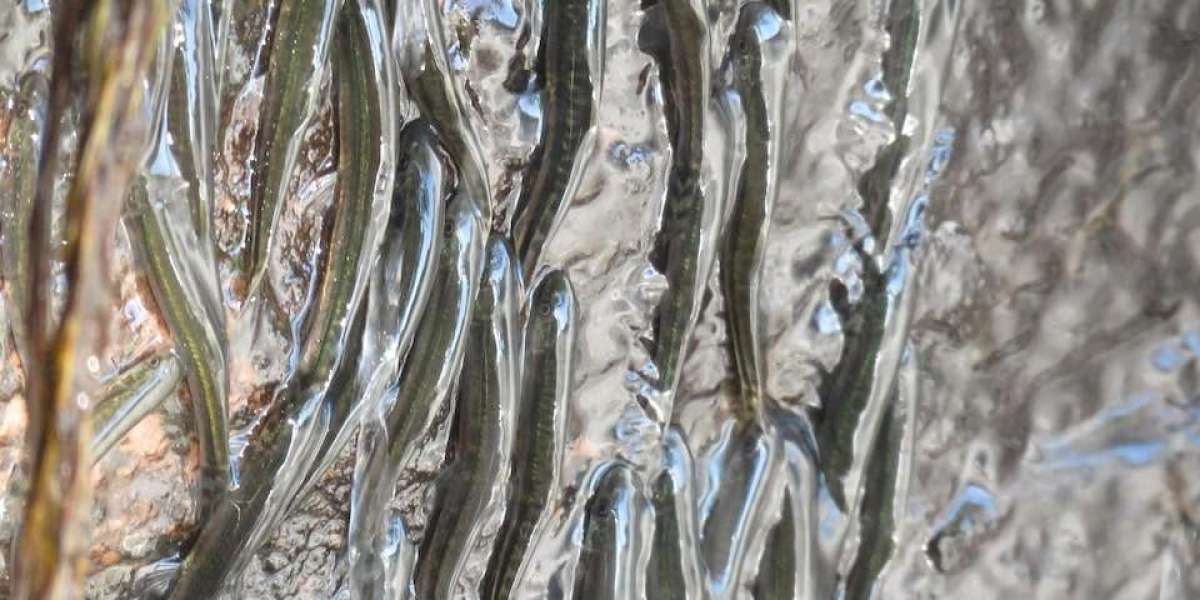

article image source: reuters.com (Link)
Thousands of Small Fish Defy Gravity: How Shellear Fish Climb Congo’s Luvilombo Waterfall
Watch Tiny Little Fish Shimmy Up A Waterfall In The Democratic Republic Of The Congo - IFLScience
Key Highlights:
Tiny shellear fish scale a 50-foot waterfall using fins and hook-like structures
The climb can take up to 10 hours, with frequent rests and high risk
This is the first documented case of waterfall-climbing fish in Africa
advertisement
Introduction
In a remarkable display of adaptation and resilience, thousands of small fish have been observed climbing a towering waterfall in the Democratic Republic of Congo.
This astonishing behavior, involving the shellear fish (Parakneria thysi), challenges conventional understanding of aquatic life and highlights the incredible diversity of survival strategies in nature.
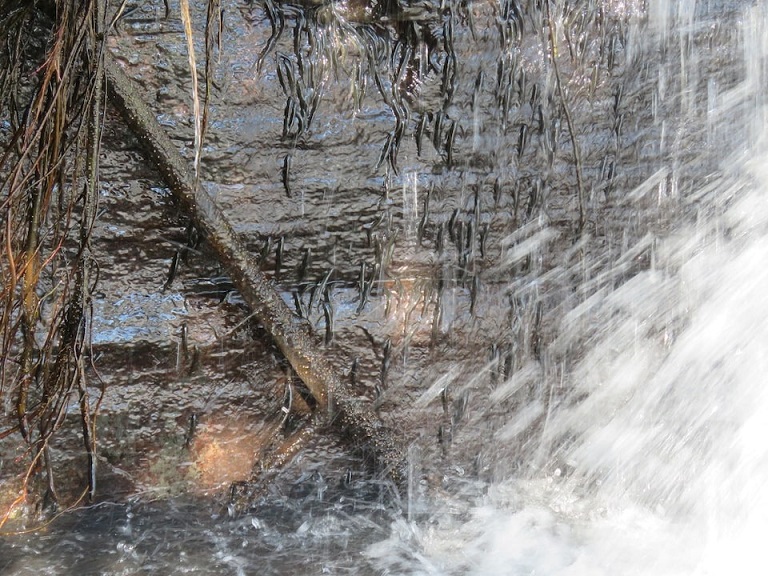
Members of a species of shellear fish, scientific name Parakneria thysi, crossing the second level of Luvilombo Falls, a waterfall in the Democratic Republic of Congo, in April 2020, in this photograph released on April 1, 2026. Pacifique Kiwele/Handout via REUTERS
image source: reuters.com
Documented at the Luvilombo Falls in the Congo Basin, this phenomenon is not only visually stunning but also scientifically significant, offering new insights into fish behavior, migration, and conservation.
A Discovery Years in the Making
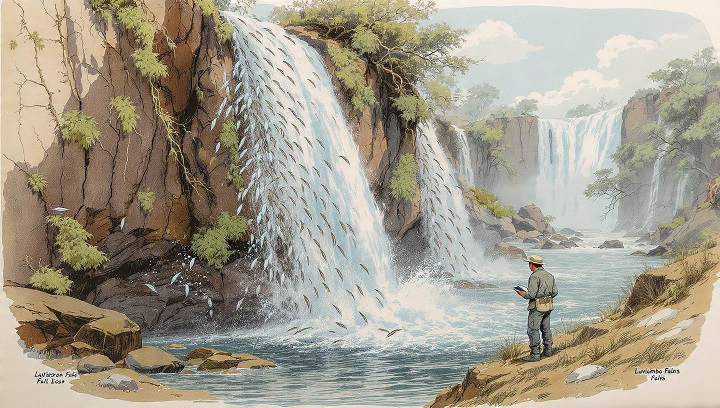
The story begins nearly two decades ago when researcher Auguste Chocha Manda from the Université de Lubumbashi first witnessed the phenomenon at Luvilombo Falls.
He observed thousands of tiny fish climbing the steep rock face behind the cascading water—an observation so unusual that it lacked confirmation after his original footage was lost.
Years later, determined to validate the claim, researcher Pacifique Kiwele Mutambala revisited the site. Through repeated field visits during rainy seasons, he successfully documented the behavior, confirming that the fish were indeed scaling the waterfall.
The findings were later published in the journal Scientific Reports, providing the first formal evidence of such behavior in Africa.
Climbing Against the Odds
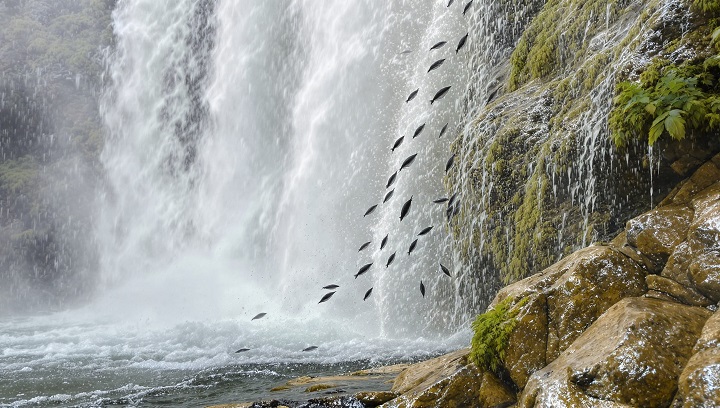
The Luvilombo Falls rise approximately 15 meters (50 feet), forming a near-vertical barrier.
Despite this, thousands of shellear fish—typically measuring between 3.7 and 4.8 cm—were seen making the arduous ascent. Larger individuals, which can grow up to 9.8 cm, were notably absent from the climb, likely because their weight makes the journey too difficult.
Rather than fighting the strongest currents, the fish navigate through the “splash zone,” where the rock surface remains wet from spray but is not overwhelmed by direct water flow.
The climb is slow and demanding, often taking nearly 10 hours to complete. The fish move in short bursts, pausing frequently to recover energy before continuing upward.
The Science Behind the Climb
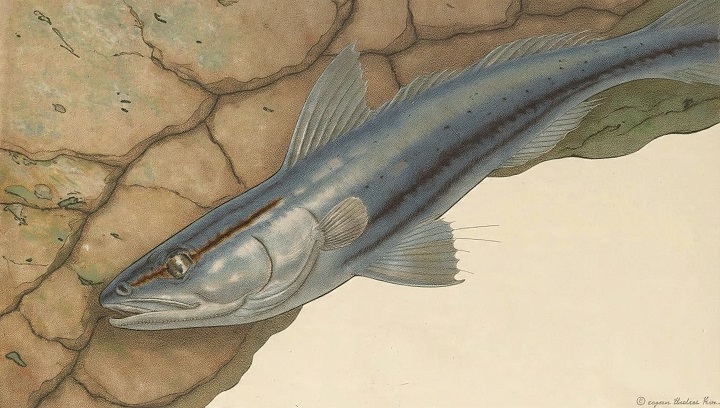
Researchers closely analyzed the fish’s anatomy and movement to understand how such a feat is possible.
The shellear fish use a combination of physical adaptations and movement techniques:
Pectoral fins with tiny hook-like structures (unculi): These act like natural Velcro, allowing the fish to grip slippery rock surfaces.
Pelvic fins: Provide support and stability during the climb.
Strong pectoral girdle: A robust bone structure that supports the muscles needed for climbing.
Lateral undulation: The fish wiggle their bodies side-to-side, effectively “swimming” vertically in short bursts.
At times, the fish even cling upside down to navigate overhangs—an especially risky maneuver that can lead to falls.
A Risky Journey
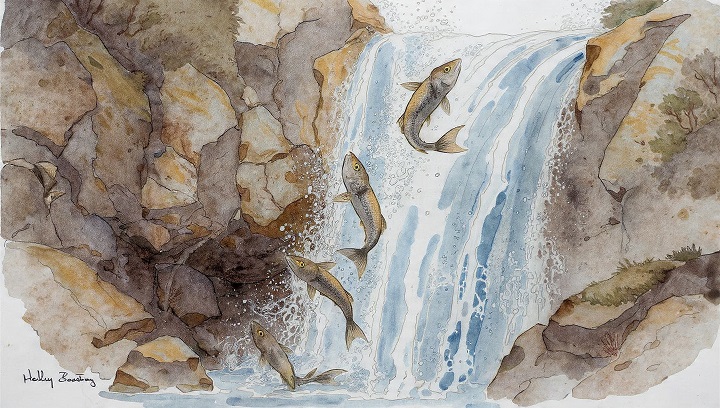
The ascent is not without danger.
Fish can lose their grip due to sudden jets of water, especially when navigating difficult sections. Some fall back into the water below and attempt the climb again, while others that land on rocks may not survive.
Despite these risks, the large number of fish attempting the climb suggests a strong evolutionary or ecological incentive.
Why Do They Climb?

Scientists are still investigating the exact reasons behind this extraordinary behavior.
Several hypotheses have been proposed:
Migration upstream: The fish may be moving to new habitats.
Better food availability: Upstream areas might offer richer feeding grounds.
Reduced predation and competition: Fewer predators and rivals could improve survival chances.
This vertical migration helps maintain connectivity between upstream and downstream populations, which is crucial for the species’ long-term survival.
Conservation Concerns
The discovery also highlights important environmental challenges.
Researchers warn that human activities could threaten this unique behavior and the species itself. Key concerns include:
Illegal fishing: Fine-mesh mosquito nets can easily capture these small fish.
Water extraction: Irrigation and other uses can reduce water flow, potentially eliminating the conditions needed for the climb.
As one researcher noted, without sufficient water flow, the fish simply cannot survive.
Additionally, migratory fish species are generally more vulnerable to extinction, making habitat preservation even more critical.
A Window Into the Unknown
This discovery underscores how little is known about aquatic life in the Congo Basin, one of the world’s most biodiverse regions.
According to researchers, it is entirely possible that other fish species in similar environments possess comparable abilities, waiting to be discovered.
The finding encourages further exploration and highlights the importance of continued scientific observation in uncovering nature’s hidden wonders.
Conclusion
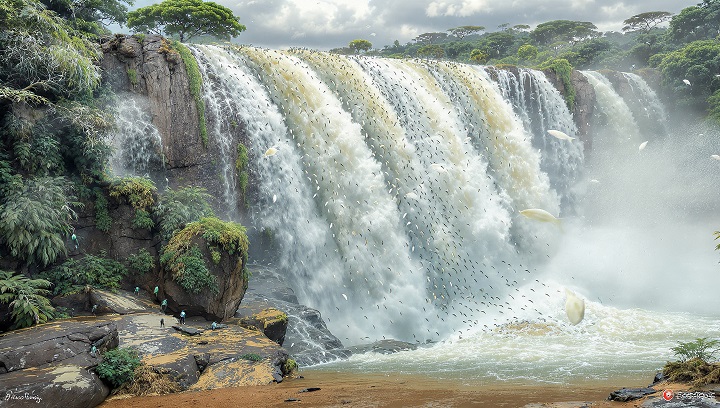
The sight of thousands of tiny fish climbing a massive waterfall may seem almost unbelievable, yet it is a powerful reminder of nature’s ingenuity.
The shellear fish of the Congo Basin demonstrate that even the smallest creatures can achieve extraordinary feats through adaptation and persistence.
Beyond its visual spectacle, this phenomenon carries profound ecological significance. It emphasizes the importance of preserving natural habitats, maintaining water systems, and protecting migratory species that rely on delicate environmental balances.
As scientists continue to explore the mysteries of the natural world, discoveries like this inspire curiosity and reinforce a simple truth: there is still so much we have yet to understand.
Key Points
Shellear fish climb a 50-foot waterfall in the Congo Basin
They use fins, hook-like structures, and body movements to ascend
The climb can take up to 10 hours and involves significant risk
This is the first documented case of such behavior in Africa
Human activities like illegal fishing and irrigation threaten the species
advertisement
Frequently Asked Questions (FAQ)
Q1: What species of fish climbs the Congo waterfall?
The shellear fish, scientifically known as Parakneria thysi, is responsible for this behavior.
Q2: How high is the waterfall they climb?
The fish climb Luvilombo Falls, which is about 15 meters (50 feet) tall.
Q3: How do the fish manage to climb vertically?
They use specialized fins with hook-like structures, along with side-to-side body movements, to grip and push upward.
Q4: How long does the climb take?
The ascent can take nearly 10 hours, with frequent pauses for rest.
Q5: Why do the fish climb the waterfall?
Possible reasons include migration, better food availability, and avoiding predators, though research is ongoing.
Q6: Is this behavior common in fish?
While some fish worldwide can climb, this is the first documented case in Africa.
Q7: What threats do these fish face?
Illegal fishing and water extraction for irrigation pose major risks to their survival.
Sources
- NPR – Detailed report on the discovery and scientific observations
https://www.npr.org/2026/04/05/nx-s1-5773315/shellear-climbing-fish-congo-waterfall - Reuters – Coverage of the study, behavior, and conservation concerns
https://www.reuters.com/business/environment/thousands-small-fish-defy-gravity-climb-congo-waterfall-2026-04-07/ - Scientific Reports – Original research publication
https://www.nature.com/articles/s41598-026-42534-8
Thank you !