

Stocks Explained: How Global Events, Market Volatility, and Economic Forces Shape Stock Markets in 2026

♦ Quick Insights
Global conflicts and oil prices are strongly influencing stock market movements in 2026
Market volatility and liquidity challenges are making trading more complex and risky
Government decisions and investor sentiment play a major role in stock performance
advertisement
Introduction: Understanding Stocks in Today’s Uncertain Economy
Stocks are one of the most popular investment tools, representing ownership in a company and offering the potential for long-term financial growth.
In 2026, however, the stock market is being shaped not just by corporate performance, but by global geopolitical tensions, economic uncertainty, and shifts in investor behavior.
From rising oil prices to war-driven volatility, understanding how stocks react to real-world events is more important than ever—especially for beginners and long-term investors alike.
What Are Stocks and Why Do They Matter?

Stocks (also known as equities) give investors a share in a company’s ownership.
When companies perform well, stock prices often rise, allowing investors to earn returns through capital gains or dividends.
However, stock prices are not determined solely by company profits—they are also influenced by broader economic factors, including:
Inflation
Interest rates
Global trade
Political decisions
Market sentiment
advertisement
How Global Events Are Impacting Stocks in 2026

Recent developments highlight how sensitive stock markets are to geopolitical events.
According to Yahoo Finance, U.S. markets reacted sharply to tensions surrounding the Iran conflict. The so-called “TACO” pattern—where policy escalation is followed by retreat—has been observed again, influencing investor expectations.
Some analysts believe that political leaders closely monitor stock market reactions when making decisions, particularly during times of economic uncertainty.
For example:
Oil prices surged more than 40% after the conflict began
The S&P 500 dropped around 7%
Major indices like the Nasdaq and Dow entered correction territory
At the same time, some investors are cautiously optimistic, expecting policy reversals to stabilize markets. Others warn that without real geopolitical resolution, volatility may persist.
Market Volatility and Liquidity Challenges

Reuters reports that the current global environment has triggered extreme volatility across financial markets—not just stocks, but also bonds, currencies, and commodities.
One major issue is liquidity, or how easily assets can be bought and sold.
Key challenges include:
Wider gaps between buying and selling prices
Reduced willingness from market makers to take risks
Difficulty executing large trades
In some cases, liquidity dropped to just 10% of normal levels in certain markets.
This has led to:
Smaller trade sizes
Increased transaction costs
Faster and more unpredictable price swings
Some analysts compare current conditions to past crises like the COVID-19 market shock, suggesting that prolonged instability could lead to deeper corrections.
advertisement
The Role of Energy Markets and Fuel Supply
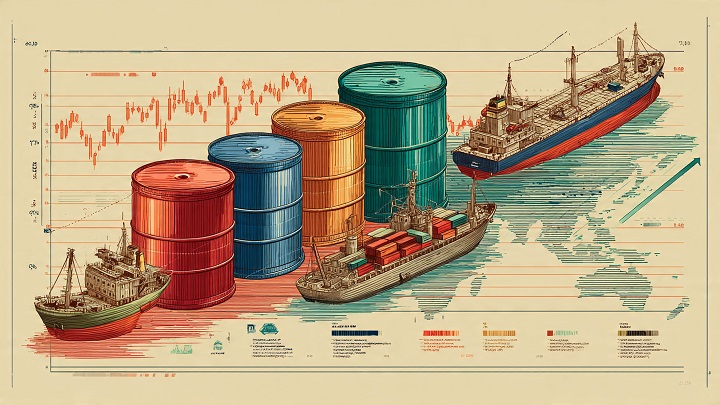
Energy markets are playing a critical role in shaping stock trends.
Rising oil prices—driven by geopolitical tensions—are increasing inflation risks and putting pressure on equities.
At the same time, data from New Zealand shows that fuel stock levels remain relatively stable, with:
59.3 days of petrol supply
54.5 days of diesel
50.4 days of jet fuel
This highlights an important contrast: while global markets react strongly to supply fears, some regions maintain stable reserves, helping cushion economic shocks.
Experts emphasize that fuel availability, import stability, and government planning are crucial in preventing further disruptions to both economies and stock markets.
Global Stock Market Performance Snapshot

Despite ongoing uncertainty, some stock markets are showing resilience.
European markets, for example, recorded modest gains in early trading:
STOXX 600 rose by 0.3%
FTSE 100 increased by 0.6%
CAC 40 gained 0.3%
Meanwhile, U.S. futures also pointed upward, suggesting cautious optimism among investors.
However, performance across regions remains mixed:
Asian markets showed declines in several countries
Commodity and energy stocks performed better due to rising oil prices
Some individual companies experienced sharp gains or losses based on sector-specific news
This mixed performance reflects the broader uncertainty dominating global markets.
advertisement
Different Perspectives on Market Direction

There is no single consensus on where stocks are heading next.
Optimistic View
Some investors believe markets will recover if geopolitical tensions ease and policy adjustments continue.
Cautious View
Others warn that:
Persistent high oil prices could fuel inflation
Rising interest rates may pressure stocks
Liquidity issues could worsen volatility
Risk-Focused View
Certain strategists emphasize the importance of protecting portfolios, noting that there is “no easy off-ramp” if current conditions continue.
advertisement
Conclusion: Navigating Stocks in a Complex World
The stock market in 2026 is a powerful reminder that investing is deeply connected to global events.
Stocks are no longer influenced only by company earnings—they respond to wars, political decisions, energy markets, and investor psychology.
For investors, this means adopting a more informed and flexible approach:
Stay updated on global developments
Diversify investments across sectors
Be cautious during periods of high volatility
Focus on long-term strategies rather than short-term reactions
While uncertainty can create risks, it also opens opportunities for those who understand the bigger picture.
In a world where change is constant, knowledge remains the most valuable investment.
Key Points
Stocks are influenced by both company performance and global events
Market volatility and liquidity issues are rising due to geopolitical tensions
Energy prices and inflation are key drivers of stock market trends
Investor sentiment plays a critical role in market movements
Diversification and caution are essential in uncertain markets
advertisement
Frequently Asked Questions (FAQ):
1. What are stocks?
Stocks represent ownership in a company and allow investors to benefit from its growth and profits.
2. Why are stock markets volatile in 2026?
Global conflicts, rising oil prices, inflation concerns, and liquidity issues are driving volatility.
3. How do oil prices affect stocks?
Higher oil prices increase costs for businesses and consumers, which can reduce profits and lower stock prices.
4. What is market liquidity?
Liquidity refers to how easily assets can be bought or sold without affecting their price. Low liquidity can lead to volatility.
5. Is it safe to invest in stocks now?
Investing always carries risk, but long-term strategies and diversification can help manage uncertainty.
Sources
- Yahoo Finance – Analysis of stock market reactions to geopolitical tensions
https://finance.yahoo.com/news/trump-pays-attention-to-the-stock-market-wall-street-eyes-signs-of-taco-amid-iran-war-140048438.html - Reuters – Global market volatility and liquidity challenges analysis
https://www.reuters.com/business/finance/global-markets-trading-analysis-pix-2026-03-30/ - RNZ – National fuel stock levels and supply data
https://www.rnz.co.nz/news/top/591010/latest-figures-show-increase-in-national-fuel-stocks - AASTOCKS – European and global stock market performance update
https://www.aastocks.com/en/stocks/news/aafn-con/NOW.1514246/latest-news/AAFN
Thank you !