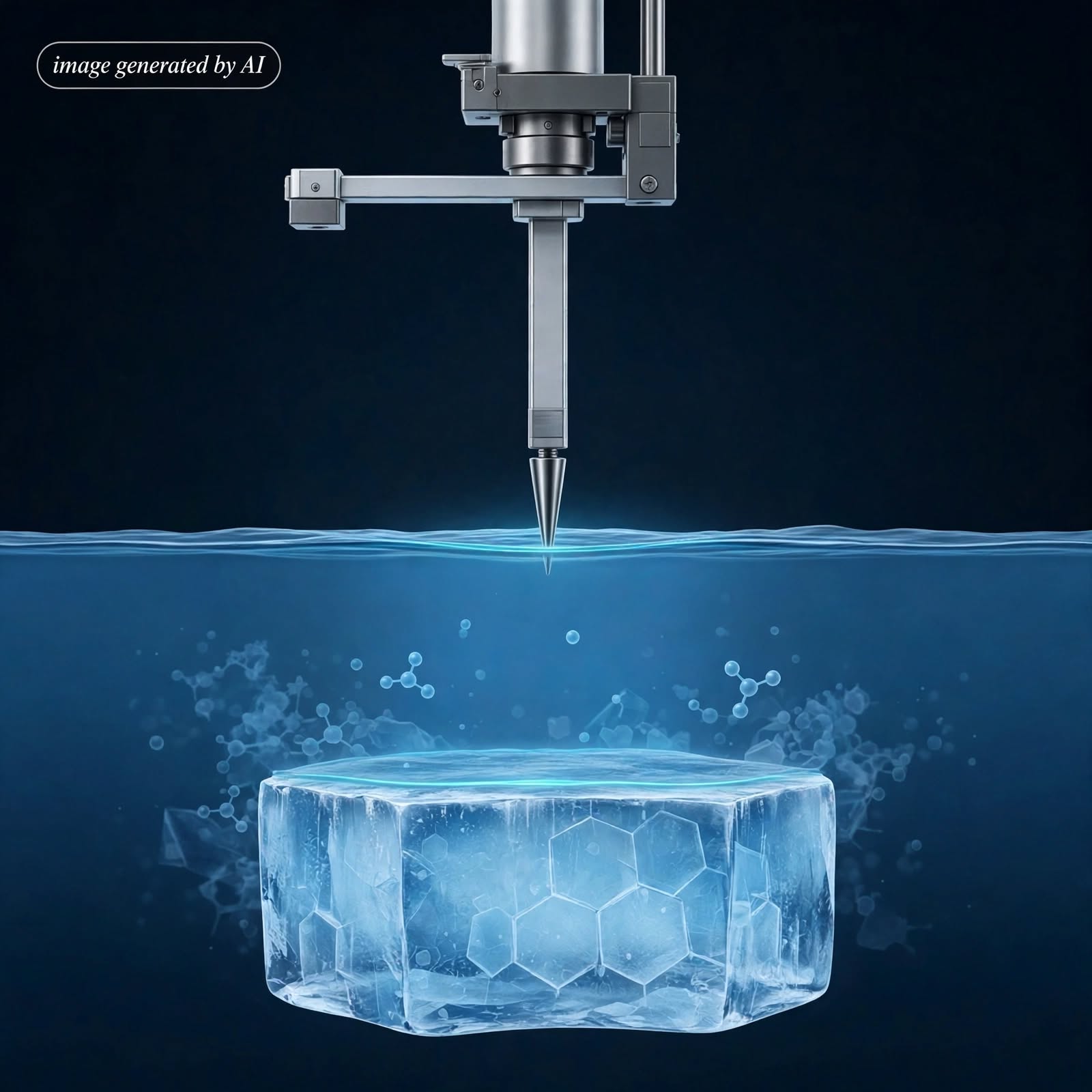
Surrounding Liquid Controls Water Layer On Submerged Ice
Researchers have found that the liquid around submerged ice controls whether a nanometre thin water layer forms on its surface. The team cooled an atomic force microscope to minus 10 degrees Celsius and probed ice in different antifreeze liquids. At minus 6 degrees in decane the tip jumped in by about 4 nanometres, a sign that it had touched a water layer. At minus 7 degrees in octane the jump was about 2 nanometres. No jump occurred in octanol or saltwater, which the authors interpret as direct contact between ice and liquid. Adding just 1 weight percent of octanol to decane also removed the jump, even though that amount should not change the bulk properties of decane. The team proposes that hydrogen bonding across the interface removes free hydroxyl groups from the ice and prevents the disordered water layer from forming.