Ancient Stone Tools Reveal a Regional Pattern in Southwest China
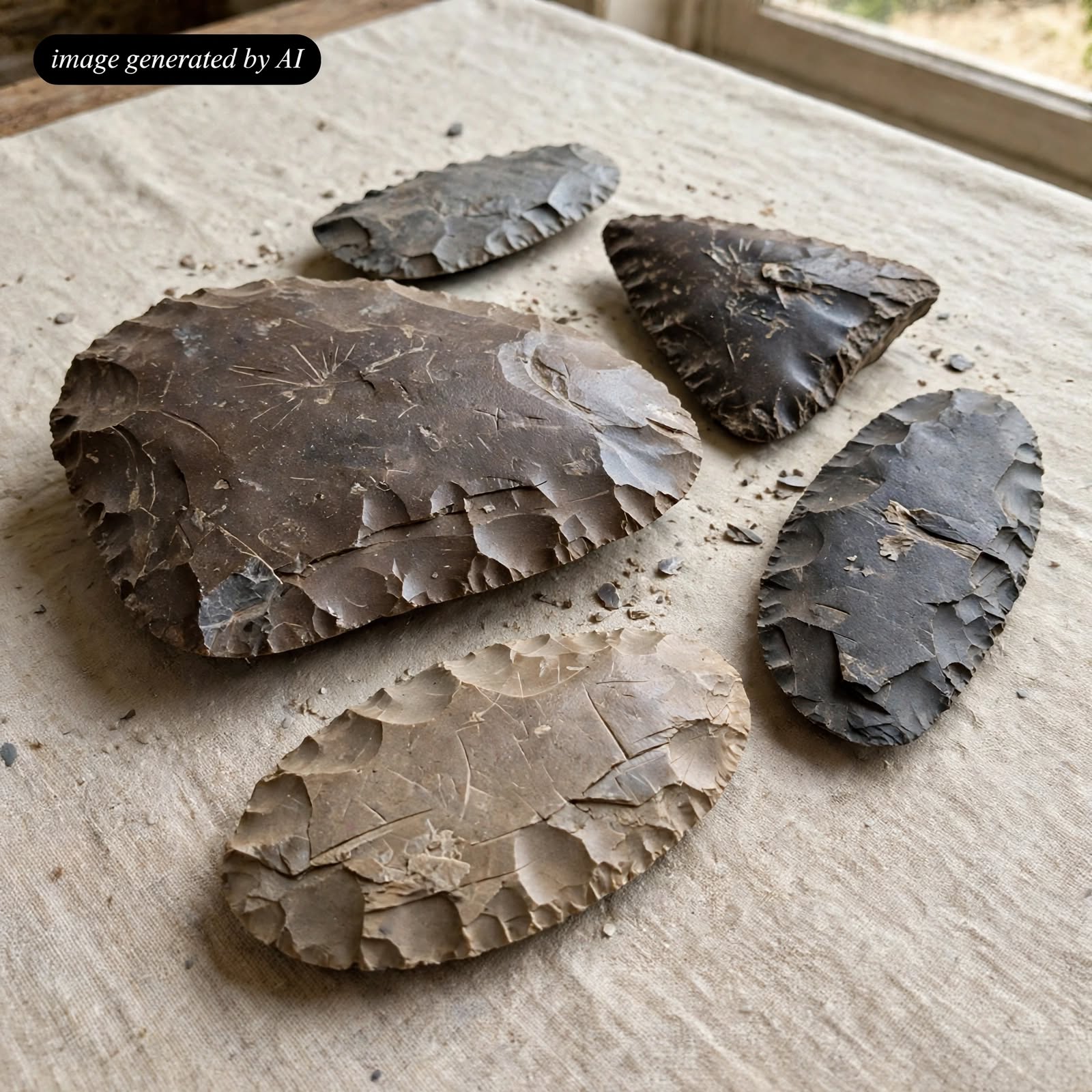
Archaeologists have found a durable stone tool tradition spread across 27 sites in southwest China. The method, known as Quina, used thick flakes with a sharp working edge and a rounded back that kept stone in reserve. Makers could resharpen the edge again and again, and flakes struck off during maintenance could serve as cutting tools themselves. The new study examined 166 scrapers and 58 resharpening flakes from surface collections in the Huangping and Binchuan basins. Their shapes closely matched earlier excavated tools from Longtan, dated to about 60,000 to 50,000 years ago. The toolmakers strongly favored trachyte, a volcanic rock that fractures predictably and survives repeated reworking. Researchers say similar pressures may have led distant groups to invent similar solutions without direct contact.