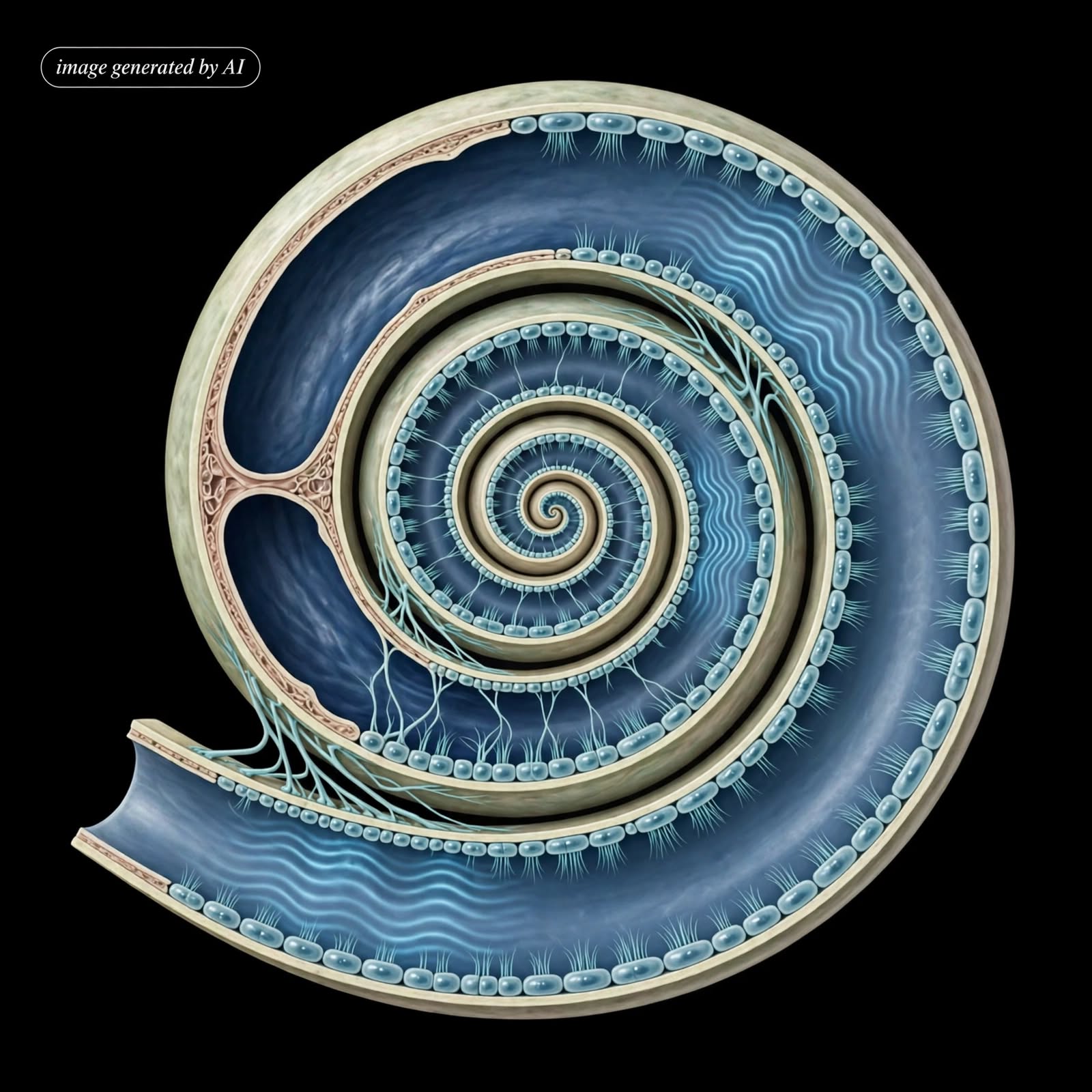
Inner Ear Study Rethinks How We Hear Low Sounds
New research suggests the inner ear does not work quite like the piano keyboard model taught since the 1960s. The classic idea says high sounds hit one end of the coiled cochlea and low sounds hit the other end. In guinea pigs, scientists found low frequency vibrations appearing almost at the same time across distant parts of the cochlea. They used optical coherence tomography and new processing to cancel noise and see the faint motion. The result suggests the brain may not need a simple place map to tell low frequencies apart. That matters for cochlear implants, which now rely on the place code to decide where to stimulate. A more complex pattern of stimulation could help people hear speech in noisy places. The discovery builds on earlier work from 2022 and opens a new way to think about hearing.