Blocked Cell Transport Drives Liver Scarring
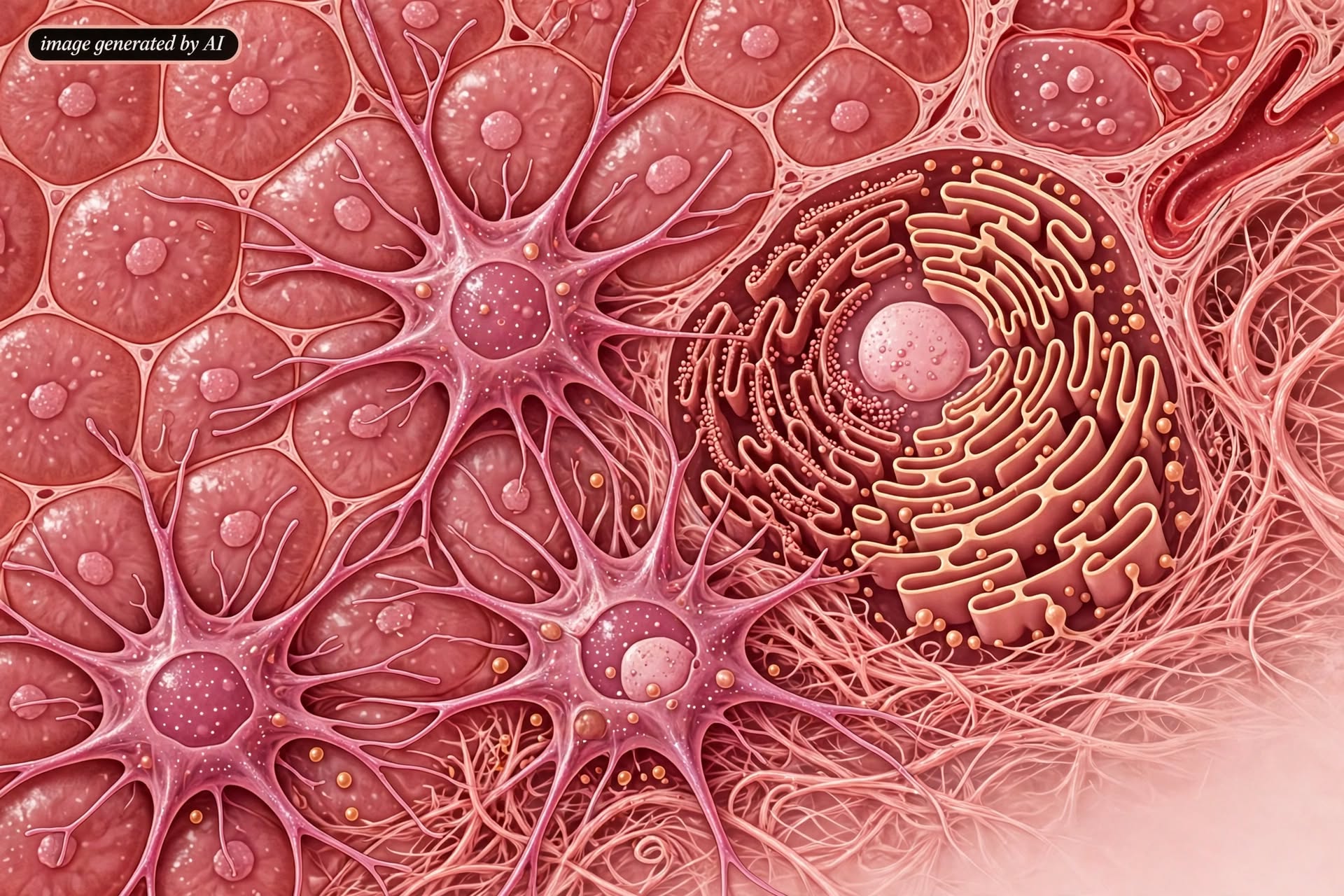
Scientists have identified a new molecular chain that helps drive liver fibrosis, a condition where scar tissue slowly replaces healthy liver tissue. The study found that a protein called G3BP1 is strongly increased in liver samples from people with fibrosis and in mouse models of the disease. G3BP1 promotes activation of hepatic stellate cells, the main scar producing cells in the liver, by acting through a SRPK1 and hnRNPM pathway that changes alternative splicing of COPI components. That change impairs transport from the Golgi apparatus back to the endoplasmic reticulum, creating stress inside the cell, and the stressed stellate cells become activated and drive fibrosis. The effect did not depend on stress granules, a better known role of G3BP1. Genetic removal of G3BP1 in liver cells reduced activation in lab and animal tests. The findings point to G3BP1 and its downstream pathway as a possible target for future antifibrotic research.