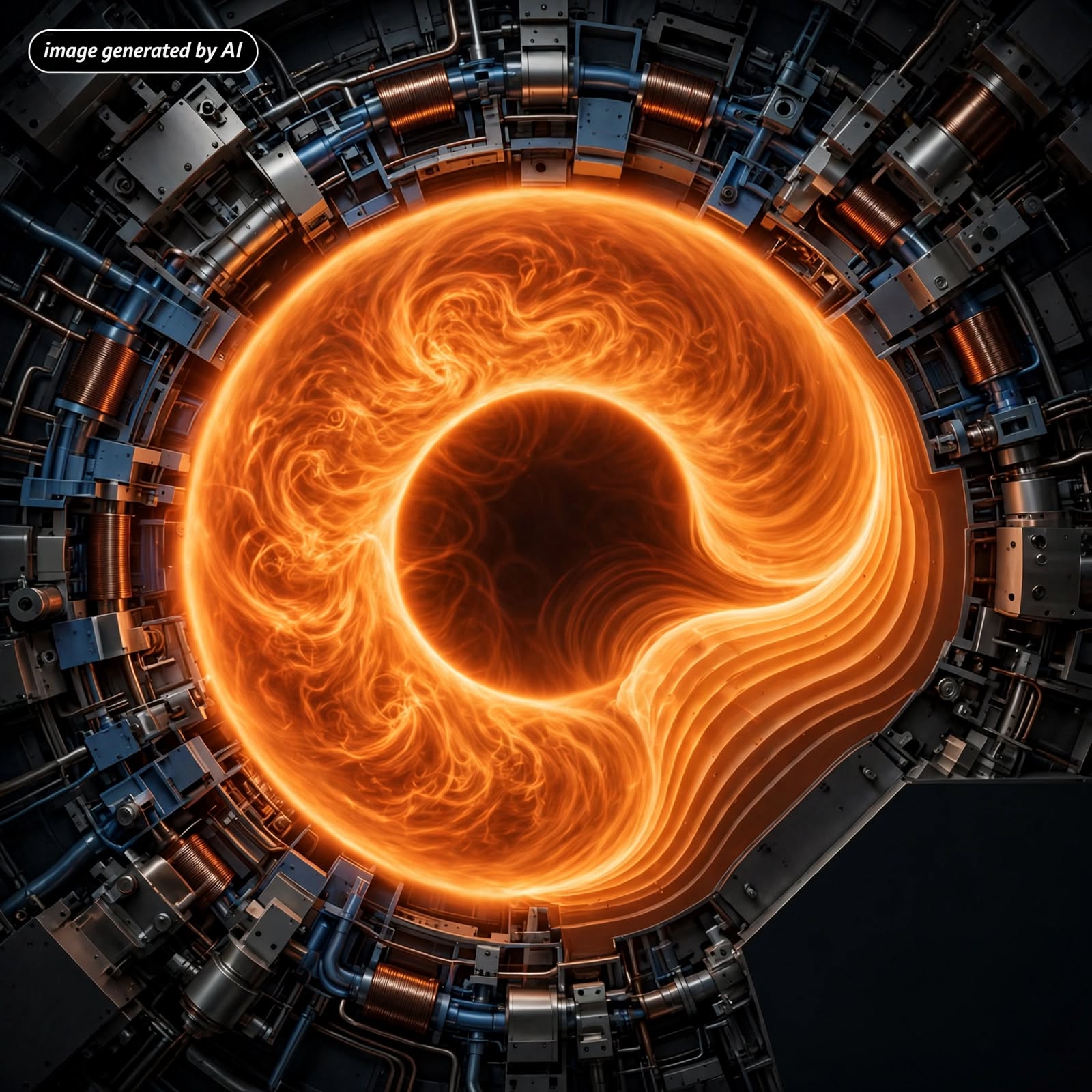
Fusion Plasma Theory Solves 40 Year Puzzle
Researchers have developed a new theory that explains how fusion plasma enters a high confinement state after decades of uncertainty. In tokamaks hot plasma is held by magnetic fields but turbulence carries heat away and makes fusion difficult. In 1982 scientists found that extra heating can suddenly cut turbulence near the edge and create the high confinement mode called H mode. The new work from EPFL shows how turbulence creates flows that move at different speeds and then suppress the turbulence itself. The model also explains why the magnetic field direction and the plasma density change the heating power needed to reach H mode. It predicts that ITER would need at least forty three megawatts to reach H mode below its planned seventy three megawatts. For the compact SPARC reactor it predicts twenty six megawatts close to its planned capacity.