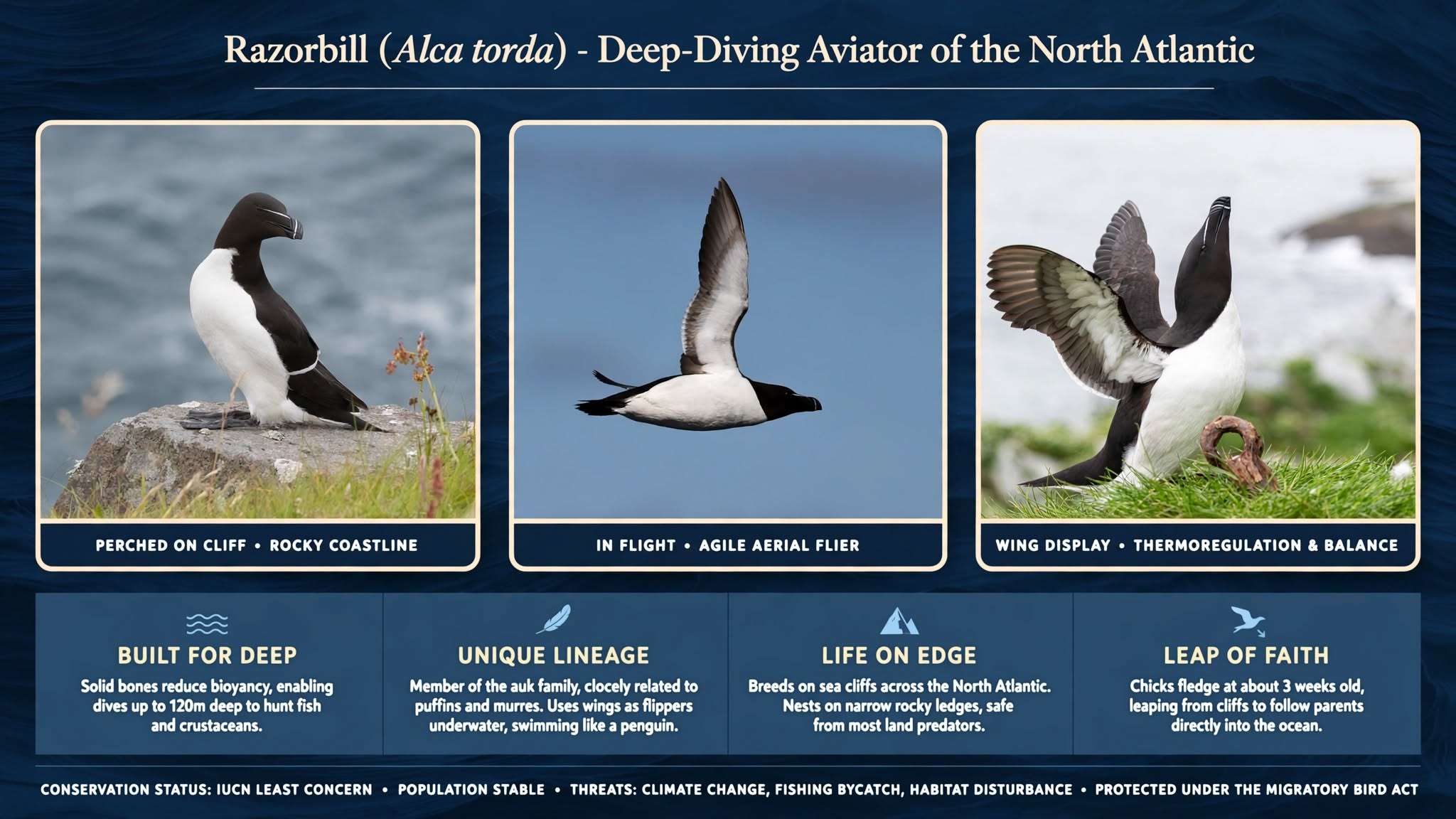
🌊 the Razorbill (Alca torda), one of the deepest-diving flying seabirds in the North Atlantic! 🐧⚓
If you love marine wildlife, this striking seabird deserves a spot on your feed. Often mistaken for a penguin due to its sharp black-and-white "tuxedo" plumage, the Razorbill is actually a member of the auk family (Alcidae) and the only living member of genus *Alca* — the closest living relative of the extinct Great Auk.
Here are a few incredible, fact-checked facts:
🐋 Built for the Deep Sea
Razorbills are shaped like tiny torpedoes. Unlike most birds, they use their semi-folded wings to literally "fly" underwater. They hunt schooling fish like sand lances / sand eels, herring, and capelin. Most foraging dives are 20-30m (65-100ft), but they are exceptional divers capable of plunging to 120-140m (400ft+) and staying down for over a minute!
🪨 Life on the Edge
These birds spend most of their lives out on the open ocean, enduring brutal winter storms. They only return to land to breed, laying a single egg directly on bare rock — no nest — on sheer cliffs, ledges and crevices across eastern Canada, Greenland, Iceland, Scandinavia, and the British Isles.
🐣 The Ultimate Leap of Faith
Razorbill parents lay just one egg per year. The real drama happens when the chick is only about 15-25 days old (usually around 18-20 days). Still downy and long before it can truly fly, the chick takes a leap of faith, usually at dusk to avoid gulls, fluttering off the high cliff into the sea below. Its father is waiting in the water below, and takes over completely — guiding it out to sea and feeding and protecting it for several more weeks until it can fish and fly on its own.
🌍 An Ocean Indicator
Globally listed as Least Concern by the IUCN with an estimated 838,000–1.6M mature individuals, the population is considered fluctuating — it increased from 2008-2015, decreased from 2015-2021, and is now stable to increasing. But regionally they face serious pressures: warming seas reducing sand eel availability, commercial overfishing and entanglement in nets, oil spills, and disturbance of breeding cliffs. Protecting our oceans means protecting these aviators.
Have you ever spotted a Razorbill on a coastal hike or boat tour?
["the Razorbill" images via 'Wikimedia Commons']