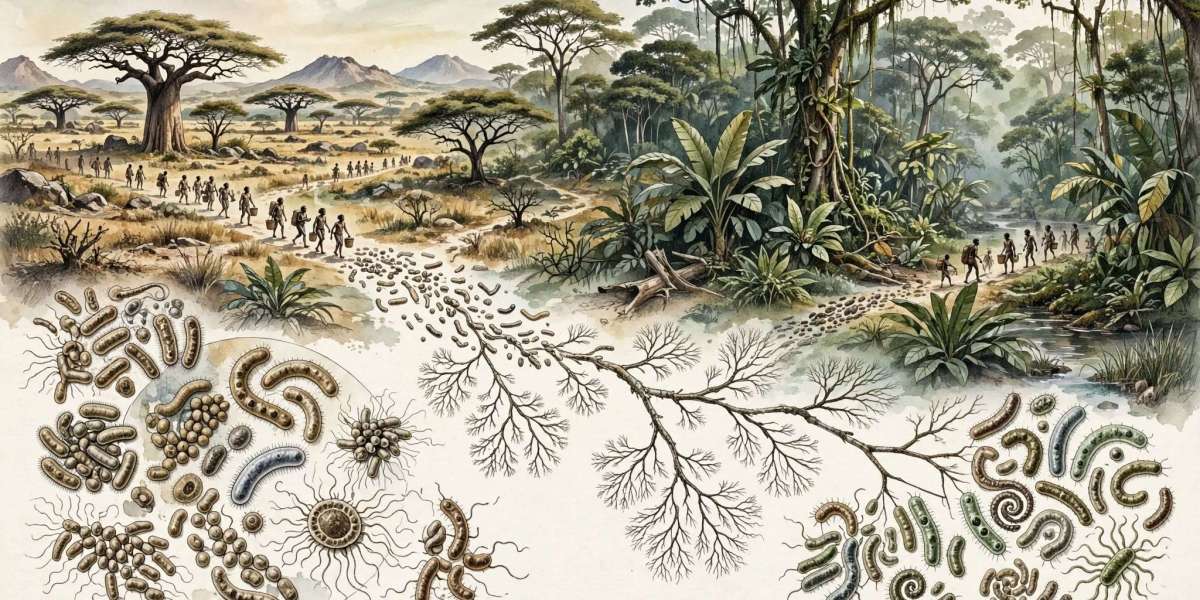
🧬 What if your gut bacteria carry clues about where ancient humans traveled?
A new study in Nature has found 1,231 microbial species shared by the Tsimane of Bolivia and the Hadza of Tanzania, two populations separated by thousands of years and thousands of kilometers.
Genetic analysis suggests that some of these microorganisms may have accompanied human populations during ancient migrations.
Even more strikingly, 848 of the shared species were rare or absent in industrialized populations, raising new questions about how modern lifestyles have changed the human microbiome.
Researchers estimate that the microbial populations experienced a median isolation time of about 17,090 years — while emphasizing that the estimate carries uncertainty because microbial genomes can exchange genetic material and contain complex ancestry patterns.
The biggest question now is whether the disappearance of some ancient microbial lineages has consequences for human health. The current study does not provide that answer.