NASA may have just taken a major step toward sending humans to Mars. 🚀
NASA’s next-generation lithium ion engine could change the future of Mars exploration forever.
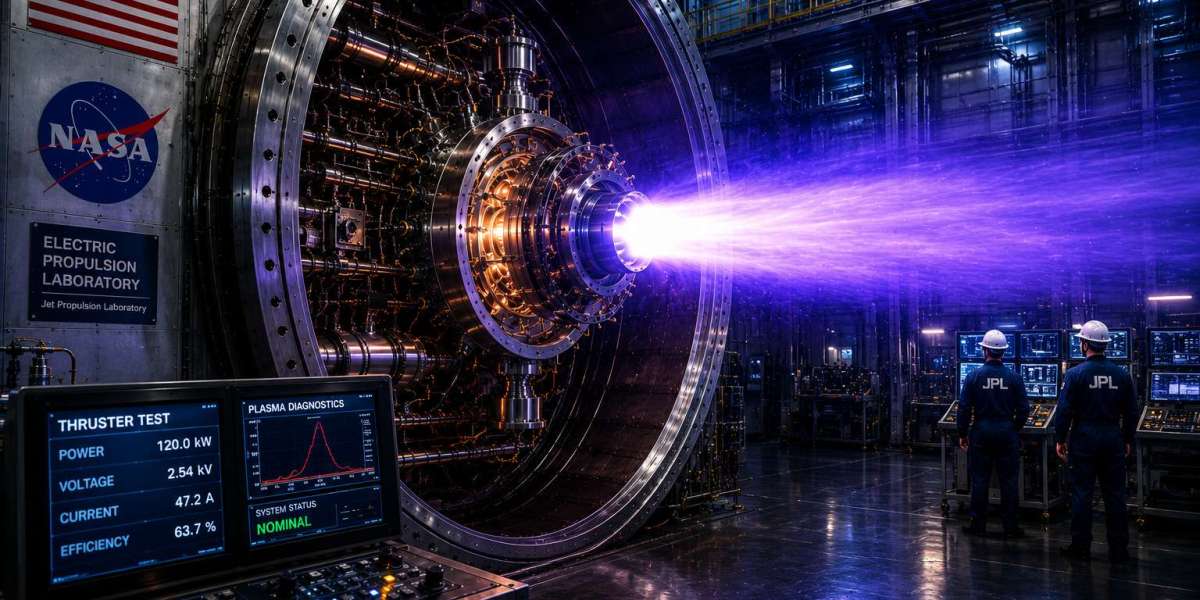
Scientists at NASA’s Jet Propulsion Laboratory successfully tested a powerful new lithium-fed ion engine capable of reaching power levels never before achieved in the United States. The experimental electromagnetic thruster generated 120 kilowatts of power — around 25 times stronger than the ion engines currently used on NASA spacecraft.
Unlike traditional chemical rockets, ion propulsion systems use electromagnetic fields to accelerate charged particles, allowing spacecraft to travel farther while using far less fuel. Researchers believe this technology, especially when combined with future nuclear-powered space systems, could make long-duration human missions to Mars far more practical and cost-effective.
The glowing plasma engine reached temperatures hotter than molten lava during testing, highlighting both the incredible engineering challenge and the exciting future of deep-space travel.
NASA hopes to scale the technology even further in the coming years, potentially creating megawatt-class propulsion systems capable of carrying astronauts across the solar system.