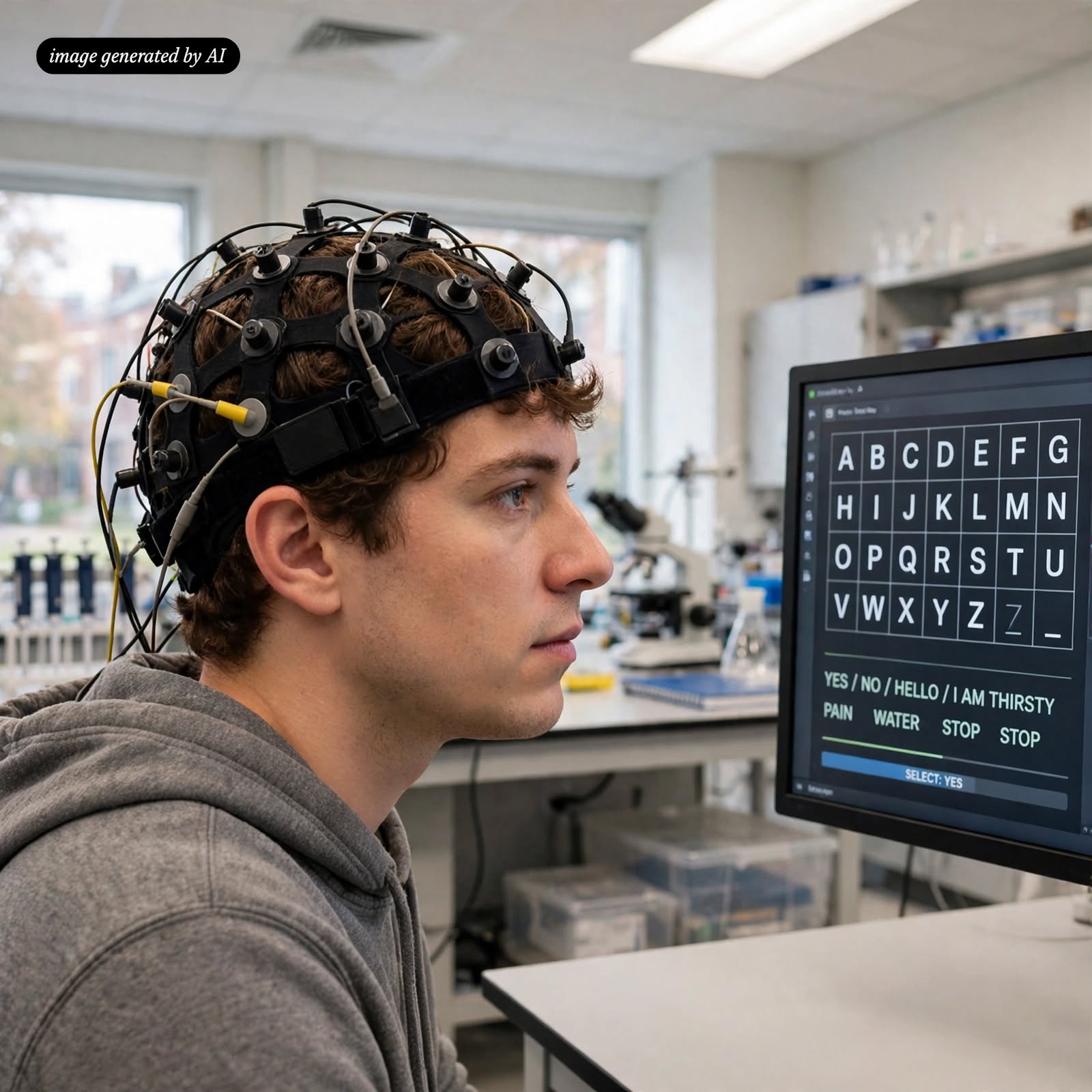
AI Brain Interface Lets People Send Messages Nearly Three Times Faster
Engineers at Rutgers have built a noninvasive brain computer interface called ChatBCI-Assist that turns attention into words and phrases. The system uses a cap with sensors that record electrical activity through the scalp while rows and columns on a screen flash in turn. When the row or column holding the intended choice flashes, the brain produces a response about 300 milliseconds later that the computer can detect. A locally run language model then suggests words and phrases that match the meaning the user wants to express. Instead of spelling every letter, a person can select a full suggestion such as asking for water. In tests with healthy volunteers, exact sentence copying ran nearly twice as fast as a dictionary based baseline. When volunteers only needed to convey the same meaning, the speed rose to nearly three times faster. The team now plans clinical testing with people living with ALS.