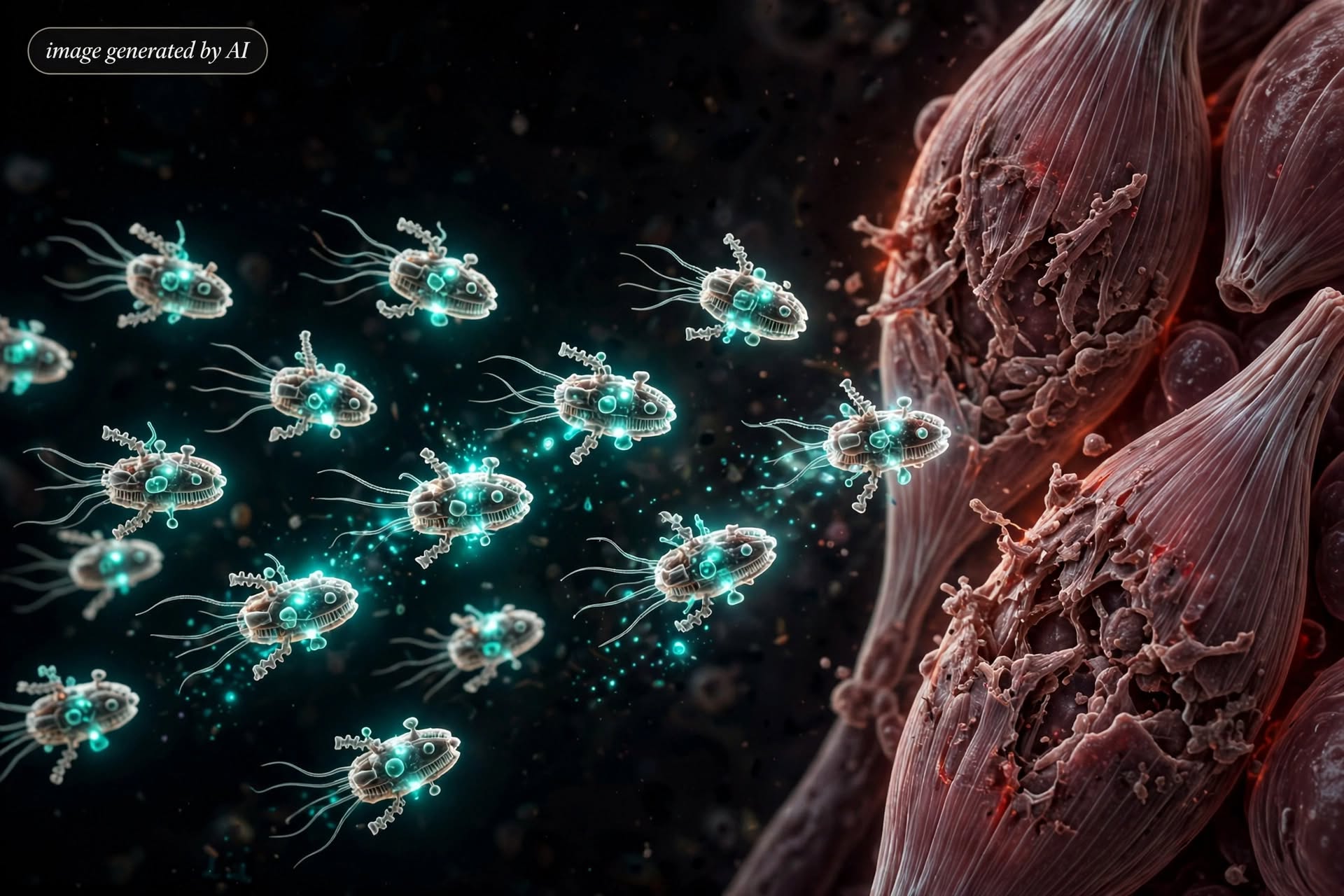
Light-powered nanorobots swim to injured heart cells and restore energy
Scientists have built tiny robots that can swim to damaged heart cells and make energy where it is needed. The robots, called ATPNbots, combine natural photosynthetic bacterial membrane with a synthetic lipid shell. Near-infrared light powers rotary protein motors in the membrane, and those motors make ATP, the cell main energy currency. The same light-driven action pushes the robots forward and guides them toward injured tissue. In lab tests with heart cells damaged by the chemotherapy drug doxorubicin, the robots roughly doubled energy levels and restored the balance of molecules. They also stabilized mitochondrial membranes, cut harmful reactive oxygen species by about half and calmed erratic calcium signals. In mice with drug-induced heart damage, the robots gathered in heart tissue at more than double the level of passive controls. The work is early and has not been tested in people, so safety and real heart benefits remain to be proven.