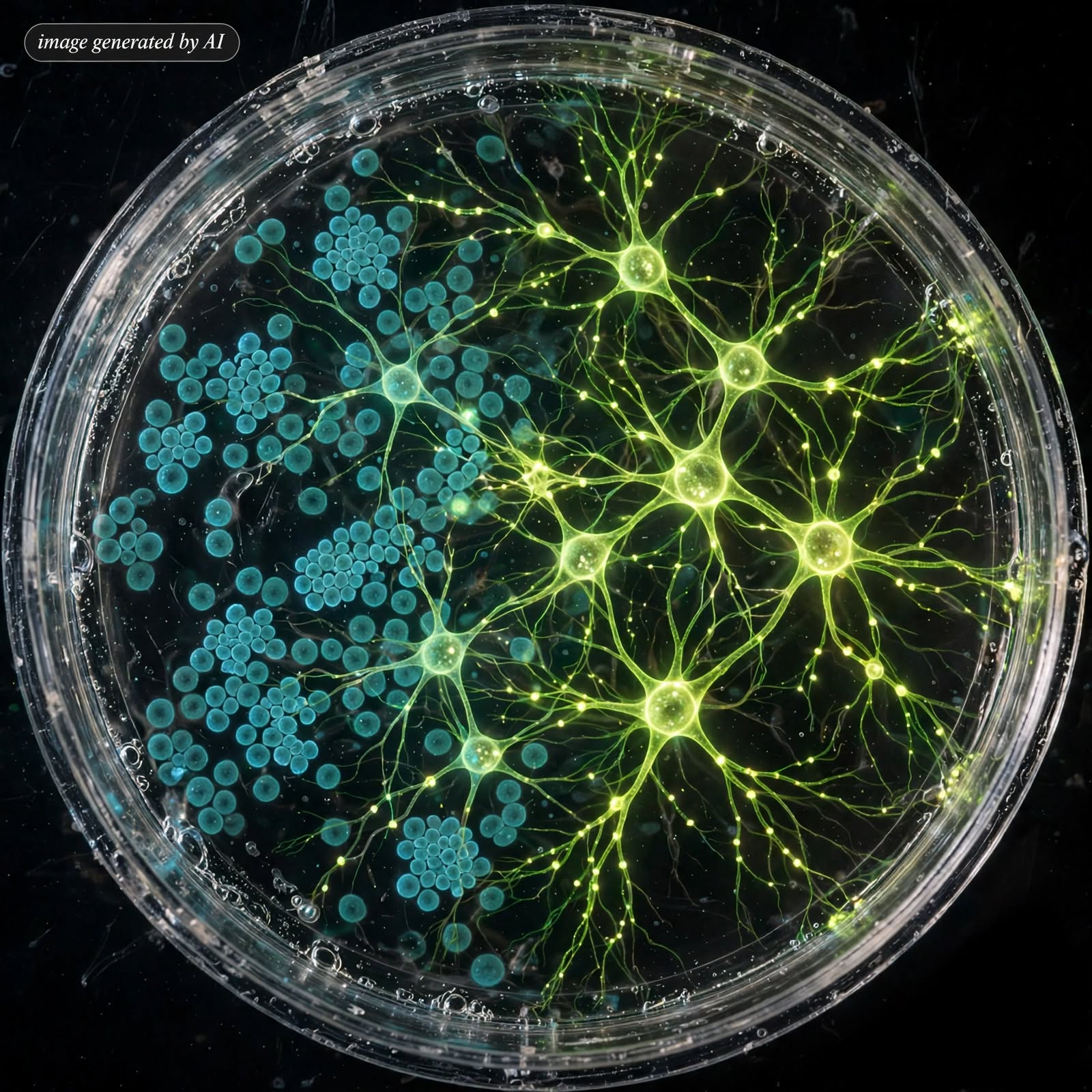
Two Enzymes Help Stem Cells Become Parkinson Brain Cells
Researchers have identified two enzymes that help human stem cells become the brain cells lost in Parkinson disease. The enzymes, called SULF1 and SULF2, remodel heparan sulfate, a sugar-rich molecule in the extracellular matrix. When stem cells were guided toward a midbrain fate, SULF1 and SULF2 helped them acquire the identity of midbrain dopaminergic neurons. These are the cells that make dopamine and are selectively lost in Parkinson disease. When both enzymes were removed, the patterning went wrong and the cells failed to develop the right identity. The work shows that the surrounding matrix is not just support tissue but a key instruction for cell fate. It could improve how laboratories produce authentic dopaminergic neurons for research and replacement therapy.