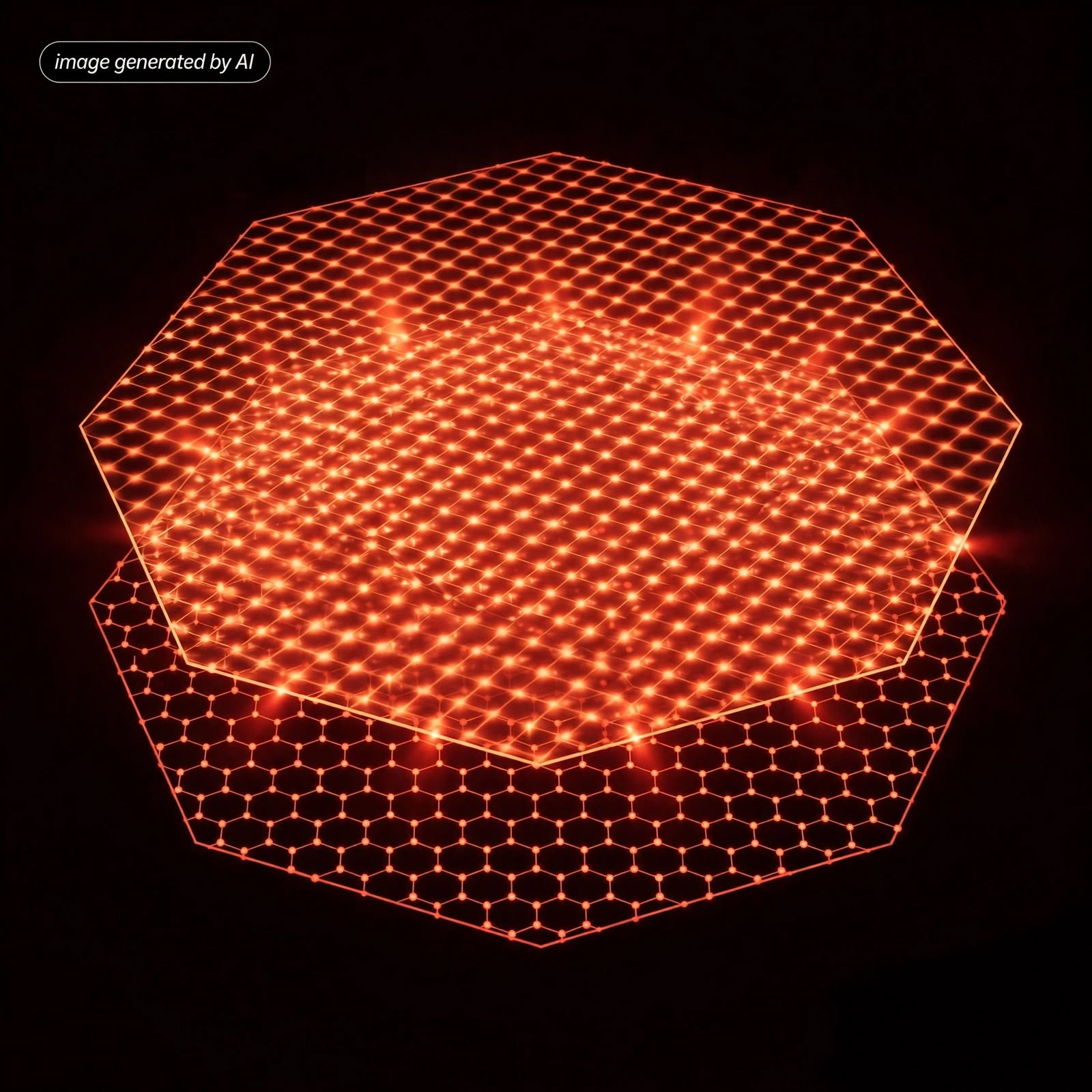
Twisting Atom Thin Layers Tunes Infrared Light
Researchers in South Korea have found a way to control infrared light by stacking and twisting two atom thin semiconductor layers. The team used rhenium disulfide and rhenium diselenide, materials whose optical behaviour changes with crystal direction. By twisting the layers from 1 degree to 88 degrees, they created a moire pattern that produced stable infrared emission through interlayer excitons. These excitons form when electrons and holes sit in different layers and bind together, and they last tens of times longer than ordinary excitons. Changing the twist angle and the number of layers tuned the energy by about 100 millielectronvolts and boosted brightness by up to ten times. The method also controlled the polarisation direction of the emitted light. The work could lead to better LiDAR for self driving cars, sharper night vision and more sensitive biosensors. It opens a route to low power optoelectronics and quantum devices.