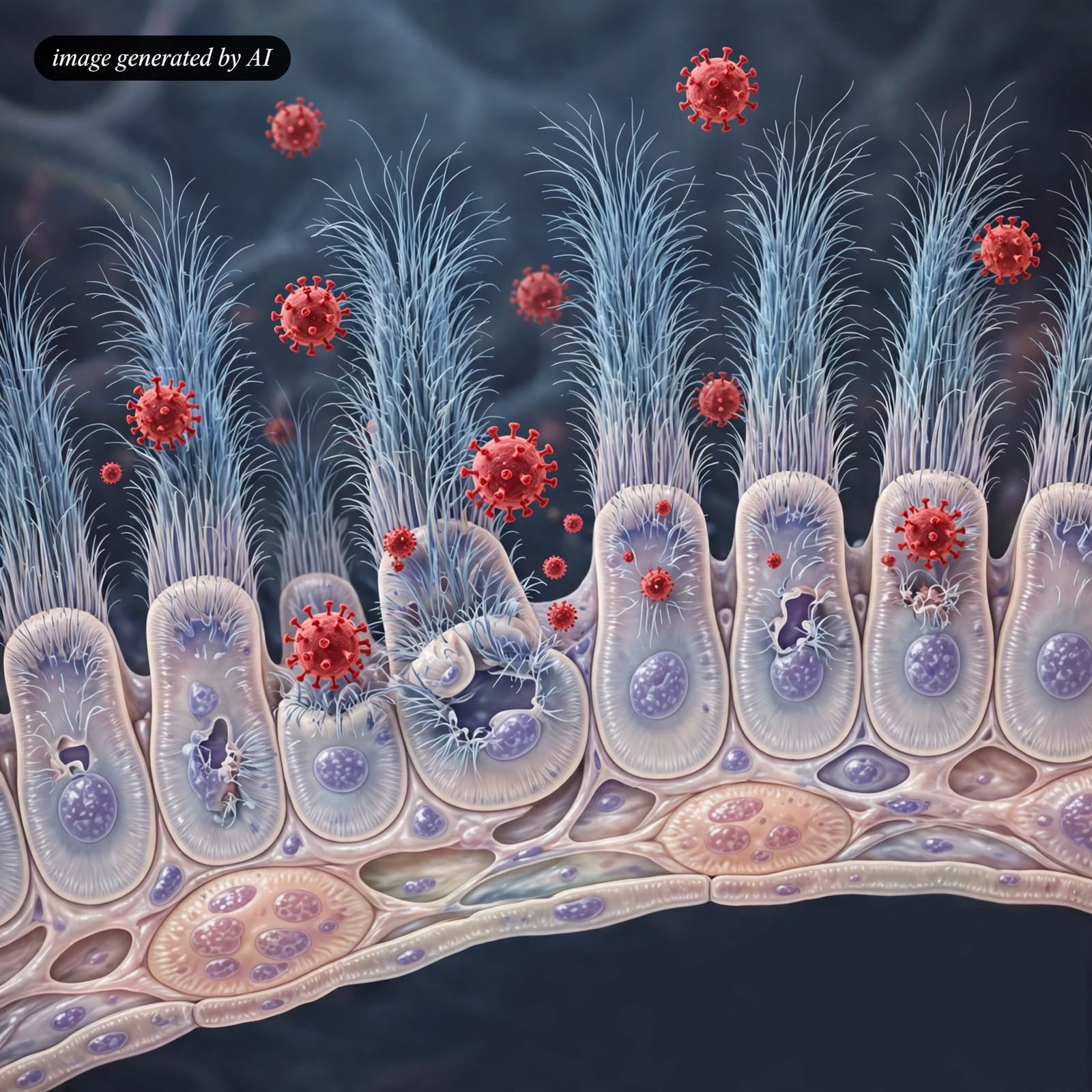
Influenza A Virus Reshapes Airway Cells And Drives Lasting Damage
A new study shows how influenza A virus reshapes ciliated cells in the airways during infection and repair. Ciliated cells carry tiny hair like structures that sweep mucus and germs out of the lungs. The virus changes how these cells develop and function through the damage and repair cycle. Researchers found viral and host mechanisms that keep mucus clearance weak even after the acute infection fades. The result helps explain why some people have a lasting cough and higher risk of second infections. The team says protecting ciliated cells could improve recovery and lower complications. More work is needed to test treatments that support repair without helping the virus spread.