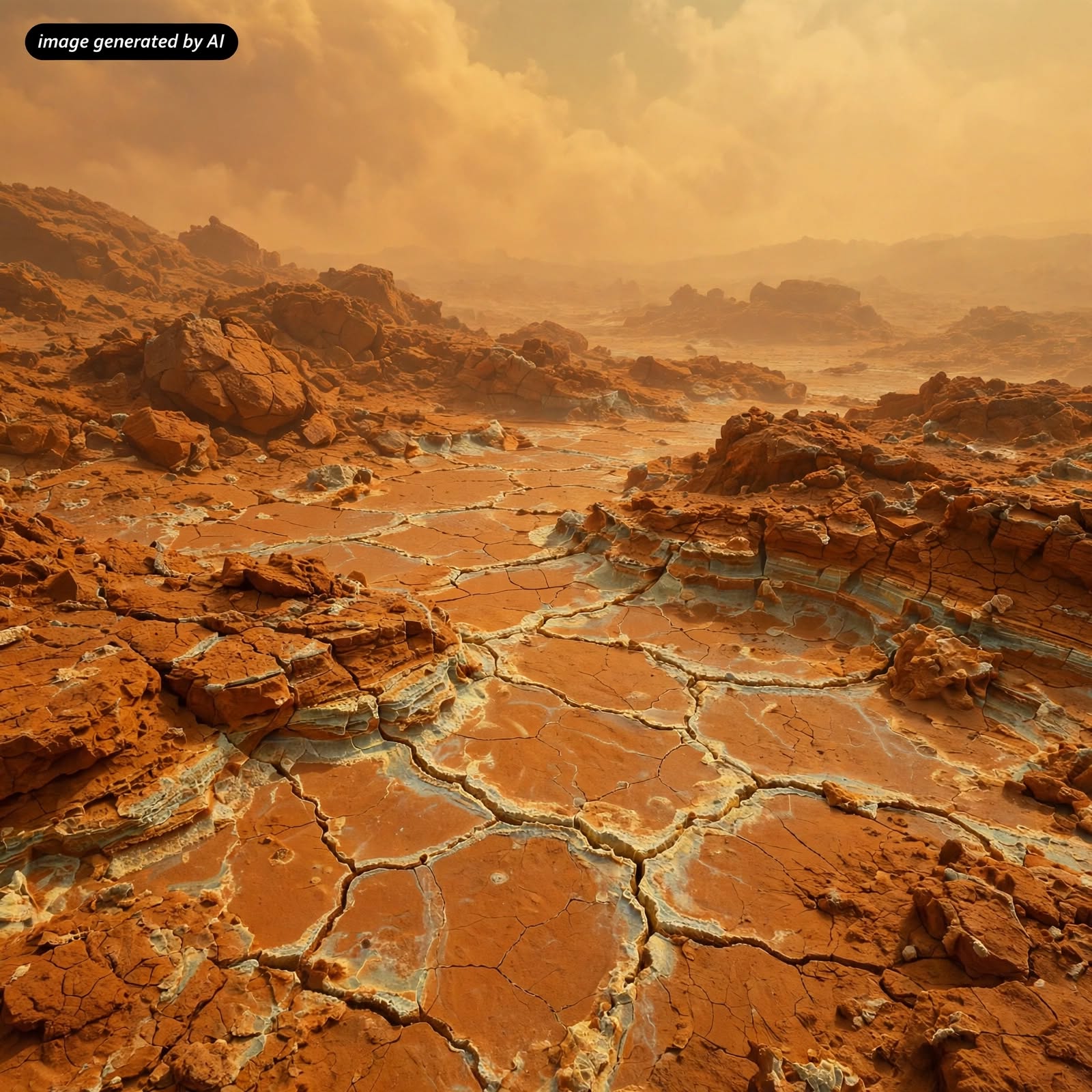
Venus Minerals Could Preserve Traces Of Ancient Water
Venus is now hot enough to melt lead, with pressure nearly 100 times greater than Earth. Scientists have long asked whether it was once much wetter and even had surface water. Researchers at UT San Antonio, NASA, and Arizona State University tested six rock-forming minerals under Venus-like conditions for 60 days. They used the Glenn Extreme Environment Rig to recreate Venus heat, pressure, and chemistry. Hydrogen fluoride in the simulated atmosphere transformed water-bearing minerals into fluorine-bearing micas that stay stable on Venus. The team also saw magnesite form from brucite and carbon dioxide, another possible clue to ancient water and carbon cycles. If future missions find these minerals, they could reveal how Venus lost its water and why it diverged from Earth.