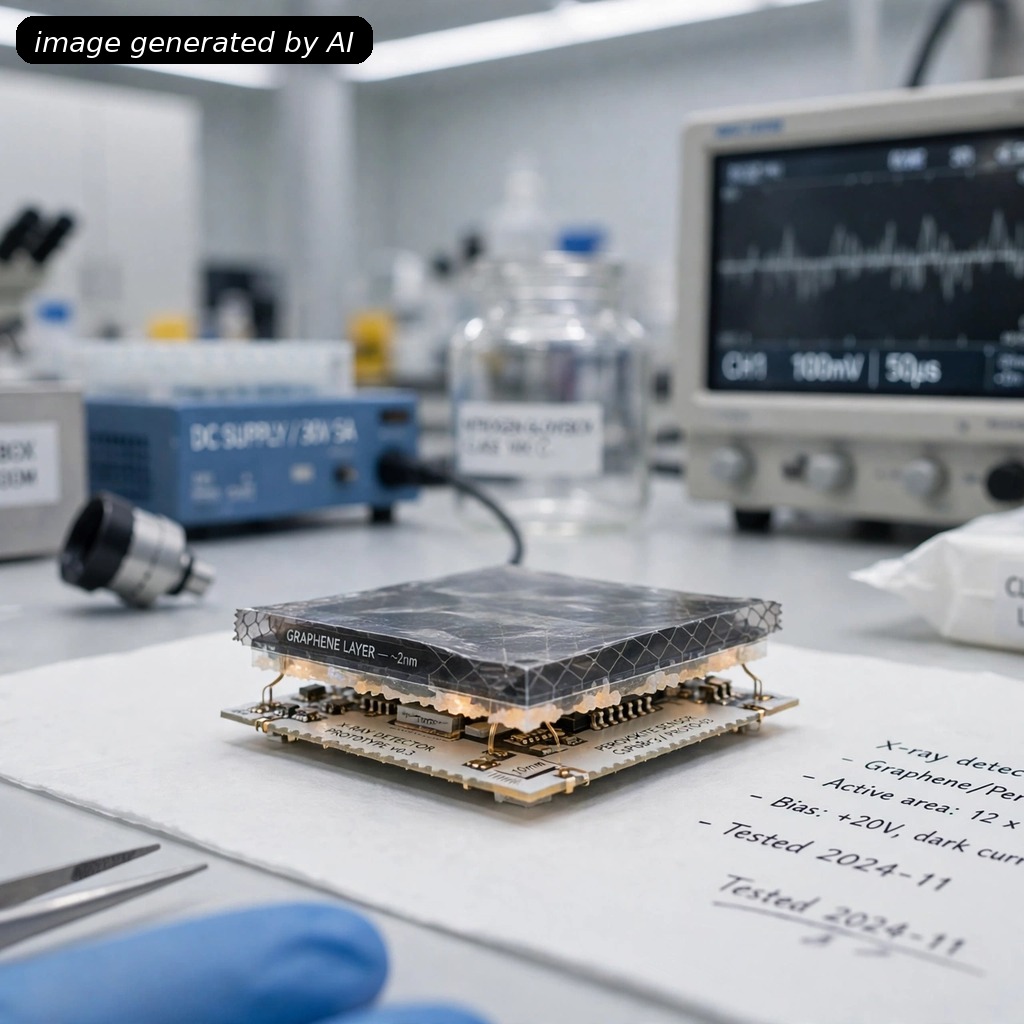
Graphene Layer Makes Prototype X-Ray Detector Far More Predictable
Researchers in Australia have built a prototype X-ray detector that could make medical imaging more accurate and reliable. The device measures about 2 cm by 2 cm and uses perovskite, a material known for sensitivity to X-rays. The challenge has been that perovskite detectors give unpredictable signals, which makes calibration difficult. The team solved this by replacing the conventional top electrode with graphene, a layer of carbon only one atom thick, while leaving the rest of the device unchanged. Laboratory tests showed a linear response, so doubling the X-ray dose doubled the electrical signal. The graphene design also cut background electrical noise by a factor of one million compared with a conventional device. Lead researcher Babar Shabbir said the work addresses a longstanding barrier to practical perovskite detectors. The findings were published in Advanced Functional Materials and the team is seeking partners to explore imaging, security and inspection uses.